Introduction
Pregnancy is an exciting journey, but it also brings many questions about what is safe for you and your baby. From foods and medications to daily activities and lifestyle habits, knowing what to avoid can sometimes feel confusing because of the amount of advice available online.
According to trusted organizations such as the American College of Obstetricians and Gynecologists (ACOG), the World Health Organization (WHO), and the National Health Service (NHS), making informed, evidence-based choices can help support a healthy pregnancy.
This guide explains 35 things to avoid during pregnancy, why they matter, and safer alternatives to help you feel more confident throughout every trimester.
Table of Contents
Why Pregnancy Safety Advice Can Feel Overwhelming
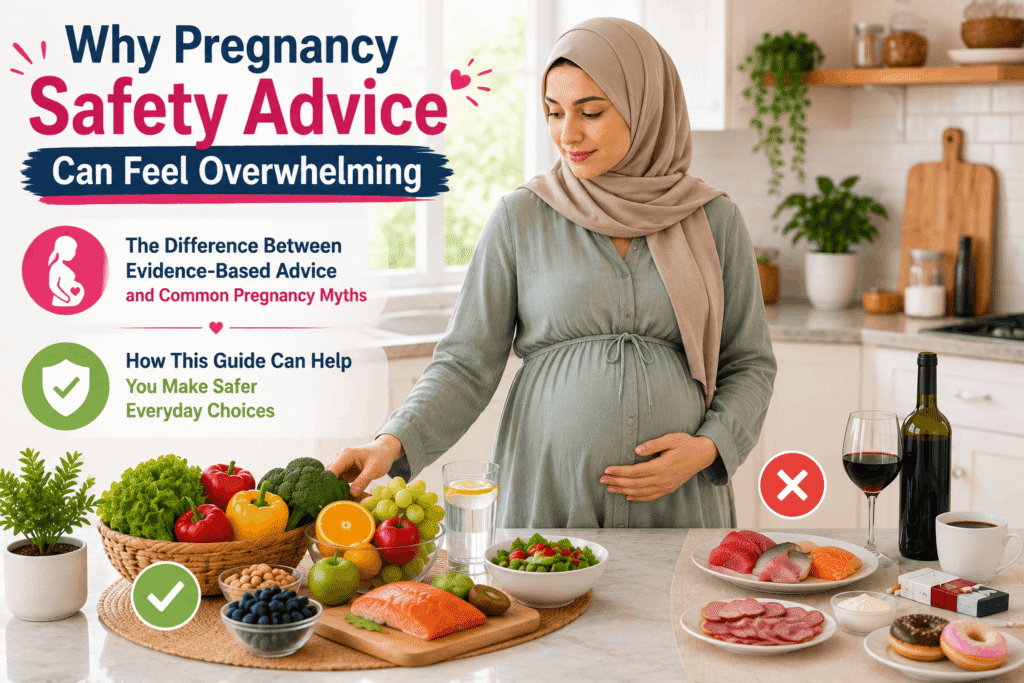
Pregnancy comes with a lot of advice. You may hear different opinions from family, friends, social media, pregnancy apps, and websites. While some tips are helpful, others can be confusing or outdated.
It’s normal to wonder whether certain foods, drinks, medications, or activities are safe. First-time mothers often have even more questions because every decision can feel important.
The good news is that you don’t have to follow every opinion you hear. According to trusted organizations such as ACOG, WHO, and NHS, focusing on evidence-based recommendations can help you make informed choices without unnecessary stress.
Quick Tip: When you receive conflicting advice, rely on trusted medical sources or ask your healthcare provider instead of following myths or social media trends.
Why Some Things Are Unsafe
Pregnancy causes many natural changes that affect your body, including your hormones, immune system, digestion, and circulation. These changes help support your growing baby but may also make you more sensitive to certain infections, medications, and environmental exposures.
Research suggests that some foods, chemicals, medications, and activities can increase certain pregnancy risks. While your placenta protects your baby in many ways, some harmful substances can still reach the developing fetus. That is why healthcare providers recommend avoiding certain foods, alcohol, smoking, and other known risks during pregnancy.
According to ACOG and WHO, most pregnancy safety recommendations are designed to reduce preventable risks—not to make pregnancy restrictive. Many women with healthy pregnancies can continue normal daily activities, including moderate exercise, while following evidence-based safety guidance.
Every pregnancy is different. Your age, medical history, existing health conditions, or a high-risk pregnancy may affect which recommendations apply to you. If you are unsure whether a food, medication, supplement, or activity is safe, speak with your healthcare provider for personalized advice.
Quick Pregnancy Safety Checklist (At-a-Glance)
This quick checklist highlights some of the most important pregnancy safety recommendations discussed throughout this guide. Use it as a simple reminder of healthy habits and common precautions.
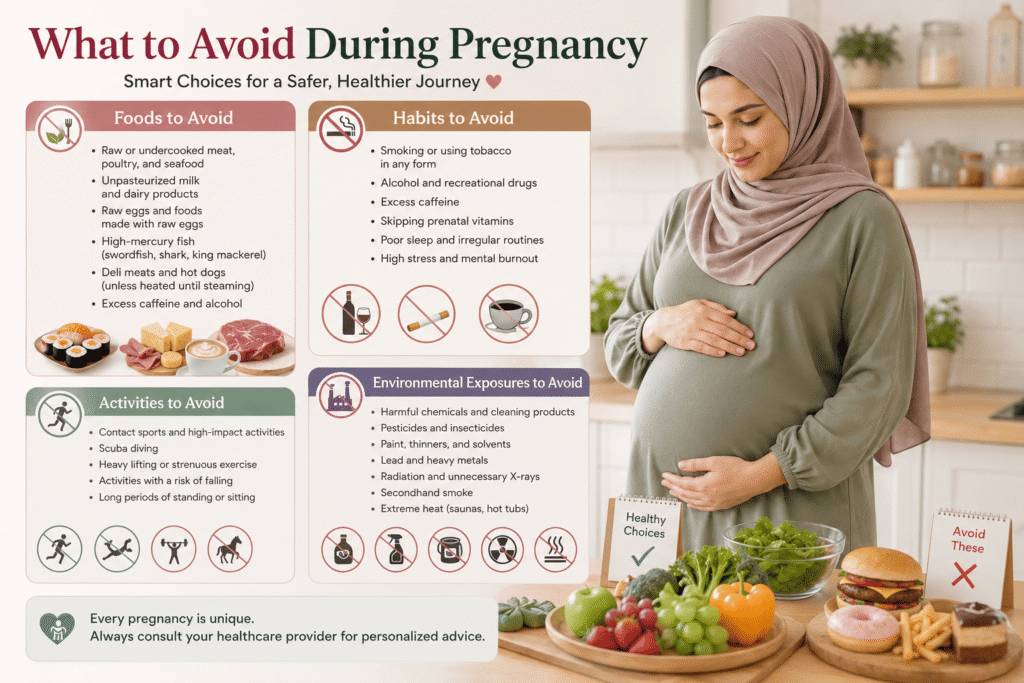
Foods to Avoid
- Raw or undercooked meat
- Raw fish and sushi
- Raw shellfish
- Unpasteurized milk
- Soft cheeses made from unpasteurized milk
- Raw eggs
- High-mercury fish
- Excess caffeine
- Energy drinks
- Alcohol
Safer Choices
- Fully cooked meats
- Pasteurized dairy products
- Low-mercury fish
- Water and milk
- Fully cooked eggs
Habits to Avoid
- Smoking
- Vaping
- Recreational drug use
- Excessive alcohol consumption
- Extreme dieting
- Chronic sleep deprivation
Healthy Alternatives
- Balanced meals
- Prenatal vitamins (as recommended)
- Adequate rest
- Stress management
- Moderate exercise approved by your healthcare provider
Activities to Avoid
- Contact sports
- Scuba diving
- Horseback riding
- Downhill skiing
- High-risk fall activities
- Heavy lifting without guidance
Safer Activities
- Walking
- Swimming
- Prenatal yoga
- Stationary cycling
- Low-impact strength training
Environmental Exposures to Avoid
- Cat litter without precautions
- Lead exposure
- Pesticides
- Strong chemical solvents
- Hot tubs and saunas
Safety Tips
- Discuss workplace exposures with your healthcare provider
- Wear gloves when gardening.
- Use cleaning products in well-ventilated areas.
- Ask someone else to clean the cat litter if possible.
- Follow product safety instructions
Foods and Drinks to Avoid During Pregnancy
Food safety becomes especially important during pregnancy because your body undergoes many changes that can make you more vulnerable to certain infections. Some foods and drinks may contain bacteria, parasites, toxins, or substances that could affect your health or your baby’s development.
The good news is that most pregnancy food precautions are simple and manageable. Understanding which foods to avoid—and what safer alternatives are available—can help you feel more confident about your daily choices
1. Alcohol
Alcohol is one of the most important substances to avoid during pregnancy. Unlike many foods that carry only a small risk, alcohol can cross the placenta and reach your developing baby.
Why Experts Recommend Avoiding Alcohol Completely
According to ACOG, CDC, and WHO, there is no known safe amount of alcohol during pregnancy. Because researchers have not identified a safe level of alcohol exposure, experts recommend avoiding alcohol entirely throughout pregnancy.
Many women worry after having a drink before realizing they were pregnant. If this happens, try not to panic. Contact your healthcare provider, who can offer guidance based on your situation.
Practical Tips
Choose sparkling water with fruit slices at social events.
Try non-alcoholic mocktails.
Let friends and family know your beverage preferences.
Read labels carefully, as some drinks may contain alcohol.
What Research Show
Research shows that alcohol exposure during pregnancy may affect fetal growth and development. The risk depends on factors such as timing, frequency, and amount consumed.
Studies have found that avoiding alcohol completely is the safest approach during pregnancy. This recommendation applies during all trimesters, including the earliest weeks when many women may not yet know they are pregnant.
Safer Alternative
- Water
- Sparkling water
- Milk
- Pasteurized fruit juices
- Non-caffeinated beverages approved by your healthcare provider
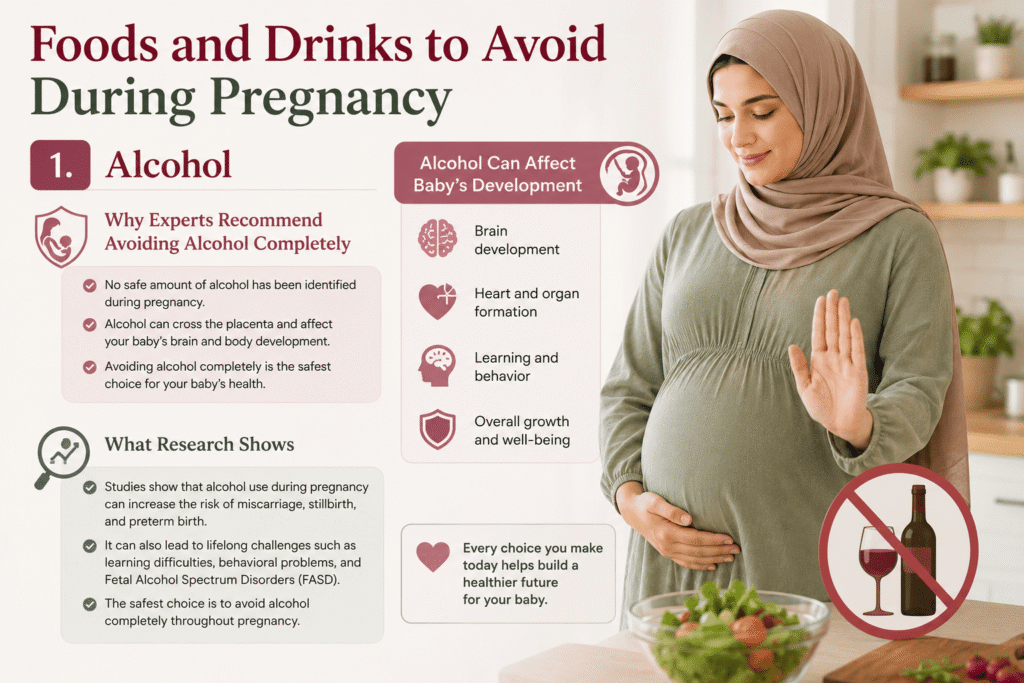
2. High-Mercury Fish
Fish can be a healthy part of a pregnancy diet because it provides protein and omega-3 fatty acids. However, some fish contain higher levels of mercury, which may affect a developing baby’s nervous system.
Fish That May Contain Higher Mercury Levels
Fish commonly identified as high in mercury include:
Shark
Swordfish
King mackerel
Marlin
Orange roughy
Tilefish
Bigeye tuna
Mercury accumulates over time in larger predatory fish, which is why these species are generally avoided during pregnancy.
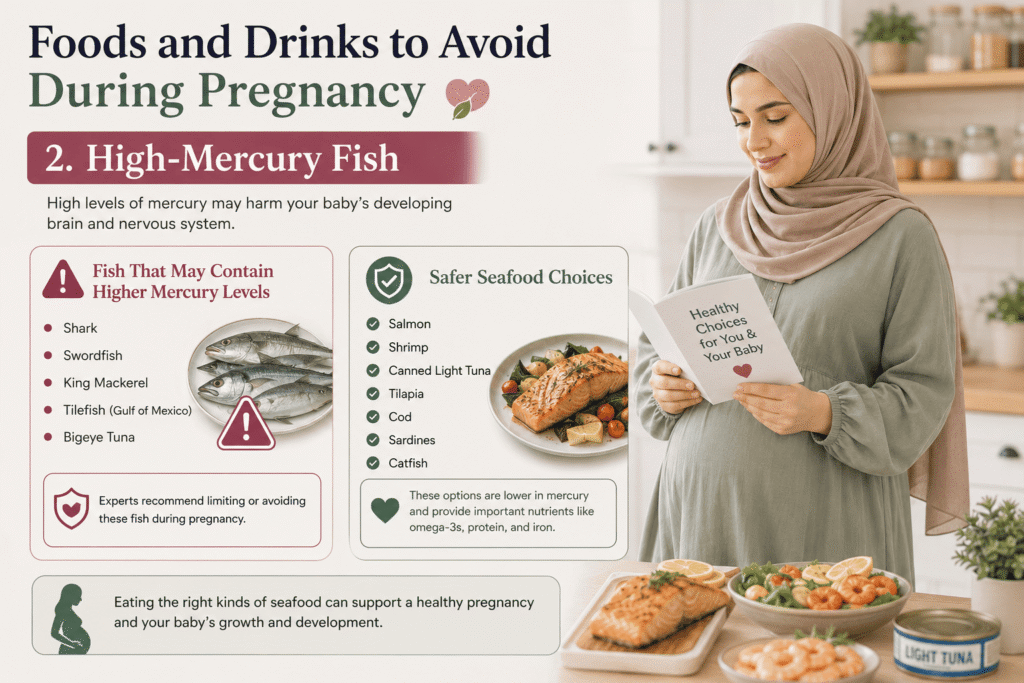
Safer Seafood Choices
Research suggests that low-mercury seafood can provide important nutrients during pregnancy.
Safer choices often include:
Salmon
Sardines
Trout
Herring
Anchovies
Shrimp
Pollock
Cod
According to many public health guidelines, including recommendations from the FDA and similar international organizations, choosing low-mercury fish can support a healthy pregnancy while reducing mercury exposure.
Quick Tip
Aim for seafood choices known to be lower in mercury rather than avoiding fish entirely.
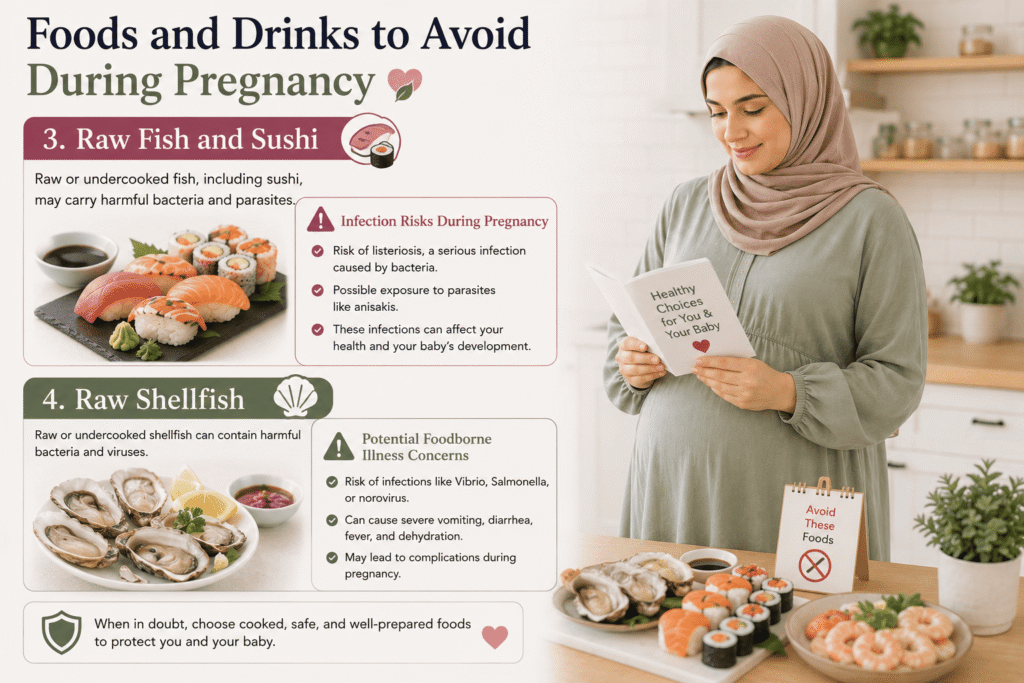
3. Raw Fish and Sushi
Many pregnant women wonder whether sushi is safe. The answer depends largely on the ingredients.
Sushi made with cooked seafood and pasteurized ingredients may be safer than sushi containing raw fish.
Infection Risks During Pregnancy
Raw fish may contain bacteria, viruses, or parasites that can cause foodborne illness.
Pregnancy can make infections more serious because immune system changes occur naturally to support the developing baby.
Potential concerns include:
Food poisoning
Gastrointestinal illness
Dehydration
Nutritional disruptions
These risks can be particularly challenging during the first trimester when nausea and morning sickness are already common.
Safer Alternative
Choose:
Cooked shrimp rolls
Vegetable rolls
Cooked salmon rolls
California rolls made according to local food safety standards
If severe symptoms occur during exercise, it is important to understand when to go to hospital during pregnancy.
4. Raw Shellfish
Raw oysters, clams, mussels, and similar shellfish are generally not recommended during pregnancy.
Potential Foodborne Illness Concerns
Potential Foodborne Illness Concerns
Raw shellfish can sometimes contain:
Bacteria
Viruses
Environmental contaminants
Research indicates that foodborne illnesses can be more severe during pregnancy than in the general population.
Symptoms may include:
Vomiting
Diarrhea
Fever
Dehydration
These symptoms can be especially difficult for women already experiencing pregnancy fatigue or nausea.
Safer Alternative
Choose fully cooked shellfish prepared according to food safety guidelines.
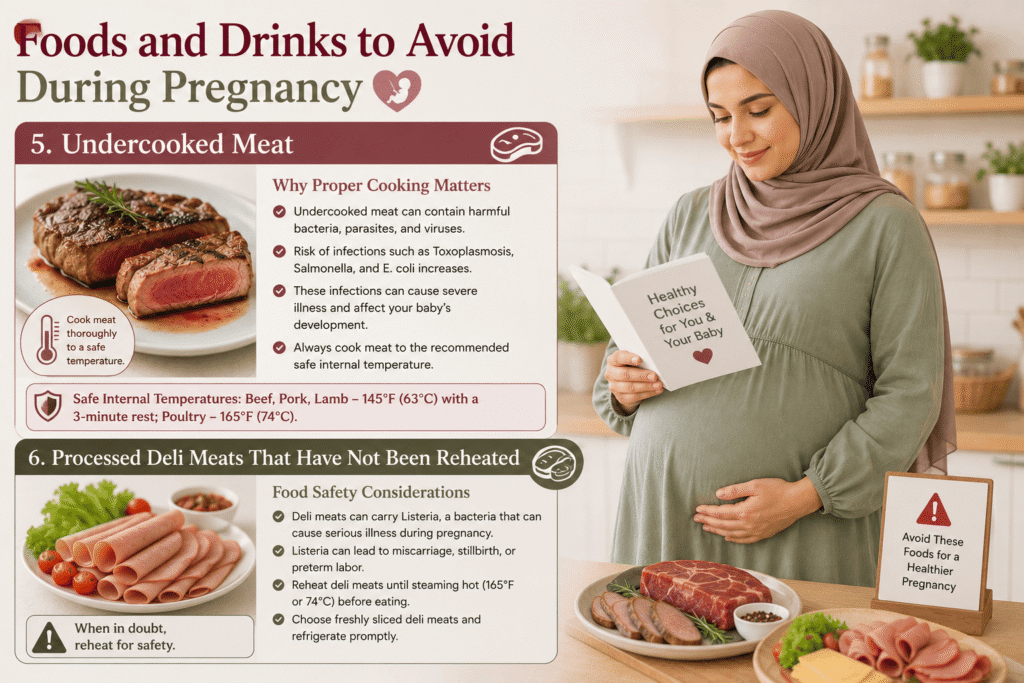
5. Undercooked Meat
Proper cooking is one of the simplest ways to reduce foodborne illness risks during pregnancy.
Why Proper Cooking Matters
Raw or undercooked meat may contain harmful organisms that are destroyed through adequate cooking.
Examples include:
Beef
Pork
Lamb
Poultry
Research suggests that cooking meat thoroughly significantly reduces the risk of foodborne infections.
Common Mistakes
Eating rare burgers
Consuming undercooked chicken
Sampling meat before it is fully cooked
Safer Alternative
Use a food thermometer and follow recommended cooking temperatures.
As pregnancy progresses, factors such as baby positioning become increasingly important. Read more about can an incorrect position affect uterine size in pregnancy.
6. Processed Deli Meats That Have Not Been Reheated
Deli meats are convenient, especially during busy pregnancy days, but they require extra attention.
Food Safety Considerations
According to CDC guidance, some ready-to-eat meats may occasionally contain bacteria such as Listeria.
Although infections are uncommon, experts often recommend reheating deli meats until steaming hot before eating them.
Examples include:
Turkey slices
Ham
Roast beef
Bologna
Salami
Safer Alternative
Freshly cooked chicken
Freshly cooked turkey
Reheated deli meats
Home-cooked sandwiches
7. Raw or Undercooked Eggs
Eggs are highly nutritious but should be cooked thoroughly during pregnancy.
Foods That May Contain Raw Eggs
Some foods may contain raw or lightly cooked eggs, including:
Homemade mayonnaise
Homemade Caesar dressing
Raw cookie dough
Certain dessert mousses
Homemade hollandaise sauce
Research shows that proper cooking greatly reduces the risk of foodborne illness associated with eggs.
Safer Alternative
Choose products made with pasteurized eggs whenever possible.
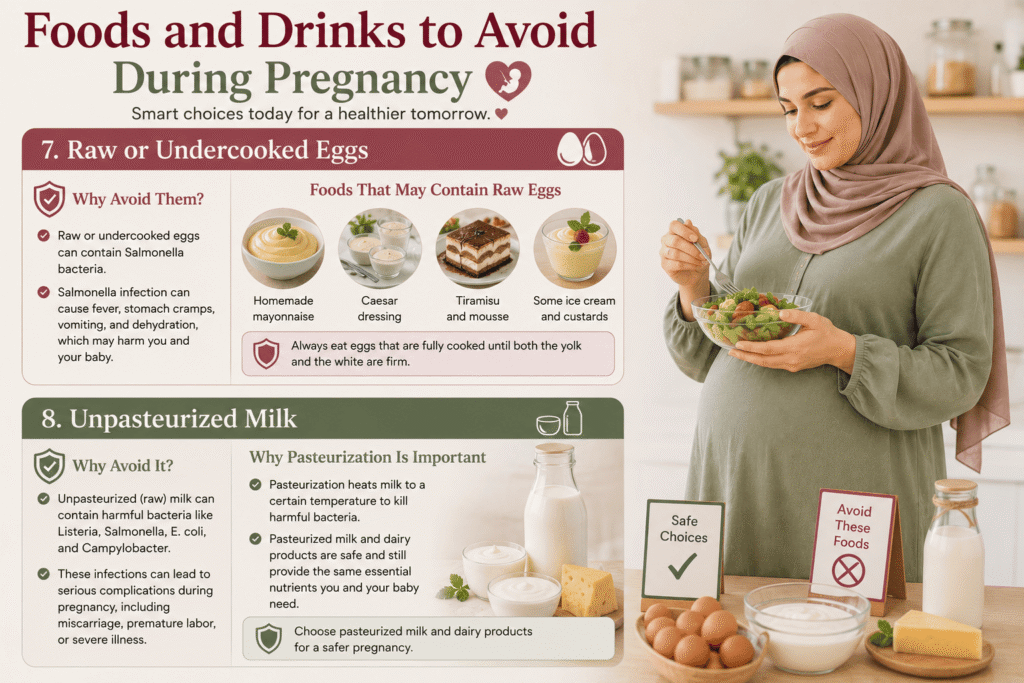
8. Unpasteurized Milk
Milk provides important nutrients during pregnancy, but pasteurization matters.
Why Pasteurization Is Important
Pasteurization is a heating process that helps eliminate potentially harmful bacteria.
According to public health agencies such as CDC and NHS, pasteurized dairy products are generally considered safer during pregnancy.
Potential concerns with unpasteurized milk include:
- Foodborne illness
- Serious bacterial infections
- Increased pregnancy complications in rare cases
Safer Alternative
Choose:
- Pasteurized milk
- Pasteurized yogurt
- Pasteurized dairy beverages
9. Unpasteurized Soft Cheeses
Not all soft cheeses are unsafe. The concern is primarily with cheeses made from unpasteurized milk.
Common Types to Watch For
Examples may include:
- Brie
- Camembert
- Roquefort
- Certain goat cheeses
- Some imported soft cheeses
Always check labels to determine whether the product is made with pasteurized milk.
Practical Shopping Tip
Look for the word “pasteurized” on packaging before purchasing soft cheeses.
Safer Alternative
Pasteurized versions of these cheeses are often widely available in North America and Europe.
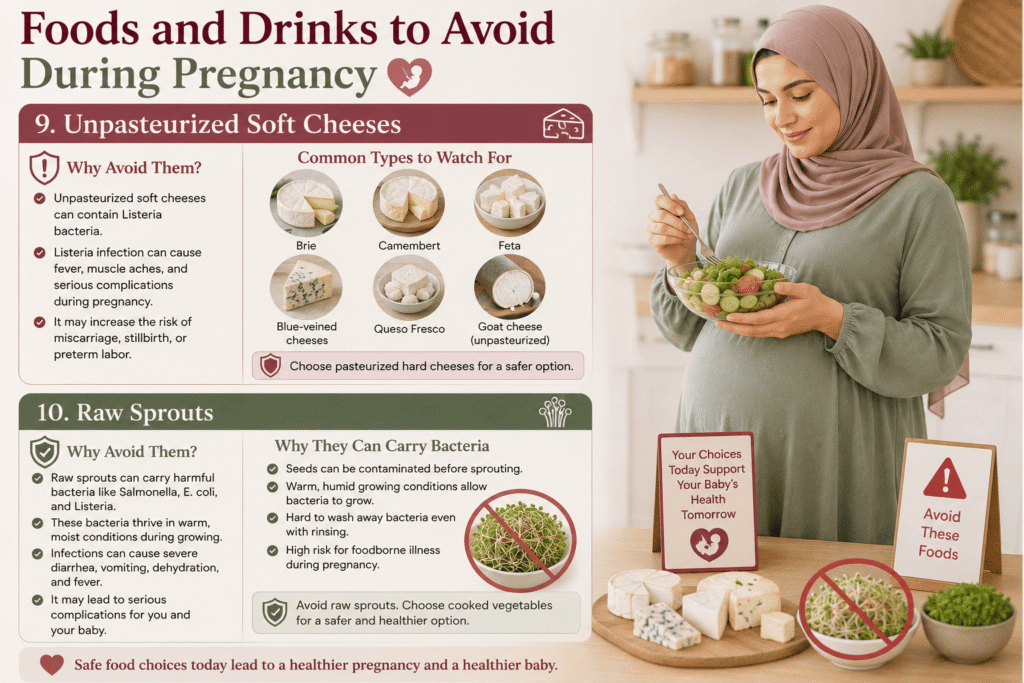
10. Raw Sprouts
Raw sprouts may seem healthy, but they can present unique food safety challenges.
Why They Can Carry Bacteria
Examples include:
- Alfalfa sprouts
- Clover sprouts
- Mung bean sprouts
- Radish sprouts
Because sprouts grow in warm, moist conditions, bacteria can sometimes multiply during production.
Research suggests that washing sprouts may not remove all bacteria.
Safer Alternative
Cook sprouts thoroughly before eating them.
11. Excess Caffeine
Many pregnant women are relieved to learn that caffeine does not always need to be completely eliminated.
Current Recommendations for Caffeine Intake
According to ACOG, moderate caffeine intake is generally considered compatible with pregnancy for many healthy women.
Current recommendations commonly suggest limiting caffeine intake to approximately 200 milligrams per day.
Sources of caffeine include:
- Coffee
- Tea
- Soda
- Energy drinks
- Chocolate
Common Mistake
Many people focus only on coffee and forget about caffeine from other foods and beverages.
Practical Tip
Keep track of total daily caffeine intake from all sources.
Safer Alternative
Try:
- Decaffeinated coffee
- Herbal teas approved by your healthcare provider
- Warm milk
- Water infused with fruit
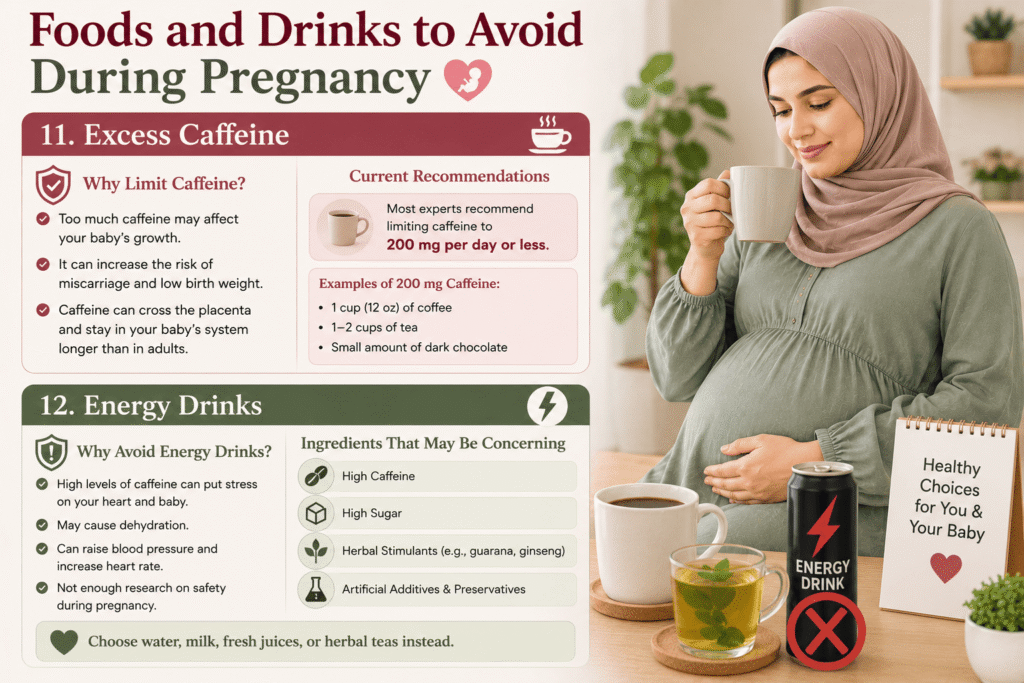
12. Energy Drinks
Energy drinks are often discouraged during pregnancy due to their ingredients and stimulant content.
Ingredients That May Be Concerning During Pregnancy
Many energy drinks contain:
- High caffeine levels
- Added stimulants
- Herbal ingredients
- Large amounts of sugar
Some products may contain ingredients that have not been extensively studied during pregnancy.
Research on certain energy drink ingredients remains limited, which is one reason healthcare professionals often recommend caution.
Safer Alternative
Choose beverages that support hydration, such as:
- Water
- Milk
- Sparkling water
- Low-sugar electrolyte drinks approved by your healthcare provider
Medications and Supplements to Avoid Without Medical Guidance
Many women are surprised to learn that medications and supplements they used safely before pregnancy may not always be appropriate during pregnancy. This does not mean that every medicine is harmful. However, pregnancy changes how the body processes substances, and some ingredients may affect a developing baby.
According to ACOG, NHS, and other health organizations, it is important to discuss medications, supplements, and herbal products with a healthcare provider before using them during pregnancy. This is especially important during the first trimester, when many of the baby’s organs are developing.
13. Certain Over-the-Counter Pain Relievers
Many over-the-counter (OTC) pain relievers are available without a prescription, but that does not automatically mean they are safe during pregnancy.
Common OTC pain medications include:
- Ibuprofen
- Naproxen
- Aspirin
- Acetaminophen (Paracetamol)
Different medications have different safety considerations during pregnancy.
Why This Matters
Research suggests that some pain relievers may carry risks at certain stages of pregnancy. For example, some nonsteroidal anti-inflammatory drugs (NSAIDs) may not be recommended during later pregnancy unless specifically advised by a healthcare provider.
Many women take pain relievers for:
- Headaches
- Back pain
- Muscle aches
- Fever
- Joint discomfort
Because pregnancy-related symptoms are common, it is important to seek professional guidance before taking medication.
Common Mistakes
- Assuming a medication is safe because it is sold without a prescription
- Taking leftover medication from before pregnancy
- Using medication recommended by friends or family
Safer Alternative
If you experience pain or fever during pregnancy, contact your healthcare provider for guidance on the safest option for your situation.
14. Retinoid Acne Treatments
Acne can become worse during pregnancy due to hormonal changes. Many women search for treatments that worked before pregnancy, but some acne products require special attention.
Retinoids are vitamin A-related compounds commonly found in:
- Prescription acne medications
- Anti-aging creams
- Certain skin care products
Why This Matters
According to dermatology and pregnancy health guidelines, some retinoid products are generally avoided during pregnancy because of concerns about fetal development.
Research has identified concerns particularly with certain prescription retinoid medications.
Common Mistakes
- Continuing a pre-pregnancy acne treatment without reviewing ingredients
- Assuming all skin care products are automatically safe
- Overlooking ingredient labels
Practical Tip
Review skin care products with your healthcare provider or dermatologist if you become pregnant or are trying to conceive.
Safer Alternative
Healthcare professionals may recommend pregnancy-appropriate skin care options based on individual needs.
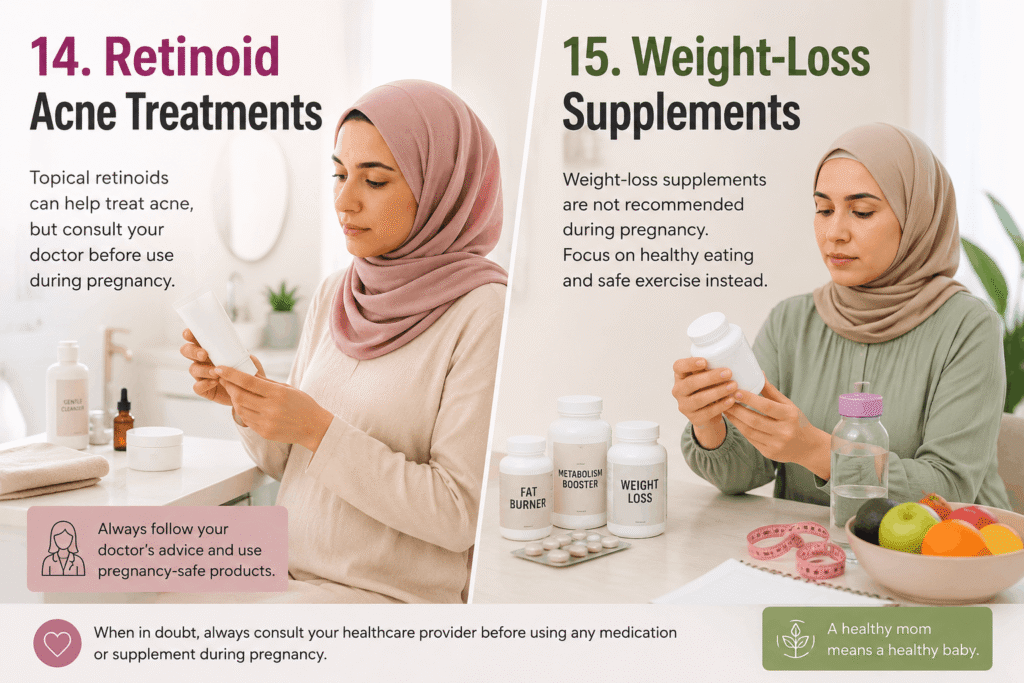
15. Weight-Loss Supplements
Pregnancy is not the time to use weight-loss supplements unless specifically recommended by a healthcare provider for a unique medical reason.
Many weight-loss products contain:
- Stimulants
- Herbal extracts
- Appetite suppressants
- Ingredients with limited pregnancy safety data
Why This Matters
During pregnancy, healthy weight gain supports fetal growth and development.
Research indicates that restrictive weight-loss practices may affect nutritional intake and overall pregnancy health.
Common Concerns
Some women worry about body changes during pregnancy. These concerns are understandable, especially during the second and third trimesters when weight gain becomes more noticeable.
However, pregnancy weight gain is a normal part of supporting a growing baby.
Safer Alternative
Focus on:
- Balanced nutrition
- Prenatal care
- Gentle physical activity approved by your healthcare provider
- Healthy lifestyle habits
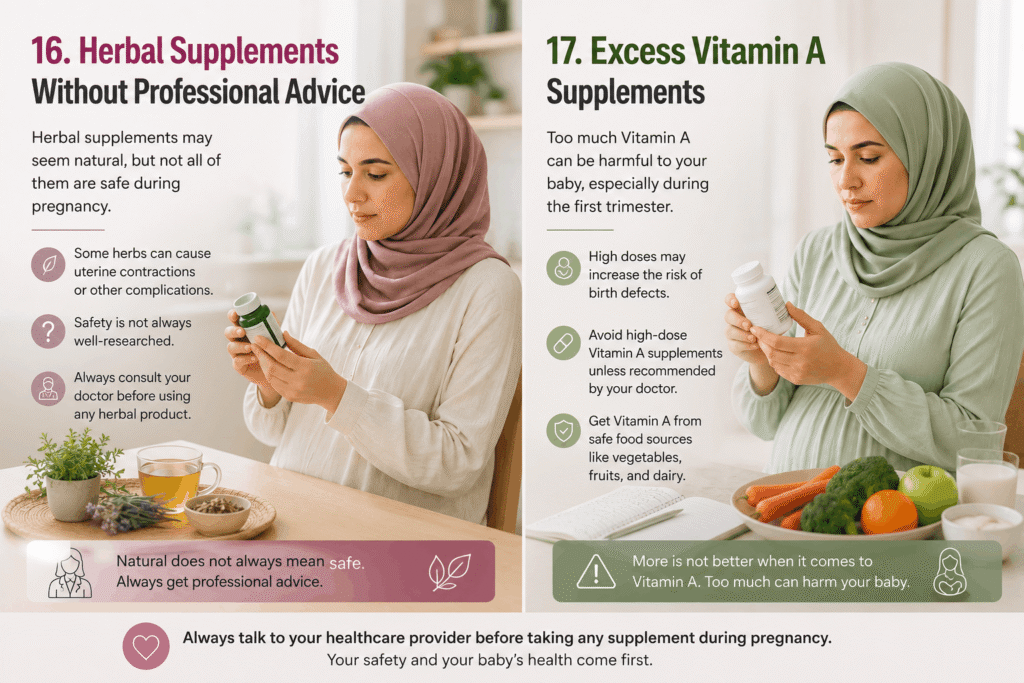
16. Herbal Supplements Without Professional Advice
Many people assume that “natural” means safe. Unfortunately, this is not always true during pregnancy.
Why This Matters
Research on herbal supplements during pregnancy is often limited.
Some products may:
- Affect hormone levels
- Interact with medications
- Contain ingredients not listed on the label
- Lack adequate pregnancy safety studies
Examples of commonly used herbal products include:
- Herbal teas
- Herbal capsules
- Concentrated plant extracts
- Traditional remedies
Common Mistakes
- Taking herbal products without discussing them with a healthcare provider
- Using supplements based on internet recommendations
- Assuming natural products are risk-free
Safer Alternative
Before starting any herbal supplement, discuss it with your healthcare provider or pharmacist.
Some women may require modified exercise routines depending on medical conditions and situations in which pregnancy becomes difficult for women.
17. Excess Vitamin A Supplements
Vitamin A is an important nutrient, but more is not always better.
Why This Matters
Vitamin A supports:
- Vision
- Immune function
- Cell growth
However, excessive amounts from supplements may be harmful during pregnancy.
Studies have found that very high levels of vitamin A from certain supplements may increase developmental risks.
Common Sources
- High-dose supplements
- Certain liver products
- Some specialty wellness products
Practical Tip
Always check the ingredient label before taking a new supplement.
Safer Alternative
Take prenatal vitamins recommended by your healthcare provider rather than combining multiple vitamin products without guidance.
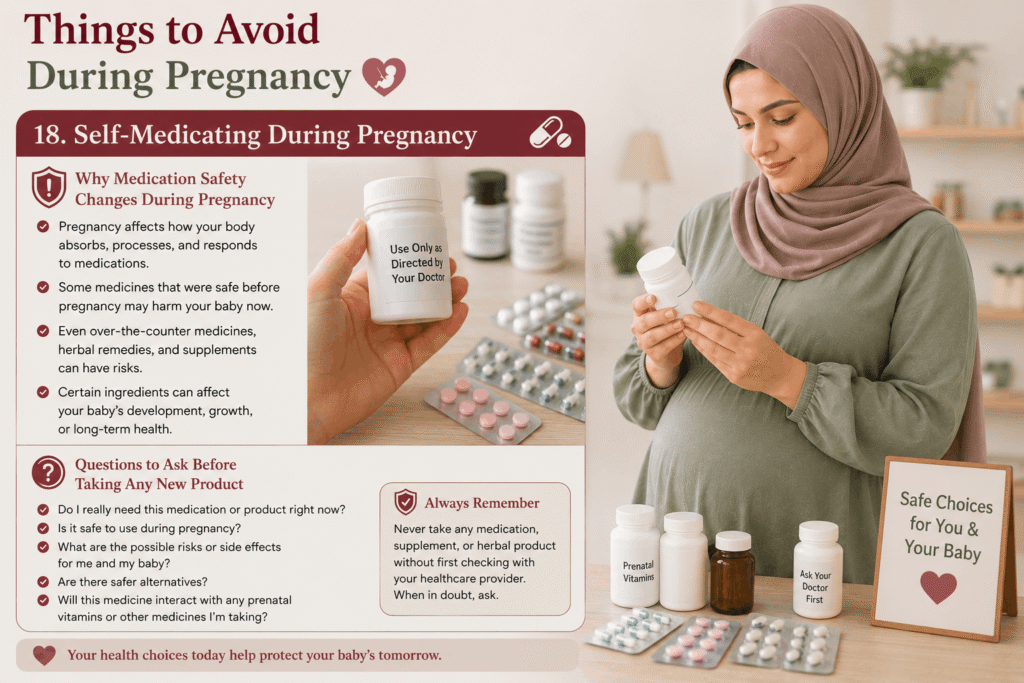
18. Self-Medicating During Pregnancy
Self-medicating refers to taking medications, supplements, or remedies without professional medical guidance.
Why This Matters
Pregnancy symptoms such as:
- Nausea
- Heartburn
- Constipation
- Back pain
- Sleep difficulties
- Headaches
may tempt women to reach for familiar products.
However, pregnancy can change medication safety considerations significantly.
Common Mistakes
- Taking leftover prescriptions
- Using online advice instead of professional guidance
- Borrowing medications from family members
- Combining multiple supplements
Safer Alternative
Whenever possible:
- Speak with your healthcare provider.
- Consult your pharmacist.
- Verify ingredients before use.
- Keep an updated list of medications and supplements.
Alongside exercise, women should also learn how to perform breast self-examination during pregnancy as part of routine prenatal health awareness.
Why Medication Safety Changes During Pregnancy
Pregnancy affects how medications move through the body.
Changes occur in:
- Blood volume
- Kidney function
- Hormone levels
- Metabolism
In addition, some substances may cross the placenta and reach the developing baby.
Research suggests that medication safety can vary based on:
| Factor | Why It Matters |
|---|---|
| Pregnancy stage | Risks may differ by trimester |
| Dosage | Higher doses may carry greater concerns |
| Frequency | Repeated exposure may matter |
| Medical history | Individual factors affect recommendations |
This is one reason healthcare providers carefully evaluate medications during pregnancy rather than applying a one-size-fits-all approach.
Questions to Ask Before Taking Any New Product
Before using any medication, supplement, herbal remedy, or wellness product, consider asking:
- Is this considered appropriate during pregnancy?
- Has it been studied during pregnancy?
- Are there safer alternatives available?
- Could it interact with other medications?
- Does the benefit outweigh potential risks?
- Is the dosage appropriate?
- Should I avoid it during a specific trimester?
Quick Tip
Keep a list of all medications, vitamins, and supplements you use and bring it to prenatal appointments.
Lifestyle Habits to Avoid During Pregnancy
Daily habits can have a meaningful impact on pregnancy health. While no one can make perfect choices every day, evidence-based lifestyle habits can support both maternal well-being and fetal development.
The goal is not perfection. It is making informed decisions whenever possible.
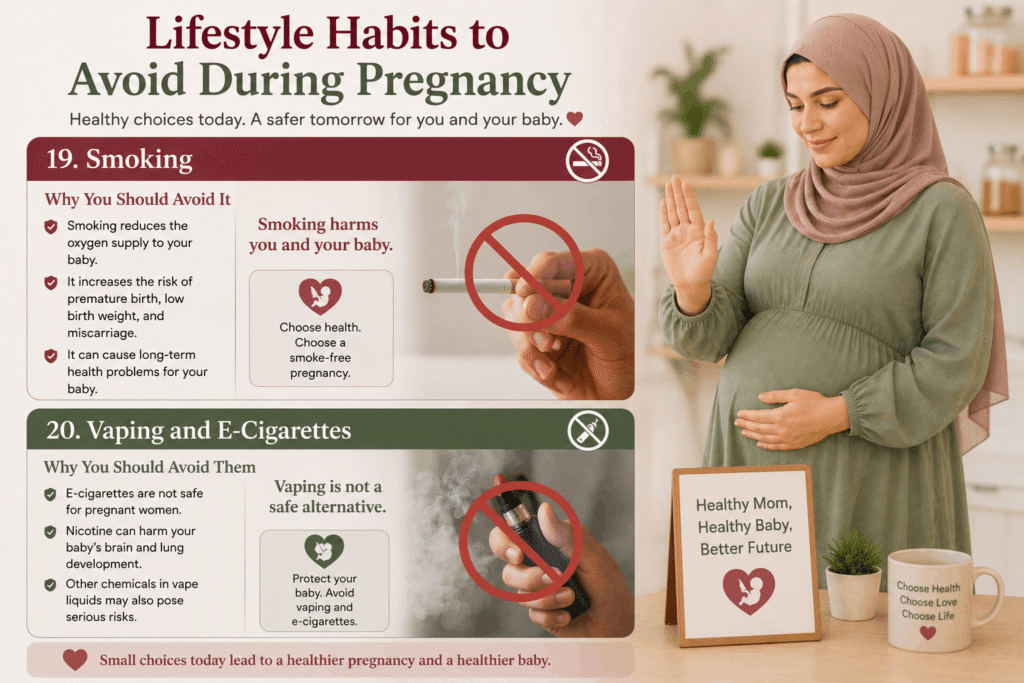
19. Smoking
Smoking remains one of the most well-established pregnancy risk factors.
Why This Matters
According to WHO, CDC, and ACOG, smoking exposes both mother and baby to harmful chemicals.
Research indicates that smoking during pregnancy may affect:
- Oxygen delivery
- Fetal growth
- Placental function
Common Concerns
Many women struggle with quitting because nicotine dependence can be challenging.
If quitting feels difficult, remember that support is available through healthcare providers, smoking cessation programs, and counseling services.
Safer Alternative
Work with a healthcare professional to develop a personalized quitting plan.
Pregnancy is part of a woman’s lifelong reproductive health journey. Before pregnancy, maintaining regular menstrual health is equally important. Learn more in our guide on How to Maintain Menstrual Health Step by Step.
20. Vaping and E-Cigarettes
Some people assume vaping is harmless during pregnancy. Current evidence does not support this assumption.
Why This Matters
Many vaping products contain:
- Nicotine
- Flavoring chemicals
- Aerosol particles
- Other substances with limited pregnancy research
According to health authorities, vaping products should not be considered risk-free during pregnancy.
Common Mistake
Switching from smoking to vaping without discussing options with a healthcare provider.
Safer Alternative
Seek professional support for nicotine cessation rather than replacing one nicotine source with another.
21. Recreational Drug Use
Recreational drugs can affect both maternal and fetal health.
Why This Matters
Research suggests that substance exposure during pregnancy may influence fetal development and pregnancy outcomes.
Potential concerns vary depending on:
- Type of substance
- Frequency of use
- Amount used
- Stage of pregnancy
Important Note
If you are pregnant and struggling with substance use, seeking help is a positive step. Healthcare professionals can provide support without judgment.
Safer Alternative
Discuss concerns openly with your healthcare provider to access appropriate support services.
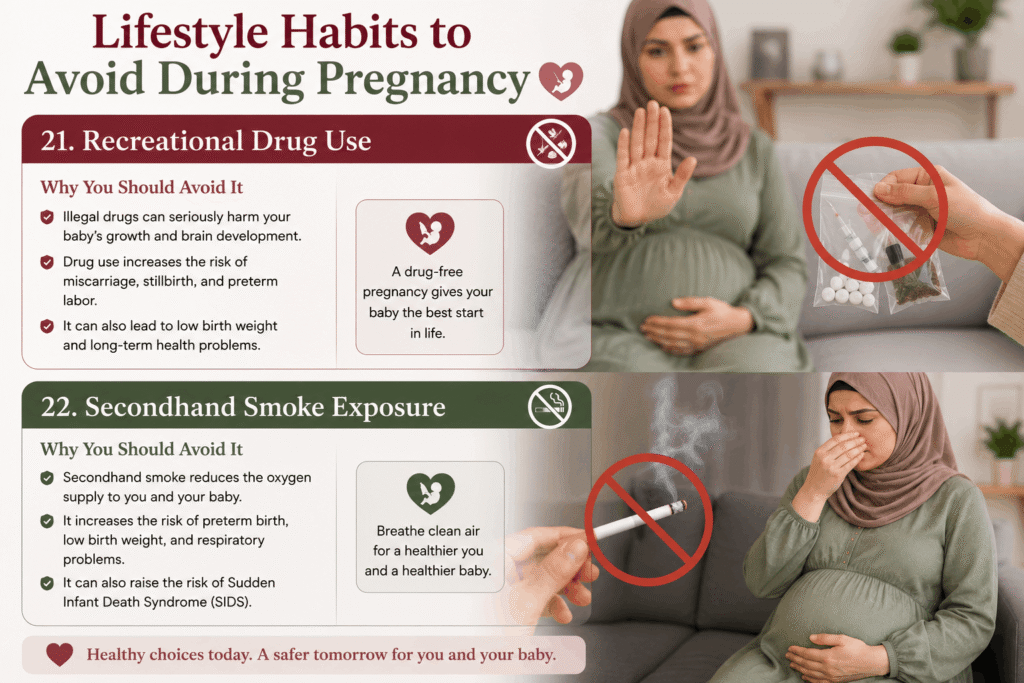
22. Secondhand Smoke Exposure
Even if a pregnant woman does not smoke, secondhand smoke may still be a concern.
Why This Matters
Secondhand smoke contains many of the same harmful chemicals found in cigarette smoke.
Research indicates that regular exposure may affect pregnancy health.
Practical Tips
- Ask household members not to smoke indoors.
- Avoid smoking areas when possible.
- Improve indoor ventilation.
- Discuss smoke-free policies with family members.
Safer Alternative
Create smoke-free environments at home, work, and social gatherings whenever possible.
23. Extreme Dieting
Pregnancy increases nutritional needs, making extreme dieting especially risky.
Why This Matters
A developing baby requires:
- Protein
- Healthy fats
- Vitamins
- Minerals
- Adequate calories
Restrictive diets may make it harder to meet these needs.
Common Concerns
Body image concerns are common during pregnancy. Weight gain can feel uncomfortable emotionally, even when it is medically appropriate.
Safer Alternative
Focus on:
- Nutrient-dense foods
- Balanced meals
- Appropriate weight gain guidance
- Prenatal nutrition support
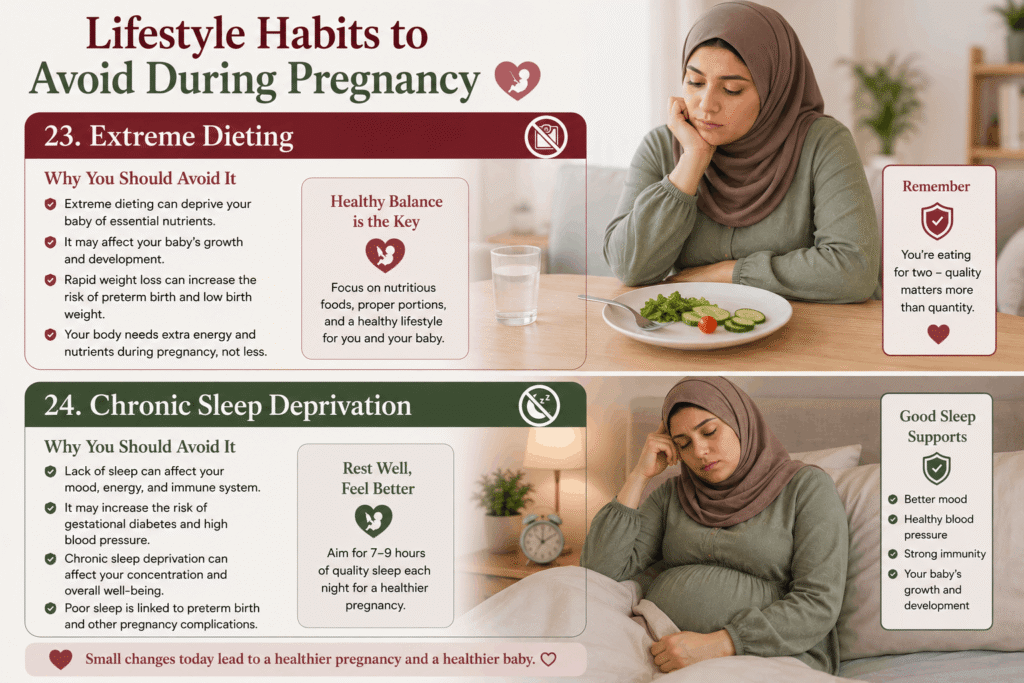
24. Chronic Sleep Deprivation
Sleep challenges are common during pregnancy.
Many women experience:
- Frequent urination
- Heartburn
- Back pain
- Anxiety
- Difficulty finding a comfortable sleeping position
Why This Matters
Research suggests that chronic sleep deprivation may affect overall health and well-being during pregnancy.
Poor sleep may contribute to:
- Fatigue
- Mood changes
- Reduced energy levels
- Increased stress
Practical Sleep Tips
- Establish a bedtime routine.
- Limit screen time before bed.
- Use pregnancy pillows for support.
- Stay physically active during the day when appropriate.
Safer Alternative
Prioritize consistent sleep habits and discuss ongoing sleep difficulties with your healthcare provider.
Research on Lifestyle Habits and Pregnancy Outcomes
Research consistently shows that healthy lifestyle habits can support better pregnancy outcomes.
Studies have found benefits associated with:
- Not smoking
- Avoiding substance use
- Eating a balanced diet
- Getting adequate sleep
- Attending prenatal appointments
- Managing stress effectively
According to ACOG, healthy pregnancies often benefit from a combination of good nutrition, appropriate physical activity, and regular prenatal care.
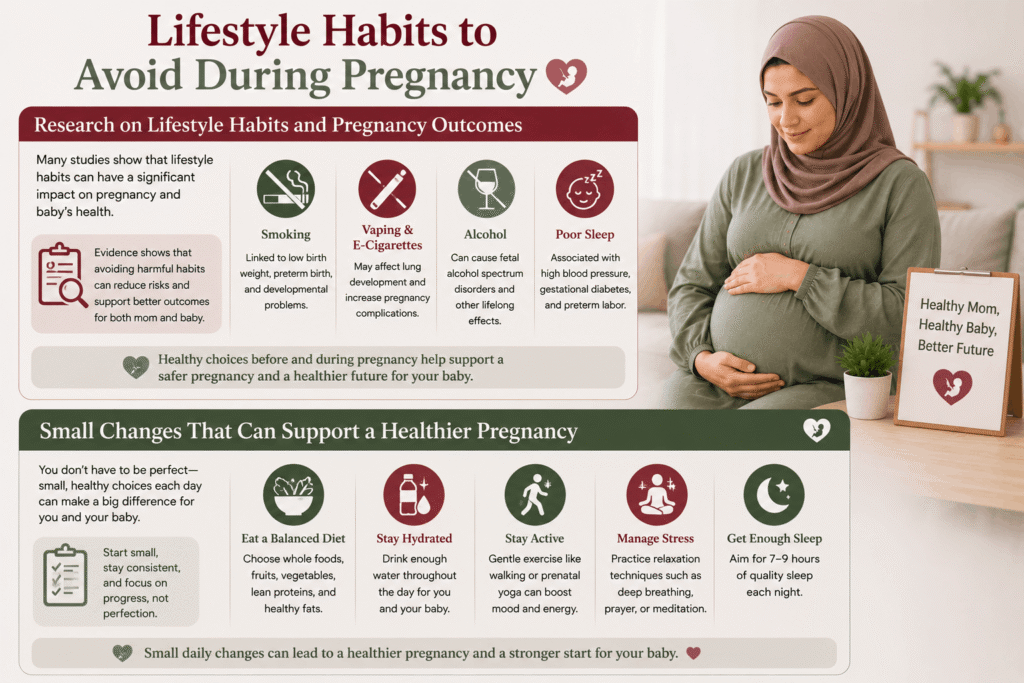
Small Changes That Can Support a Healthier Pregnancy
Healthy pregnancy habits do not require perfection.
Small steps can make a meaningful difference:
- Drink more water each day.
- Eat balanced meals.
- Prioritize sleep.
- Attend scheduled prenatal visits.
- Take prenatal vitamins as recommended.
- Seek support when feeling overwhelmed.
- Stay physically active if medically appropriate.
Activities to Avoid During Pregnancy
Staying active during pregnancy is often encouraged, but not every activity is appropriate for every stage of pregnancy. According to ACOG, most women with healthy pregnancies can safely participate in moderate physical activity. However, some activities carry a higher risk of falls, injury, abdominal trauma, or pressure-related complications.
As pregnancy progresses, your center of gravity shifts, joints become more flexible due to hormonal changes, and balance may become less stable. These normal changes can increase the risk of accidents during certain activities.
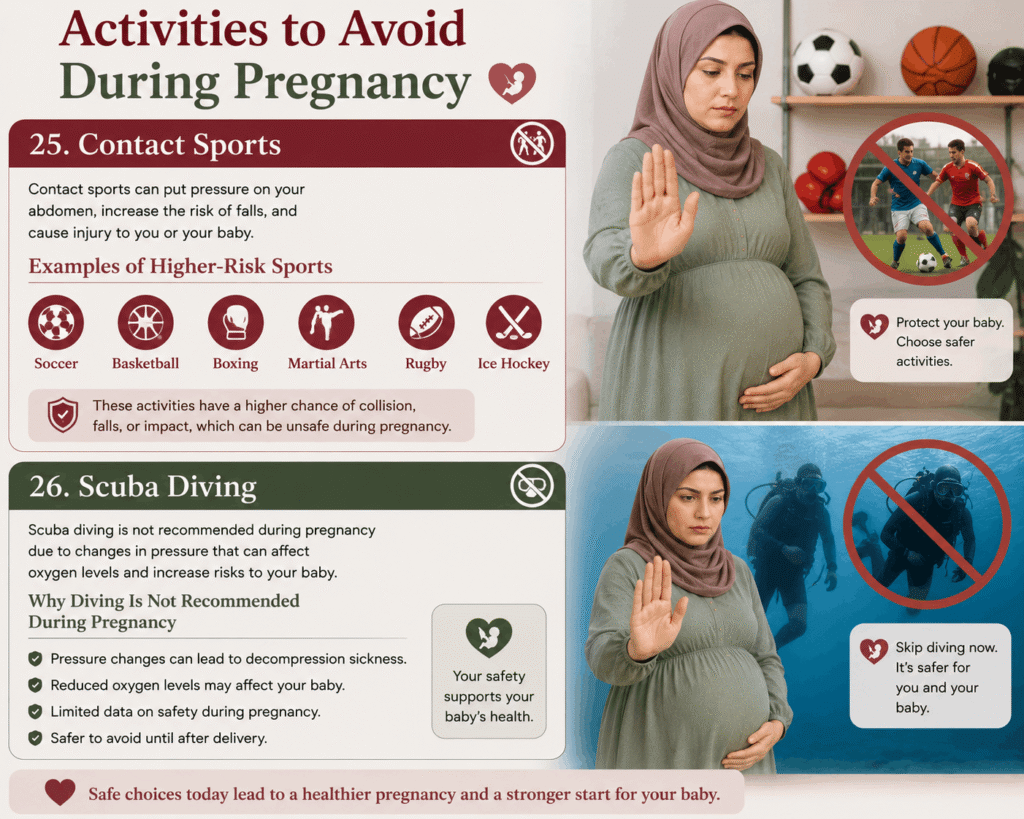
25. Contact Sports
Contact sports involve physical collisions with other players, equipment, or surfaces. During pregnancy, these impacts may increase the risk of injury to both mother and baby.
Why Contact Sports May Be Risky
Research suggests that direct blows to the abdomen can increase the risk of complications. While the baby is protected by the uterus and amniotic fluid, significant trauma can still be concerning.
Additionally, pregnancy-related changes in balance and coordination may make injuries more likely.
Examples of Higher-Risk Sports
Examples include:
- Boxing
- Kickboxing
- Martial arts
- Rugby
- Ice hockey
- American football
- Wrestling
These activities may involve:
- Falls
- Direct physical contact
- High-speed collisions
- Sudden impacts
Safer Alternatives
Many pregnant women can continue lower-impact activities such as:
- Walking
- Swimming
- Prenatal yoga
- Stationary cycling
- Prenatal fitness classes
Always discuss exercise plans with your healthcare provider if you have concerns.
If your healthcare provider approves, gentle movement from our pregnancy exercise guide for beginners may help support overall well-being.
26. Scuba Diving
Scuba diving is generally not recommended during pregnancy.
Why Diving Is Not Recommended During Pregnancy
According to organizations including ACOG and diving medicine experts, pressure changes that occur during scuba diving may pose risks to a developing baby.
Unlike adults, a fetus cannot safely manage dissolved gases in the same way. Researchers have raised concerns about the possibility of decompression-related complications.
Potential concerns include:
- Pressure changes
- Reduced oxygen availability
- Decompression sickness risks
Although research in this area is limited, experts generally recommend avoiding scuba diving throughout pregnancy.
Safer Alternatives
If you enjoy water activities, consider:
- Swimming
- Water aerobics
- Gentle aquatic exercise classes
These options provide many benefits without exposure to underwater pressure changes.
27. Horseback Riding
Horseback riding may become riskier during pregnancy because of the possibility of falls.
Why Horseback Riding Can Be Concerning
Even experienced riders can fall unexpectedly.
Pregnancy may affect:
- Balance
- Reaction time
- Coordination
- Joint stability
A fall from a horse can lead to significant injury regardless of the stage of pregnancy.
Trimester Considerations
First Trimester: The uterus remains protected within the pelvis, but falls can still result in injury.
Second Trimester: Changes in posture and balance become more noticeable.
Third Trimester: The growing abdomen may further affect stability and increase the likelihood of losing balance.
Safer Alternatives
Consider:
- Walking outdoors
- Swimming
- Prenatal stretching
- Low-impact fitness classes
These activities can help maintain fitness while reducing injury risk.
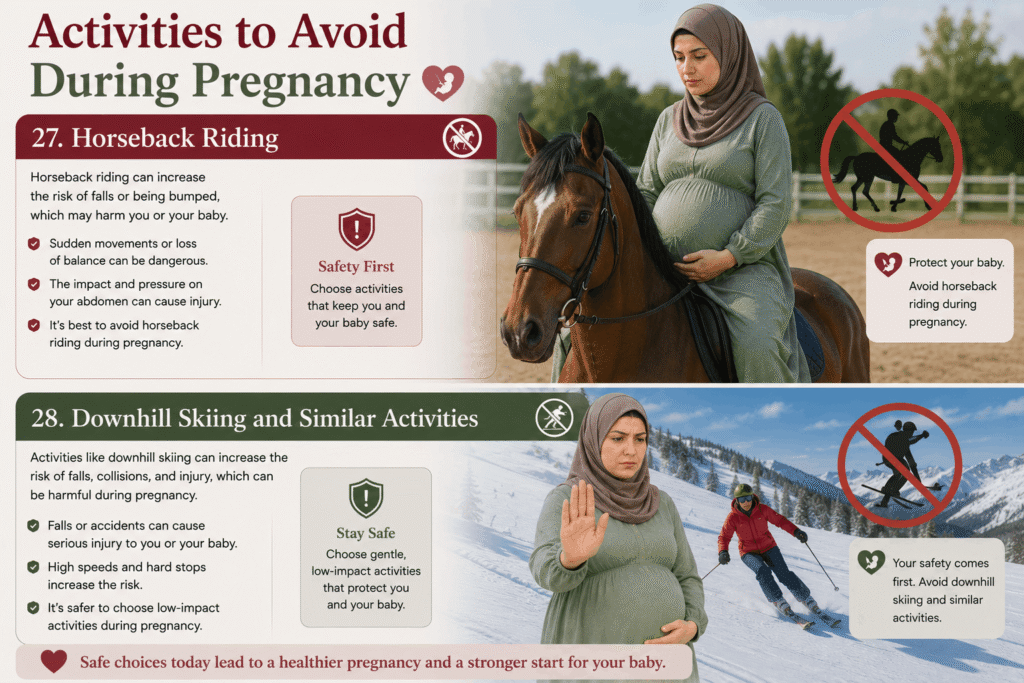
28. Downhill Skiing and Similar Activities
Many winter sports involve speed, uneven terrain, and fall risks.
Why These Activities May Be Risky
Activities such as:
- Downhill skiing
- Snowboarding
- Water skiing
- Mountain biking on difficult trails
can increase the likelihood of:
- Falls
- Collisions
- Sudden impacts
As pregnancy progresses, changes in balance may make these activities more difficult.
Common Concerns
Some women who regularly participate in winter sports wonder whether experience eliminates risk. While skill level can reduce some dangers, it cannot completely prevent unexpected falls or collisions.
Safer Alternatives
Try:
- Walking
- Indoor cycling
- Prenatal yoga
- Swimming
- Low-impact strength training approved by your healthcare provider
29. Heavy Lifting Without Proper Guidance
Many women continue working, caring for children, and performing household tasks throughout pregnancy. However, heavy lifting may require additional caution.
Why Heavy Lifting Matters
Pregnancy places additional strain on:
- Back muscles
- Pelvic floor muscles
- Joints
- Ligaments
Hormonal changes make connective tissues more flexible, which can increase injury risk.
Potential Concerns
Heavy lifting may contribute to:
- Back pain
- Muscle strain
- Pelvic discomfort
- Increased fatigue
Women already experiencing pregnancy-related back pain may find lifting particularly uncomfortable.
Practical Safety Tips
If lifting is necessary:
- Bend your knees instead of bending from your waist.
- Keep objects close to your body.
- Avoid twisting while lifting.
- Ask for assistance when possible.
- Follow workplace safety guidelines.
Safer Alternative
Use supportive equipment or seek help with heavy objects whenever possible.
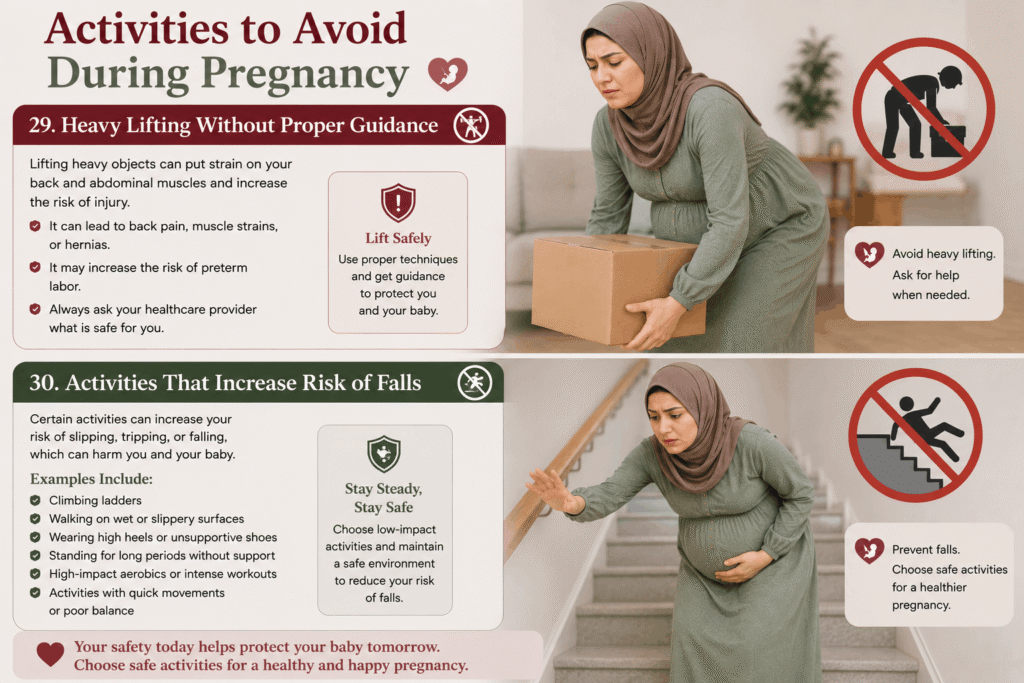
30. Activities That Increase Risk of Falls
Fall risk becomes increasingly important as pregnancy progresses.
Why Falls May Be More Common During Pregnancy
Several factors can affect balance:
- Weight distribution changes
- Joint looseness
- Fatigue
- Swelling
- Dizziness
- Lower back discomfort
These changes are common and often become more noticeable during the second and third trimesters.
Activities With Higher Fall Risk
Examples include:
- Rock climbing
- Gymnastics
- Skateboarding
- Rollerblading
- Surfing
- Trampoline use
Practical Safety Tips
- Wear supportive footwear.
- Use handrails when available.
- Avoid slippery surfaces.
- Move carefully when standing up quickly.
- Stay hydrated.
Safer Alternative
Choose activities that allow stable footing and controlled movement.
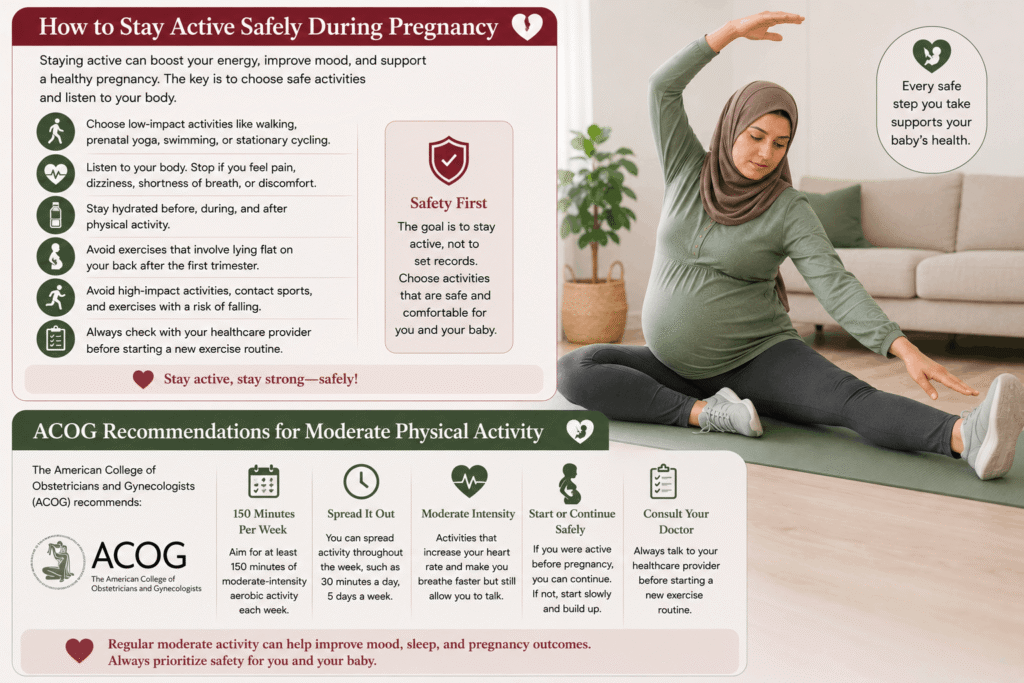
How to Stay Active Safely During Pregnancy
Many women worry that exercise may be harmful during pregnancy. In reality, evidence suggests that appropriate physical activity offers numerous benefits for many healthy pregnancies.
Research has found that regular activity may help support:
- Energy levels
- Sleep quality
- Mood
- Cardiovascular health
- Healthy weight management
Safe Exercise Tips
- Begin with gentle activities if you haven’t exercised regularly before.
- Stay hydrated.
- Avoid overheating.
- Wear supportive clothing.
- Listen to your body.
- Stop and seek medical advice if unusual symptoms occur.
Pregnancy-Friendly Activities
- Walking
- Swimming
- Prenatal yoga
- Water aerobics
- Stationary cycling
- Low-impact strength training
ACOG Recommendations for Moderate Physical Activity
According to ACOG, most women with uncomplicated pregnancies can safely engage in moderate-intensity physical activity.
Examples of moderate activity may include:
- Brisk walking
- Swimming
- Prenatal fitness programs
- Cycling on a stationary bike
Moderate activity generally allows you to carry on a conversation while exercising.
Environmental Exposures to Avoid
Environmental exposures are often overlooked during pregnancy. While many everyday environments are safe, certain chemicals, toxins, and biological agents may require additional precautions.
The goal is not to create fear about everyday life but to understand practical ways to reduce avoidable risks.
31. Hot Tubs and Saunas
Many people enjoy hot tubs and saunas for relaxation, but pregnancy makes it harder for the body to control its temperature.
Why This Matters
Pregnant women may become overheated more easily than usual.
Excessive body temperature increases can be concerning, particularly during early pregnancy.
Concerns About Overheating
Research suggests that prolonged exposure to high temperatures may increase certain risks during pregnancy.
Factors that may contribute to overheating include:
- Hot tubs
- Saunas
- Steam rooms
- Extremely hot baths
Practical Safety Tips
- Choose warm rather than very hot baths.
- Limit exposure to high-heat environments.
- Drink plenty of water.
- Leave immediately if feeling dizzy or overheated.
Safer Alternative
Consider relaxation methods such as:
- Warm showers
- Gentle stretching
- Prenatal massage approved by your healthcare provider
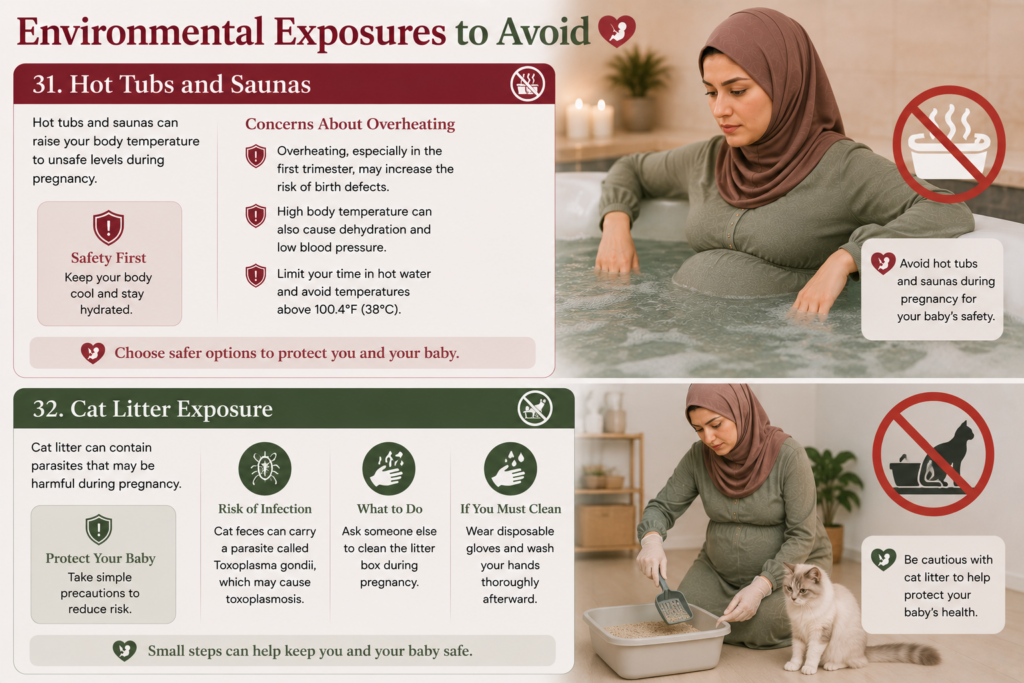
32. Cat Litter Exposure
Cat ownership itself is not usually a problem during pregnancy. The concern relates to handling cat litter.
Understanding Toxoplasmosis Risks
Toxoplasmosis is an infection caused by a parasite that can sometimes be found in cat feces.
Although many people never experience symptoms, infection during pregnancy can be concerning.
Practical Safety Tips
- Ask someone else to clean the litter box when possible.
- Wear disposable gloves if cleaning is necessary.
- Wash hands thoroughly afterward.
- Clean litter boxes daily.
Common Myth
Many people believe they must give away their cat during pregnancy. This is not supported by evidence. Simple precautions can significantly reduce risk.
Safer Alternative
Delegate litter box duties to another household member whenever possible.
33. Lead Exposure
Lead exposure remains an important public health concern in some areas.
Why Lead Matters
According to public health authorities, lead exposure may affect both maternal and fetal health.
Lead can sometimes be found in:
- Older homes
- Certain plumbing systems
- Old paint
- Some imported products
Common Sources of Lead
Potential sources include:
- Paint in homes built before modern regulations
- Renovation dust
- Certain ceramics
- Some imported cosmetics
- Contaminated soil
Practical Safety Tips
- Avoid sanding old paint yourself.
- Use certified professionals for renovation projects.
- Discuss concerns with your healthcare provider.
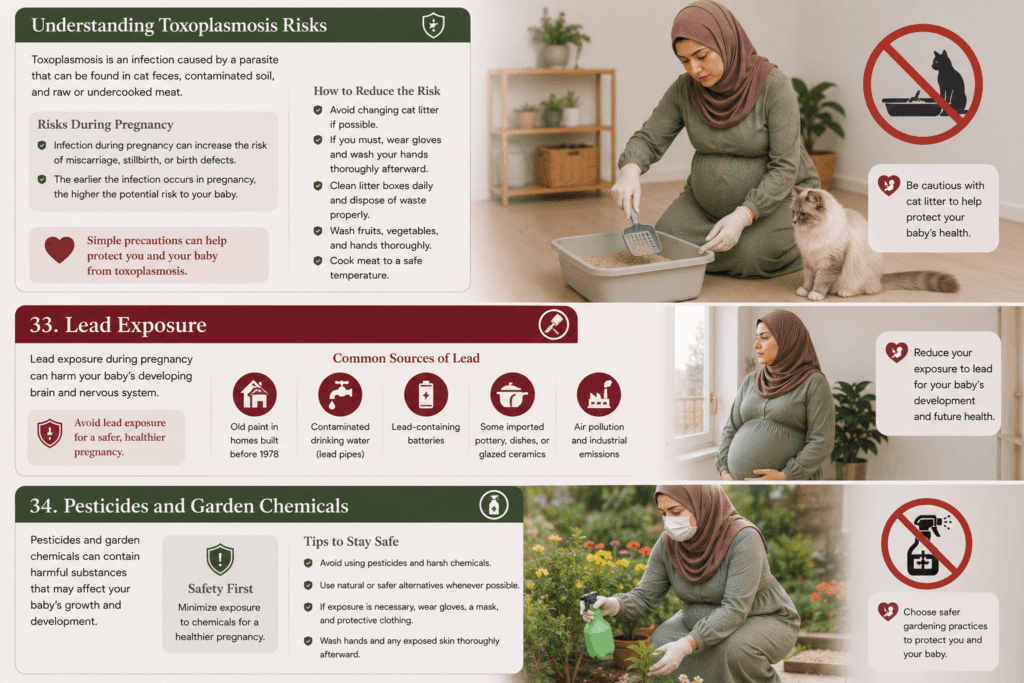
34. Pesticides and Garden Chemicals
Many households use pesticides to control insects, weeds, and garden pests.
Why This Matters
Research on pesticide exposure continues to evolve, but experts generally recommend limiting unnecessary exposure during pregnancy whenever possible.
Potential Sources
- Lawn treatments
- Garden pesticides
- Indoor insect sprays
- Weed-control products
Safer Alternatives During Pregnancy
Consider:
- Physical pest barriers
- Traps
- Natural pest-control methods
- Professional services that follow safety guidelines
Practical Tip
Avoid direct contact with recently treated areas until products have dried or according to manufacturer instructions.
35. Strong Cleaning Chemicals and Solvents
Cleaning products help maintain a healthy home environment, but some products contain strong chemicals that require careful handling.
Why This Matters
Certain products may release fumes that can irritate:
- Eyes
- Nose
- Throat
- Lungs
Pregnancy may increase sensitivity to odors, especially during the first trimester when nausea and morning sickness are common.
Examples of Products Requiring Extra Caution
- Paint thinners
- Industrial solvents
- Strong degreasers
- Certain renovation chemicals
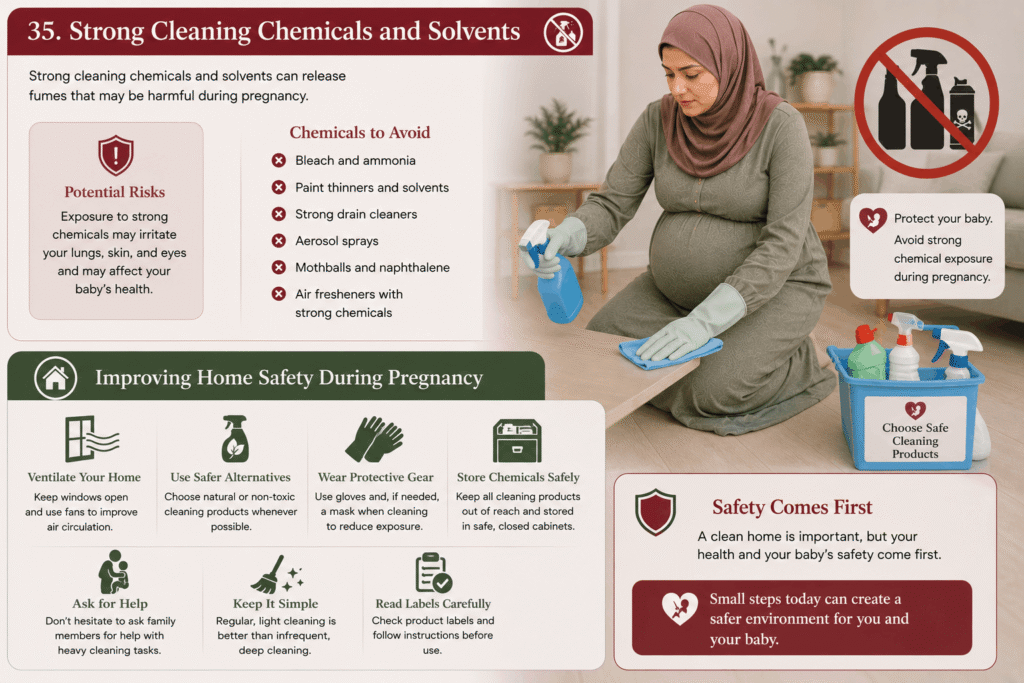
Improving Home Safety During Pregnancy
Simple precautions include:
- Open windows during cleaning.
- Wear gloves when appropriate.
- Follow product instructions.
- Avoid mixing cleaning products.
- Take breaks if strong odors trigger nausea.
Safer Alternative
Choose milder cleaning products and ensure good ventilation whenever cleaning or renovating.
Common Pregnancy Myths About Things to Avoid
Pregnancy often comes with a flood of advice from family, friends, social media, and online forums. While some recommendations are based on strong scientific evidence, others are outdated myths that can create unnecessary stress.
Understanding the difference between evidence-based guidance and common misconceptions can help you make informed decisions throughout pregnancy.
Myth: Exercise Is Unsafe During Pregnancy
One of the most common pregnancy myths is that women should avoid exercise to protect their baby.
What Many People Believe
Some people worry that physical activity may:
- Increase the risk of miscarriage
- Harm the baby
- Cause preterm labor
- Lead to pregnancy complications
These concerns are understandable, especially during the first trimester when many women feel protective of their pregnancy.
What Research Shows
According to ACOG, most women with healthy pregnancies can safely participate in moderate physical activity throughout pregnancy.
Research suggests that appropriate exercise may help support:
- Cardiovascular health
- Healthy weight management
- Better sleep
- Reduced back pain
- Improved mood
- Increased energy levels
Important Exceptions
Certain medical conditions or pregnancy complications may require activity modifications. This is why individualized medical advice remains important.
Safer Alternative
Instead of avoiding exercise completely, many women benefit from:
- Walking
- Swimming
- Prenatal yoga
- Stationary cycling
- Low-impact strength training
Quick Takeaway
For most healthy pregnancies, exercise is not something to fear. The goal is choosing safe, moderate activities that fit your health needs.
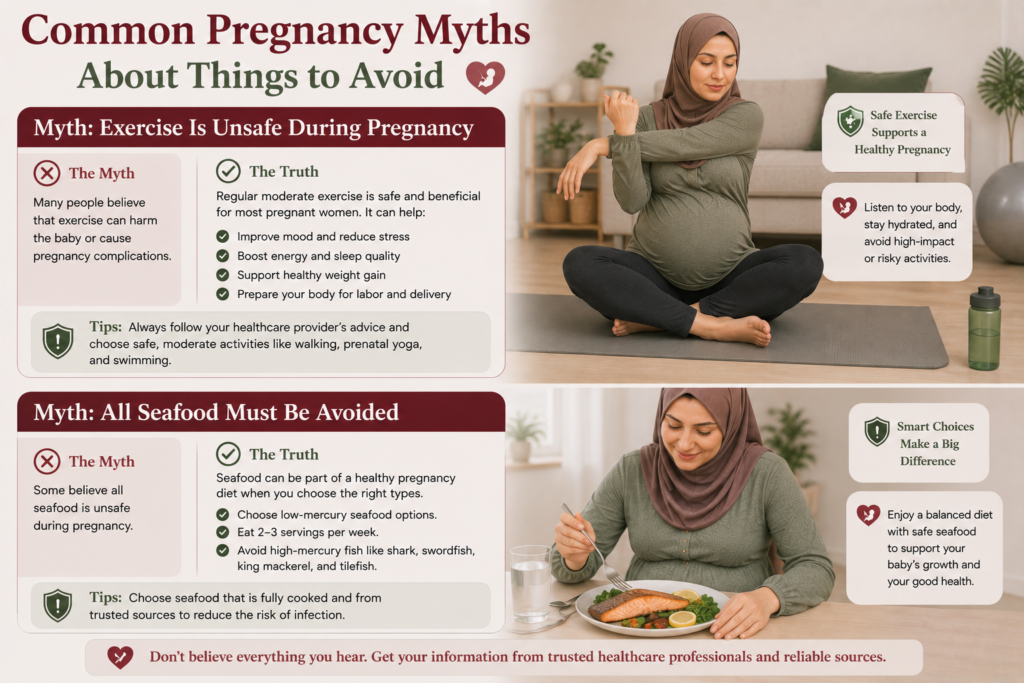
Myth: All Seafood Must Be Avoided
Many pregnant women stop eating seafood entirely because they worry about mercury exposure.
What Many People Believe
A common misconception is that every type of fish is unsafe during pregnancy.
What Research Shows
Studies have found that many types of seafood provide important nutrients during pregnancy, including:
- Protein
- Iodine
- Omega-3 fatty acids
- Vitamin D
According to public health guidelines in the United States, Canada, the United Kingdom, and Europe, low-mercury fish can be part of a healthy pregnancy diet.
Fish Commonly Recommended as Lower-Mercury Choices
Examples include:
- Salmon
- Sardines
- Trout
- Herring
- Pollock
- Cod
Fish Commonly Avoided Due to Higher Mercury Levels
Examples include:
- Shark
- Swordfish
- King mackerel
- Marlin
Quick Takeaway
The goal is not to avoid all seafood. Instead, focus on choosing lower-mercury options and following local dietary guidance.
Myth: Every Cup of Coffee Is Harmful
Coffee is often one of the first foods women question after learning they are pregnant.
What Many People Believe
Some people think even a small amount of caffeine can harm a pregnancy.
What Research Shows
According to ACOG, moderate caffeine intake is generally considered acceptable for many healthy pregnant women.
Research indicates that most guidelines recommend limiting caffeine rather than eliminating it completely.
Sources of Caffeine
Many women forget that caffeine is also found in:
- Tea
- Soda
- Energy drinks
- Chocolate
- Coffee-based beverages
Common Mistake
Only counting coffee while ignoring caffeine from other sources.
Safer Alternative
Consider:
- Decaffeinated coffee
- Reduced-caffeine beverages
- Herbal teas approved by your healthcare provider
Quick Takeaway
Moderation matters. The concern is excessive caffeine intake rather than an occasional cup of coffee.
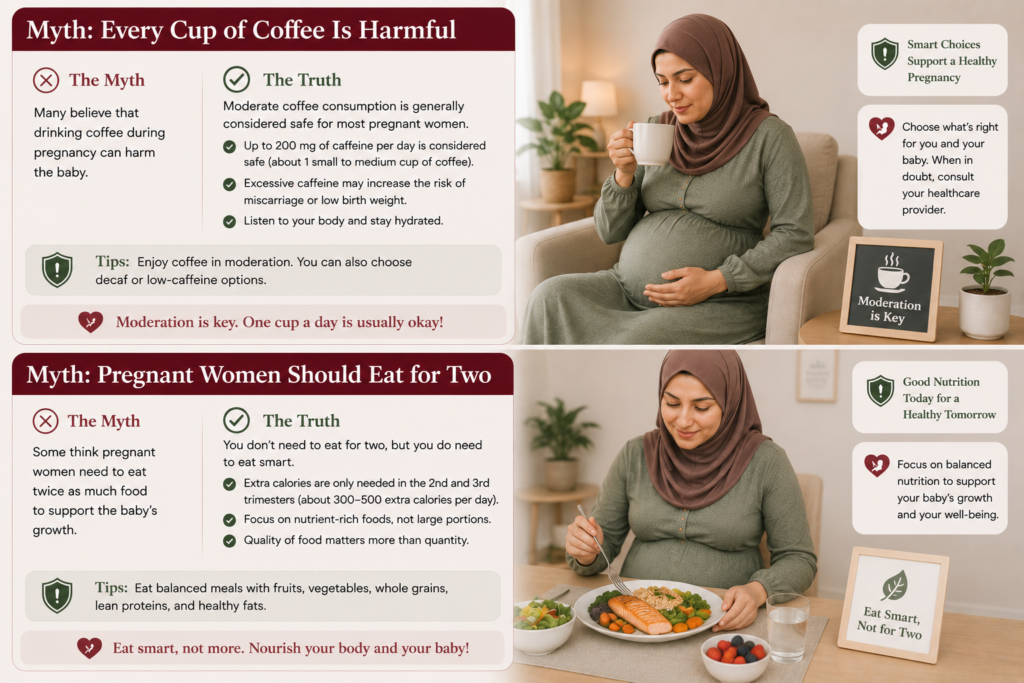
Myth: Pregnant Women Should Eat for Two
This myth has been repeated for generations.
What Many People Believe
Some people assume pregnancy means doubling food intake.
What Research Shows
Research suggests that pregnancy increases nutritional needs, but this does not mean eating twice as much food.
What matters most is:
- Nutrient quality
- Balanced meals
- Adequate protein
- Healthy fats
- Vitamins and minerals
Why This Myth Can Be Problematic
Eating far beyond nutritional needs may contribute to:
- Uncomfortable weight gain
- Digestive discomfort
- Heartburn
- Fatigue
Better Approach
Focus on:
- Nutrient-dense foods
- Fruits and vegetables
- Whole grains
- Lean protein sources
- Healthy snacks
Quick Takeaway
Pregnancy is about nourishing your body and your baby, not dramatically increasing food intake.
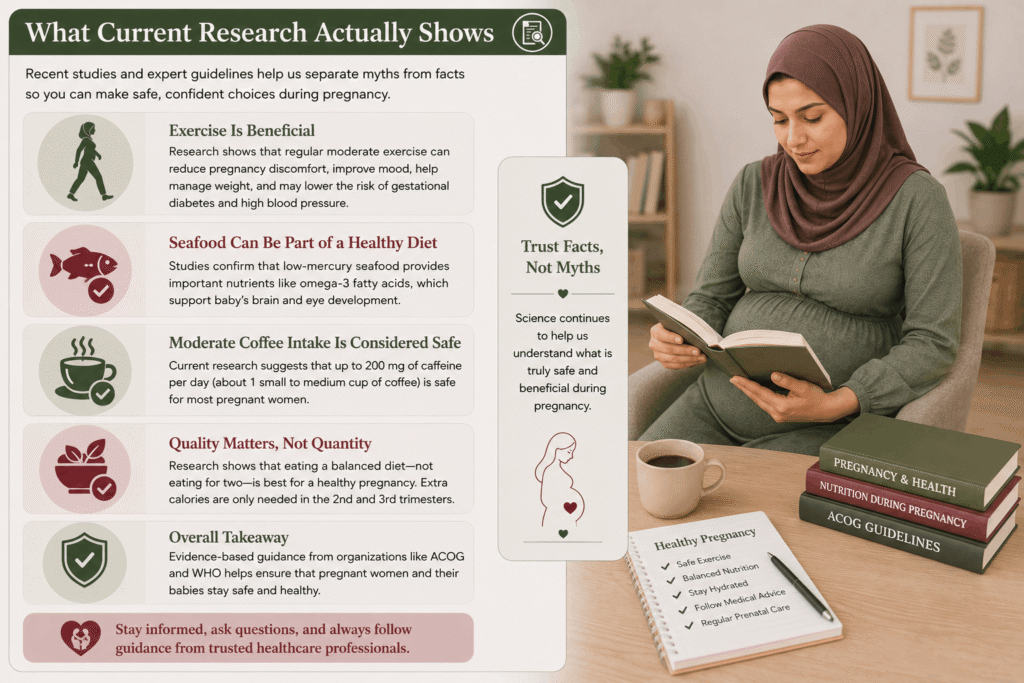
What Current Research Actually Shows
When examining pregnancy recommendations, researchers consistently emphasize balance rather than fear.
Leading healthcare organizations, including ACOG, the WHO, and the NHS, recommend these practices to help support a healthy pregnancy:
- A balanced diet
- Appropriate physical activity
- Good sleep habits
- Regular prenatal care
- Avoidance of known risks
Evidence-Based Pregnancy Safety Principles
| Myth | Research-Based Reality |
|---|---|
| Exercise is dangerous | Moderate exercise is often encouraged |
| All seafood is unsafe | Low-mercury fish can be beneficial |
| Any caffeine is harmful | Moderate intake is often acceptable |
| Eat for two | Focus on nutrition quality, not quantity |
Things to Avoid During the First Trimester
During the first trimester, the baby undergoes significant growth and early development. Many women experience significant physical and emotional changes while adjusting to pregnancy.
It is also the stage when many questions about safety first arise.
Common Early Pregnancy Concerns
The first trimester often brings symptoms that can make everyday life more challenging.
Common concerns include:
- Morning sickness
- Fatigue
- Breast tenderness
- Food aversions
- Anxiety about miscarriage
- Emotional changes
Many women worry about accidentally doing something wrong before they even realize they are pregnant.
What Research Shows
Research indicates that most pregnancies are resilient. While certain precautions are important, occasional mistakes rarely mean something bad will happen.
Practical Tip
Focus on healthy habits moving forward rather than worrying about every past choice.
Food Safety Precautions
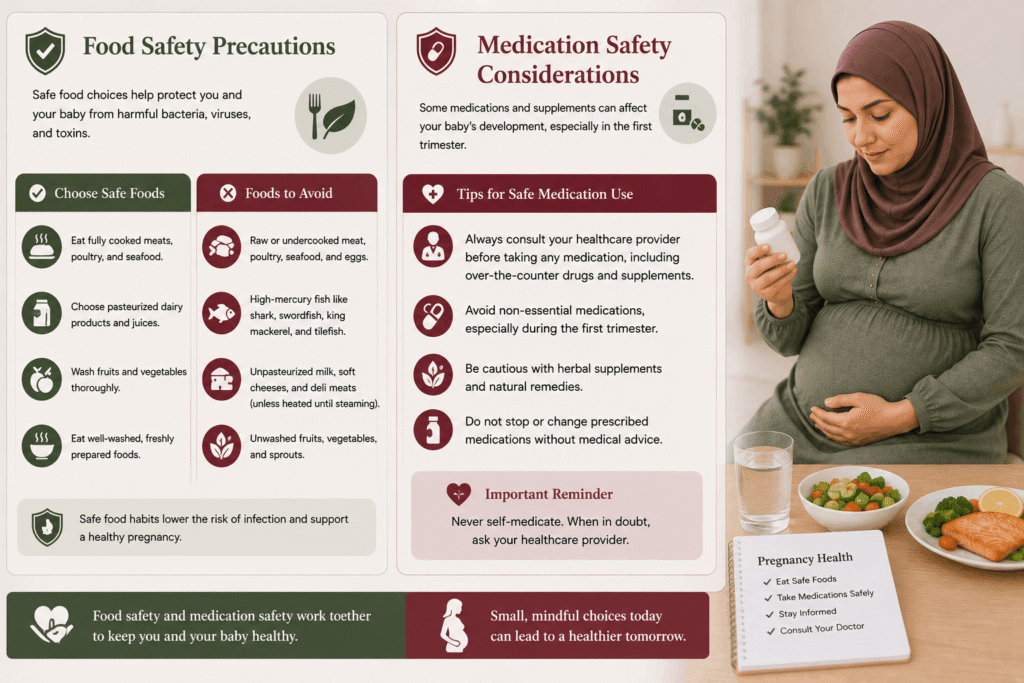
Food safety becomes especially important during early pregnancy.
Why It Matters
Pregnancy-related immune changes may increase vulnerability to certain foodborne illnesses.
Common precautions include avoiding:
- Raw fish
- Raw shellfish
- Undercooked meat
- Unpasteurized dairy products
- Raw eggs
Practical Food Safety Tips
- Wash produce thoroughly.
- Cook meats completely.
- Check food expiration dates.
- Store leftovers safely.
- Choose pasteurized dairy products.
Common Mistake
Assuming that healthy-looking food is automatically safe.
Medication Safety Considerations
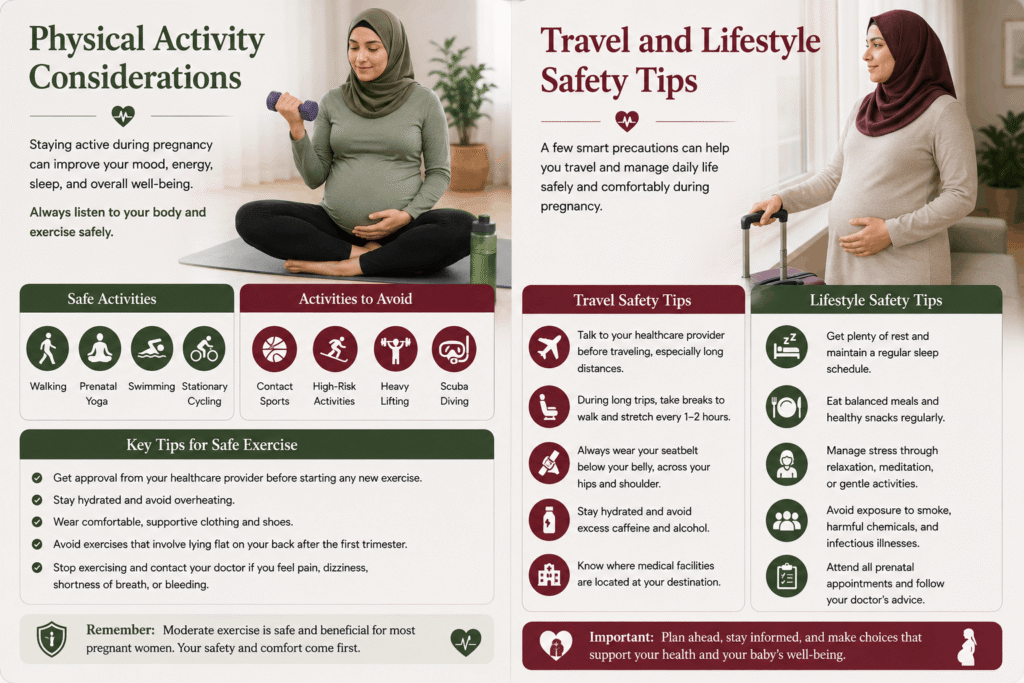
Many women discover they are pregnant while already taking medications or supplements.
Why This Matters
The first trimester is an important stage when the baby’s organs and body systems begin to develop.
Trusted medical organizations, including ACOG and the NHS, recommend discussing all medications with a healthcare professional early in pregnancy.
Common Questions
Women frequently ask:
- Can I still take my allergy medicine?
- What about headache medication?
- Are herbal supplements safe?
The answer varies depending on the specific product.
Practical Tip
Create a list of:
- Prescription medications
- Over-the-counter medications
- Vitamins
- Herbal supplements
Bring this list to your prenatal appointments.
Managing Morning Sickness Safely
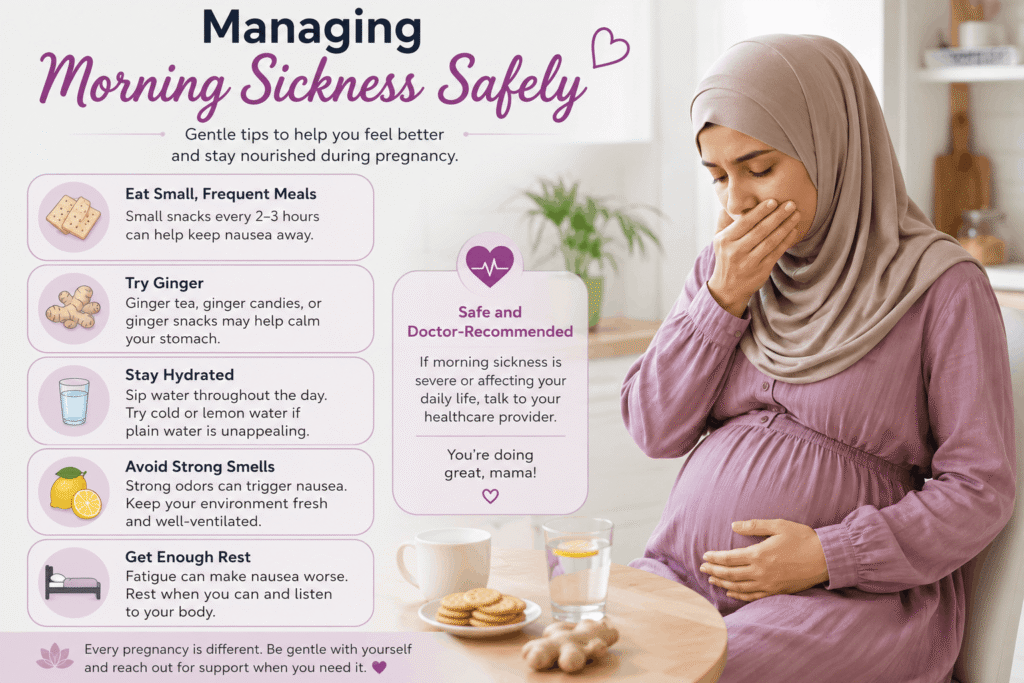
Morning sickness is one of the most common first-trimester symptoms.
Despite its name, it can occur at any time of day.
Common Symptoms
- Nausea
- Vomiting
- Food aversions
- Reduced appetite
Practical Strategies
Many women find relief by:
- Eating small meals more frequently
- Staying hydrated
- Keeping simple snacks nearby
- Avoiding strong food odors
- Resting when possible
When to Seek Medical Advice
Contact your healthcare provider if:
- You cannot keep fluids down.
- Symptoms become severe.
- Signs of dehydration develop.
Things to Avoid During the Second Trimester
Many women begin feeling more energetic during the second trimester. Morning sickness often improves, and daily activities may feel easier.
However, new physical changes create different safety considerations.
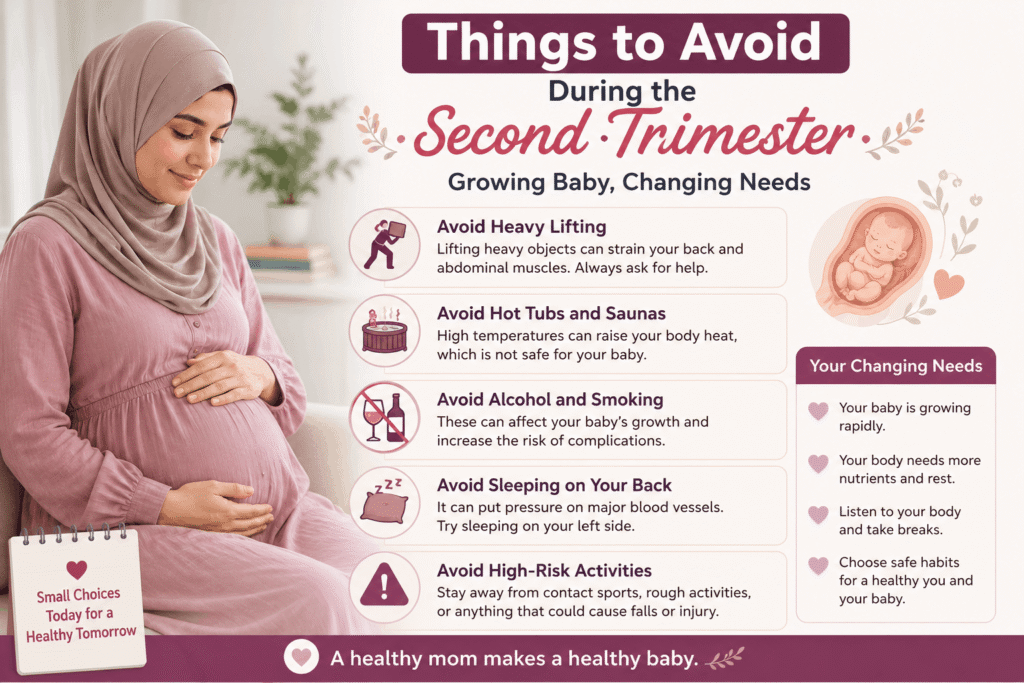
Growing Baby, Changing Needs
As your baby grows, your body continues to adapt.
Common second-trimester changes include:
- Weight gain
- A shifting center of gravity
- Increased blood volume
- Growing abdominal size
Why This Matters
These changes can affect:
- Balance
- Posture
- Energy levels
- Joint stability
Common Concerns
Women often notice:
- Back pain
- Leg cramps
- Mild swelling
- Sleep difficulties
Practical Tip
Supportive footwear, proper hydration, and good posture can help reduce discomfort.
Physical Activity Considerations
Exercise remains important during the second trimester for many healthy pregnancies.
What Research Shows
Studies have found that moderate physical activity may help:
- Reduce back pain
- Improve mood
- Support cardiovascular health
- Promote better sleep
Activities Often Considered Safer
- Walking
- Swimming
- Prenatal yoga
- Stationary cycling
Activities Commonly Avoided
- Contact sports
- Activities with high fall risk
- Scuba diving
- Extreme sports
Practical Tip
Listen to your body and avoid pushing through pain, dizziness, or unusual symptoms.
Travel and Lifestyle Safety Tips
Many women choose to travel during the second trimester because energy levels often improve.
Travel Considerations
Before traveling:
- Discuss plans with your healthcare provider.
- Stay hydrated.
- Take movement breaks during long trips.
- Carry prenatal records if traveling far from home.
Lifestyle Considerations
As pregnancy progresses:
- Avoid smoking and secondhand smoke.
- Prioritize sleep.
- Continue attending prenatal appointments.
- Follow food safety recommendations.
Common Mistake
Feeling better and becoming less cautious about healthy habits.
Things to Avoid During the Third Trimester
The third trimester begins around week 28 and continues until birth. During this stage, your baby grows rapidly, and your body prepares for labor and delivery. Many women experience increased fatigue, sleep difficulties, back pain, pelvic pressure, swelling, and emotional changes.
While many daily activities remain safe, some may become more difficult or require additional precautions. Understanding these changes can help you stay comfortable and reduce unnecessary risks as you approach your due date.
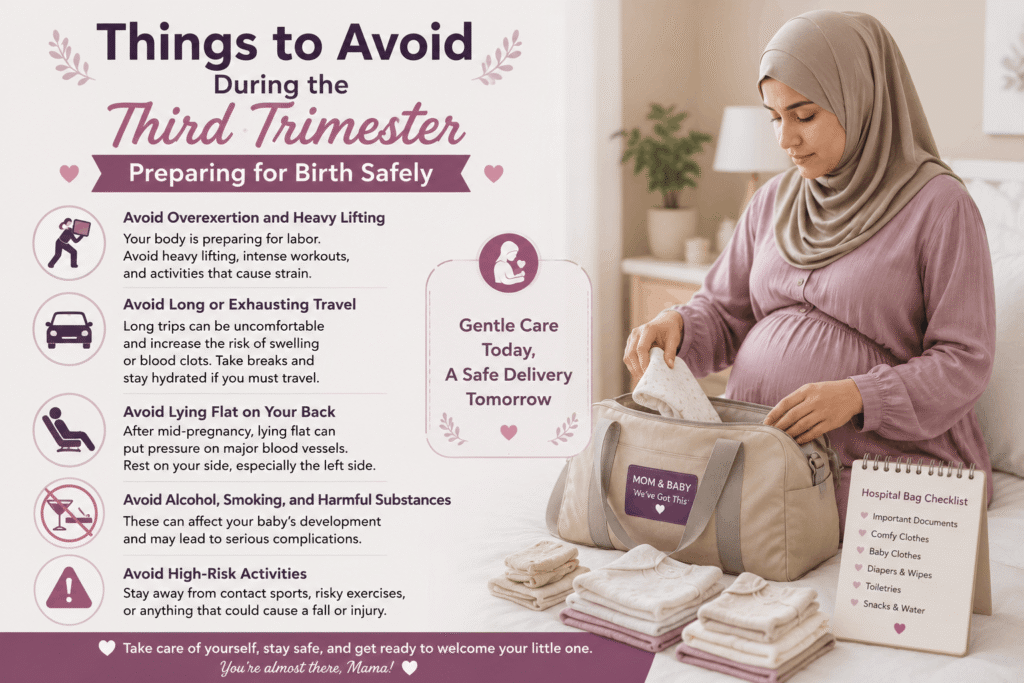
Preparing for Birth Safely
As delivery approaches, many women focus on preparing their home, completing nursery projects, and finalizing birth plans. While these tasks are exciting, it is important to avoid overexertion.
Why This Matters
During the third trimester:
- Balance may become less stable.
- Fatigue often increases.
- The growing uterus places extra strain on muscles and joints.
- Swelling and discomfort may make physical tasks harder.
Common Mistakes
Many expectant parents try to complete too many tasks in the final weeks of pregnancy.
Examples include:
- Lifting heavy furniture
- Climbing ladders
- Deep cleaning for long periods
- Skipping rest breaks
Practical Tips
- Ask for help with physically demanding tasks.
- Break projects into smaller steps.
- Prioritize rest and hydration.
- Keep emergency contact information easily available.
Safer Alternative
Focus on planning, organizing, and preparing essential items while allowing others to assist with physically demanding work.
Activities That May Become More Challenging
Activities that felt comfortable earlier in pregnancy may become more difficult during the third trimester.
Why This Happens
As your baby grows, changes in posture, flexibility, and balance can affect movement.
Many women notice:
- Increased shortness of breath
- Pelvic discomfort
- Back pain
- Swelling in the feet and ankles
- Reduced mobility
Activities That May Require Extra Caution
Examples include:
- Long periods of standing
- Climbing ladders
- Carrying heavy objects
- High-impact exercise
- Activities with a fall risk
Practical Tip
Listen to your body’s signals. Pain, dizziness, unusual shortness of breath, or exhaustion are signs to slow down and seek medical advice if symptoms persist.
Safer Alternative
Choose lower-impact activities that allow better balance and comfort.
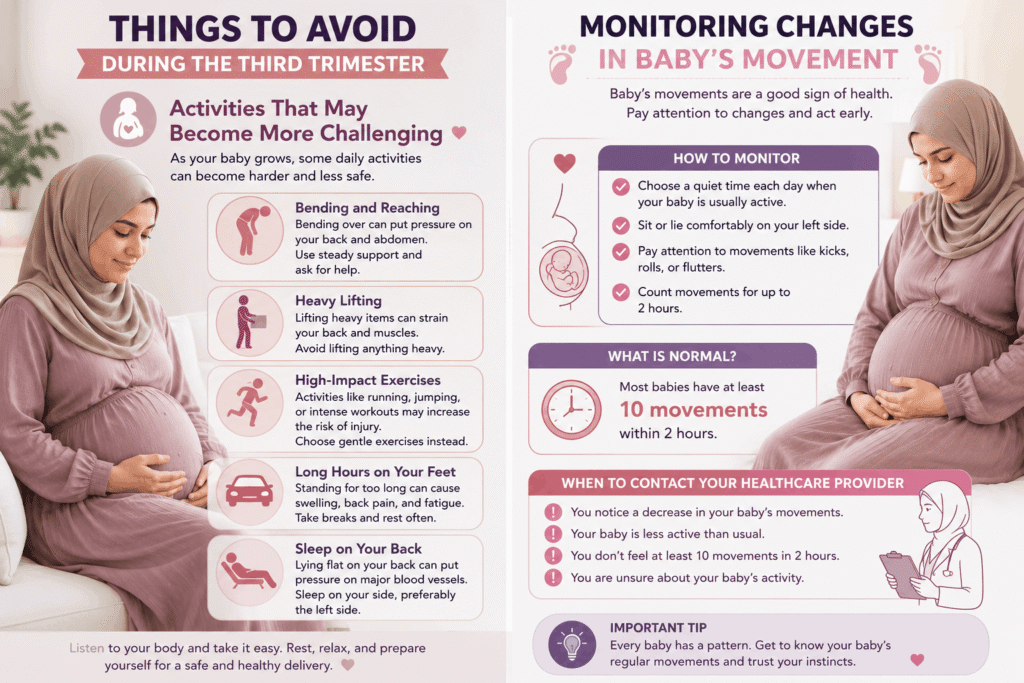
Monitoring Changes in Baby’s Movement
Many women become more aware of their baby’s movements during the third trimester.
Why Monitoring Movement Matters
Feeling your baby move is one of the ways healthcare providers monitor your baby’s health and development during pregnancy.
According to NHS and ACOG guidance, changes in movement patterns should not be ignored.
What Is Normal?
Every baby develops a unique movement pattern.
You may notice:
- Kicks
- Rolls
- Stretches
- Hiccups
As space becomes more limited later in pregnancy, movements may feel different but should not suddenly stop.
Common Concern
Many women worry when movement patterns seem to change.
If you notice:
- Reduced movement
- Significantly weaker movements
- No movement when your baby is usually active
contact your healthcare provider promptly.
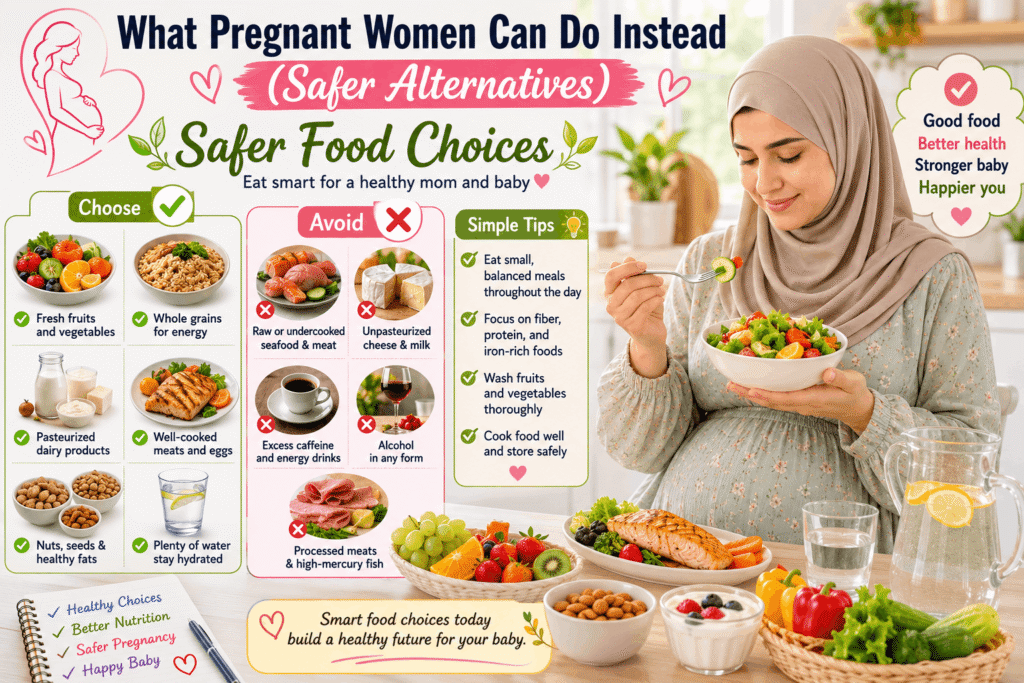
What Pregnant Women Can Do Instead (Safer Alternatives)
Pregnancy precautions are often easier to follow when you have practical alternatives. Instead of focusing only on what to avoid during pregnancy, it can be helpful to know what you can safely enjoy.
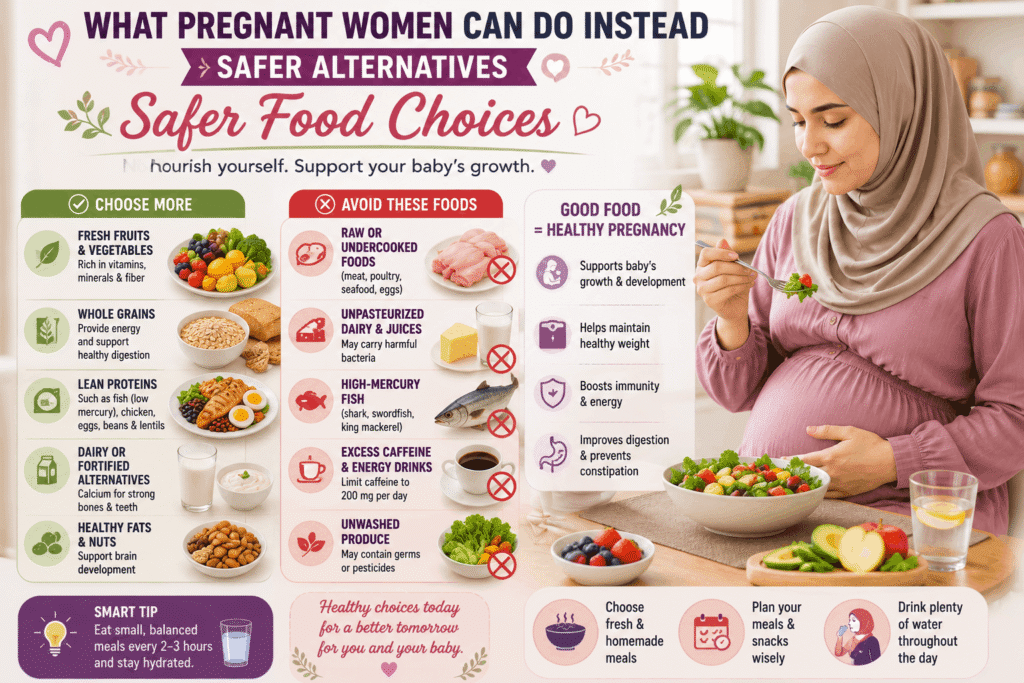
Safer Food Choices
Many foods that are limited during pregnancy have safer alternatives, allowing you to enjoy a balanced and nutritious diet while protecting your baby’s health.
Examples of Safer Food Swaps
| Instead of | Consider |
|---|---|
| Raw sushi | Cooked sushi rolls |
| High-mercury fish | Salmon or trout |
| Unpasteurized cheese | Pasteurized cheese |
| Raw eggs | Fully cooked eggs |
| Energy drinks | Water or milk |
Why This Matters
Research suggests that balanced nutrition supports both maternal health and fetal development.
Practical Tip
Focus on adding healthy foods rather than constantly worrying about restrictions.
Safer Exercise Options
Exercise is often encouraged during healthy pregnancies.
According to ACOG
Most women with uncomplicated pregnancies can safely participate in moderate physical activity.
Examples of Pregnancy-Friendly Activities
- Walking
- Swimming
- Prenatal yoga
- Water aerobics
- Stationary cycling
- Low-impact strength training
Potential Benefits
Studies have found that regular physical activity may help support:
- Better sleep
- Improved mood
- Reduced back pain
- Healthy weight management
- Increased energy
Practical Tip
Choose activities that feel comfortable and allow you to maintain a conversation while exercising.
Safer Stress-Management Techniques
Pregnancy can bring excitement, but it can also create stress and anxiety.
Common Sources of Stress
- Labor concerns
- Parenting worries
- Financial planning
- Sleep difficulties
- Physical discomfort
Research-Based Stress Management Strategies
Many women benefit from:
- Deep breathing exercises
- Meditation
- Gentle stretching
- Prenatal yoga
- Talking with supportive friends or family
- Counseling when needed
Practical Tip
Even five to ten minutes of relaxation each day may help improve emotional well-being.
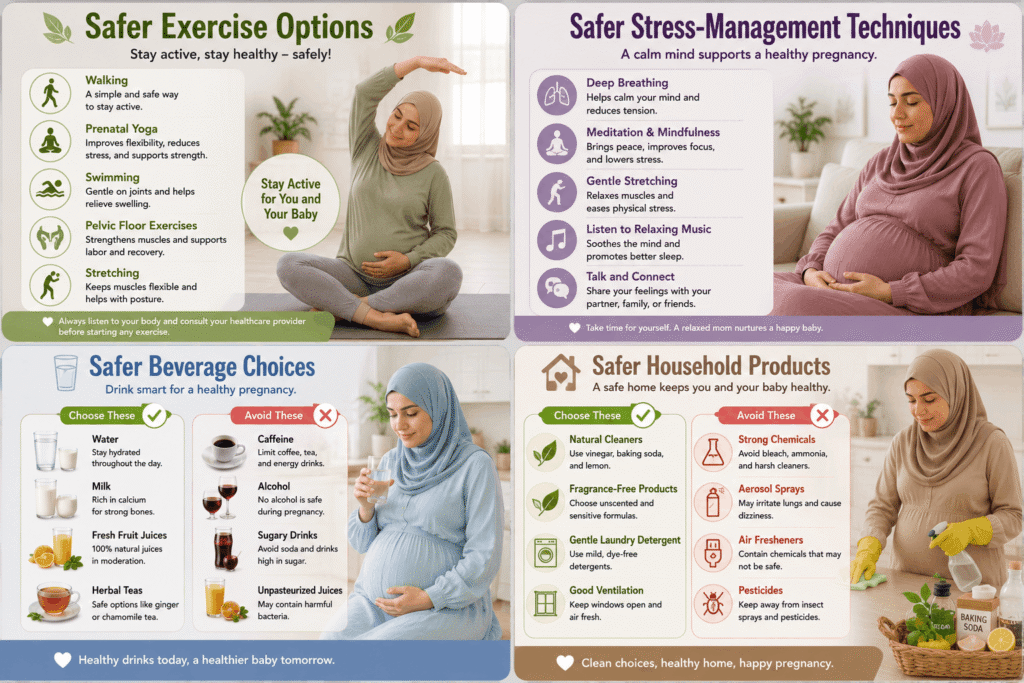
Safer Beverage Choices
Hydration plays an important role throughout pregnancy.
Recommended Beverage Options
- Water
- Milk
- Sparkling water
- Pasteurized fruit juices in moderation
- Decaffeinated beverages
Why This Matters
Proper hydration may help support:
- Circulation
- Digestion
- Energy levels
- Temperature regulation
Common Mistake
Replacing water with sugary drinks or energy drinks.
Practical Tip
Carry a reusable water bottle to encourage regular hydration.
Safer Household Products
Most women continue normal household activities during pregnancy, but choosing safer products can reduce unnecessary exposures.
Practical Choices
Consider:
- Fragrance-free cleaning products
- Mild soaps
- Well-ventilated cleaning areas
- Gloves when handling cleaning products
Why This Matters
Strong fumes can worsen nausea, headaches, and pregnancy-related sensitivity to odors.
Practical Tip
Open windows and take breaks when cleaning for extended periods.
When to Contact a Healthcare Provider
Pregnancy involves many questions. Some situations require professional guidance even when they do not seem urgent.
When in doubt, contacting your healthcare provider is often the safest approach.
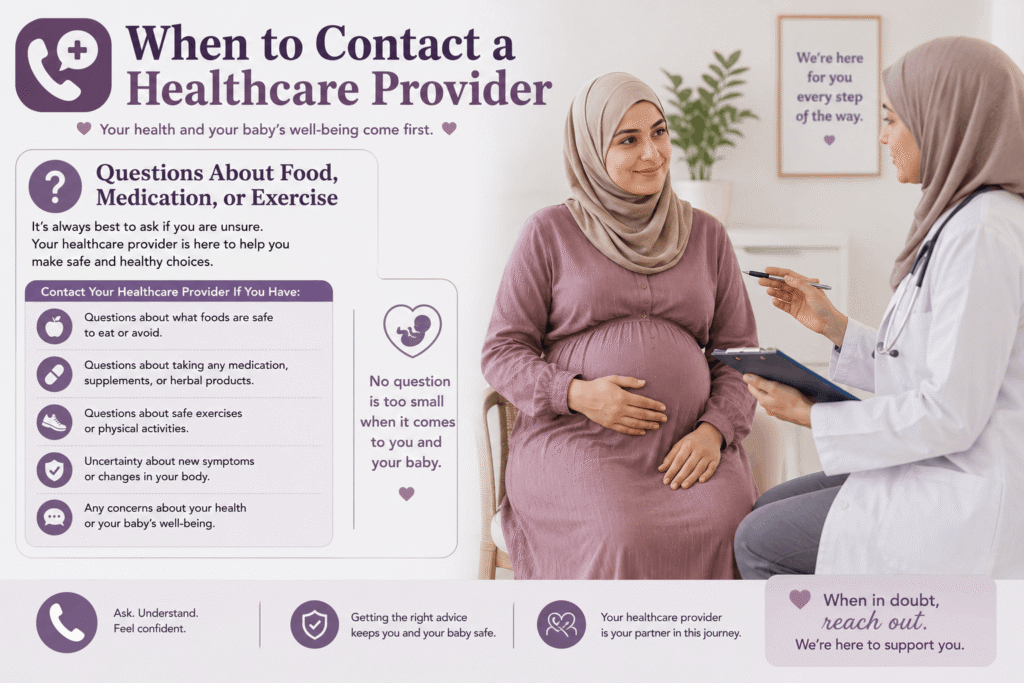
Questions About Food, Medication, or Exercise
Many women worry about accidental exposures or uncertainty regarding pregnancy safety recommendations.
Common Questions
- Can I eat this food?
- Is this medication safe?
- Should I continue exercising?
- Can I take this supplement?
Why It Matters
Medication, supplement, and dietary recommendations can vary depending on:
- Pregnancy stage
- Medical history
- Existing health conditions
- Individual risk factors
Practical Tip
Keep a list of questions between appointments so important concerns are not forgotten.
Exposure to Potentially Harmful Substances
If you believe you may have been exposed to any of the following, contact your healthcare provider for advice as soon as possible.
- Lead
- Pesticides
- Toxic chemicals
- Certain medications
- Infectious illnesses
Common Concern
Many women fear that any exposure automatically means harm.
Fortunately, risk often depends on:
- Type of exposure
- Duration
- Amount involved
- Timing during pregnancy
Your healthcare provider can evaluate your individual circumstances and recommend the most appropriate next steps.
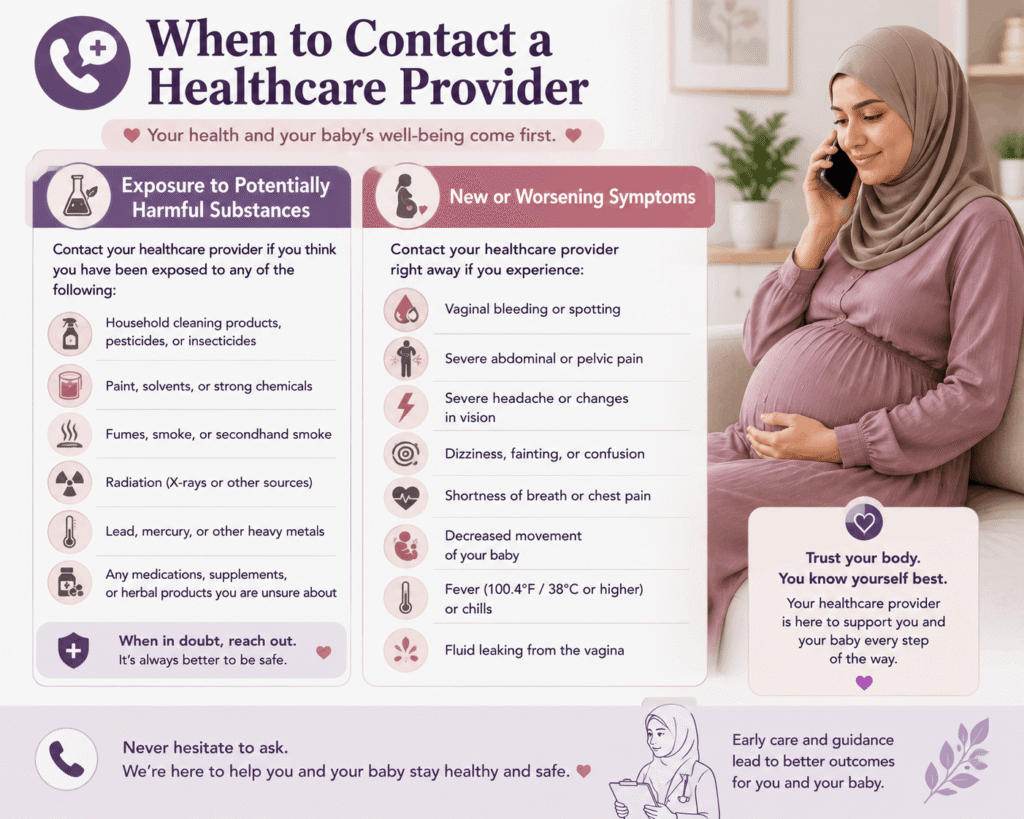
New or Worsening Symptoms
Pregnancy symptoms change over time, but some symptoms deserve medical attention.
Examples Include
- Severe nausea
- Persistent vomiting
- Significant swelling
- New pain
- Vision changes
- Unusual bleeding
Practical Tip
Trust your instincts. If a symptom feels unusual or concerning, contact your healthcare provider.
Warning Signs That Need Immediate Medical Attention
Certain symptoms should never be ignored during pregnancy. Seeking prompt medical care can help protect both mother and baby.
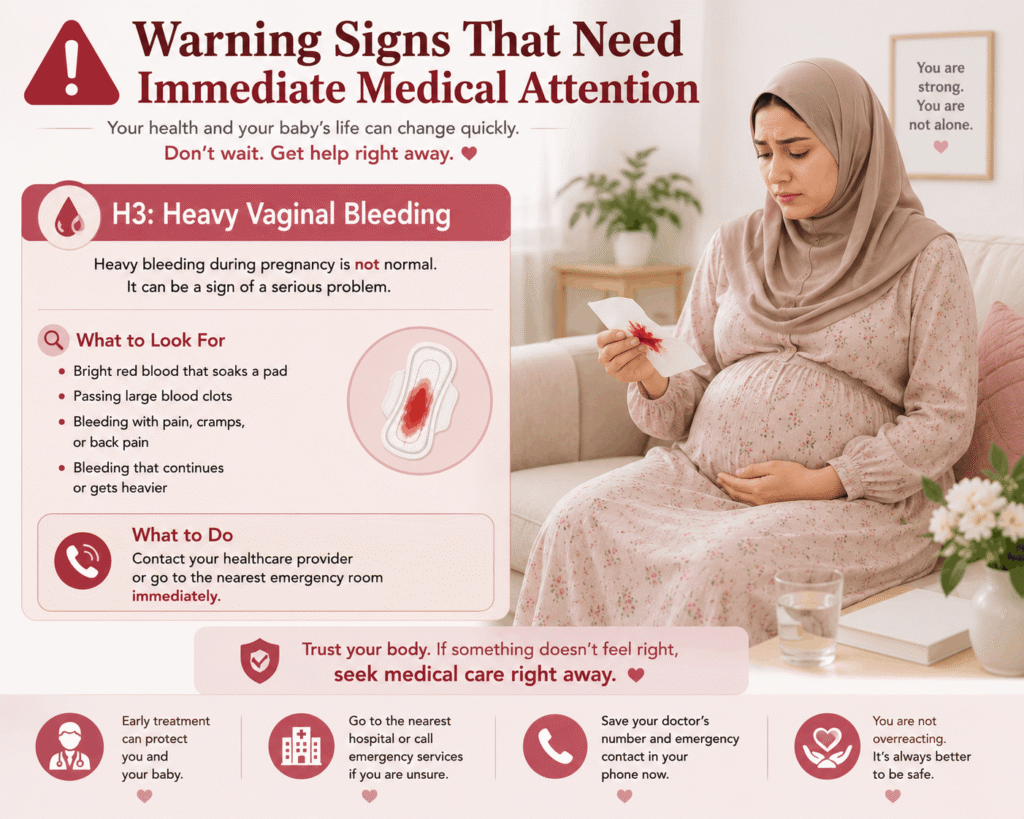
Heavy Vaginal Bleeding
Light spotting can occur in some pregnancies, but heavy bleeding requires immediate medical evaluation.
Why It Matters
Heavy bleeding may indicate a serious condition that needs urgent attention.
Seek Emergency Care If
- Bleeding is heavy
- Large clots are present
- Bleeding occurs with severe pain
Severe Abdominal Pain
Persistent or severe abdominal pain is not considered a normal pregnancy symptom.
Why It Matters
Pain that is intense, worsening, or accompanied by other symptoms should be evaluated promptly.
Seek Medical Attention If
- Pain is severe
- Pain does not improve
- Pain occurs with bleeding or fever
Persistent Severe Headache
Headaches can occur during pregnancy, but severe or ongoing headaches should not be ignored.
Why It Matters
Research indicates that severe headaches can sometimes signal serious pregnancy complications.
Seek Medical Attention If
- Headaches are severe
- Vision changes occur
- Symptoms do not improve
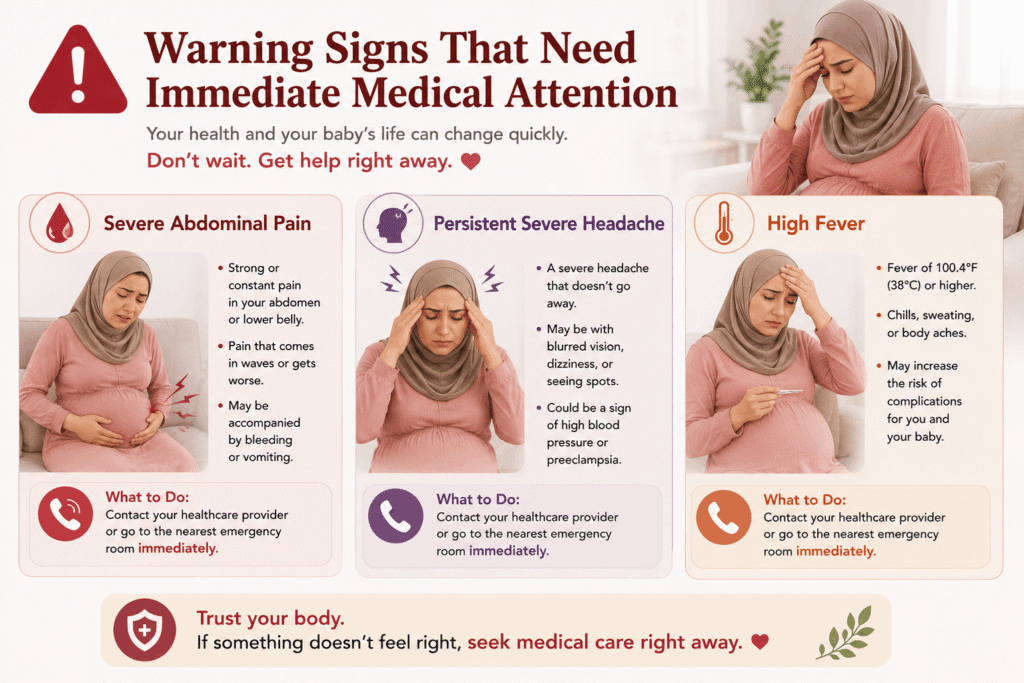
High Fever
Fever may indicate infection.
Why It Matters
According to public health guidance, untreated infections during pregnancy can require prompt evaluation.
Seek Medical Attention If
- Fever is high
- Fever persists
- Other symptoms develop
Sudden Swelling of Face or Hands
Some swelling is common during pregnancy, especially in the feet and ankles.
Why It Matters
Sudden swelling of the face or hands can sometimes be associated with serious pregnancy complications.
Seek Medical Attention If
- Swelling appears suddenly
- Swelling worsens quickly
- Other concerning symptoms are present
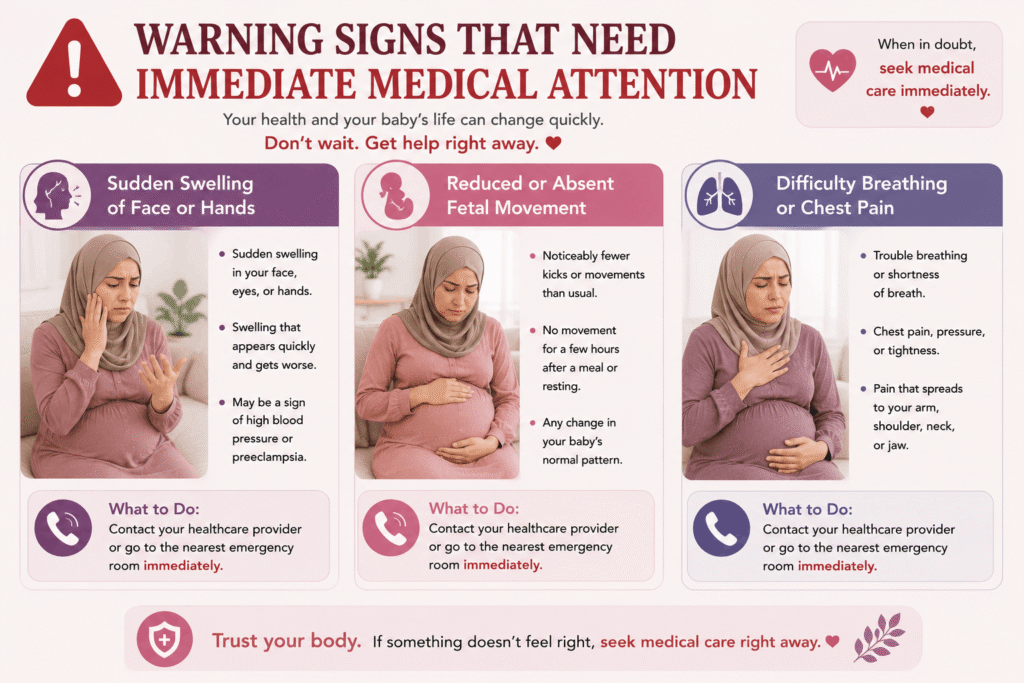
Reduced or Absent Fetal Movement
Changes in fetal movement should always be taken seriously.
Why It Matters
A noticeable decrease in movement may require prompt assessment.
Seek Medical Attention If
- Movements become significantly less frequent
- Your baby stops moving
- Movement patterns change suddenly
Difficulty Breathing or Chest Pain
Breathing changes can occur during pregnancy, but severe symptoms are not normal.
Why It Matters
Chest pain or significant breathing difficulties require immediate evaluation.
Seek Emergency Care If
- Chest pain develops
- Breathing becomes difficult
- Symptoms occur suddenly
Key Takeaways
Pregnancy doesn’t mean avoiding everything—it means making informed choices that protect both you and your baby. By following evidence-based guidance from trusted organizations such as ACOG, WHO, CDC, and NHS, you can reduce avoidable risks while maintaining a healthy and active lifestyle.
Although every pregnancy is unique, the recommendations in this guide can help you make safer everyday decisions. If you are ever unsure about a food, medication, supplement, or activity, your healthcare provider can offer personalized advice based on your medical history and pregnancy needs.
Pregnancy Safety Checklist
Use this quick checklist as a reminder of the most important pregnancy safety habits. Saving or printing this table can make it easier to remember the key recommendations throughout your pregnancy.
| Category | Avoid | Choose Instead |
|---|---|---|
| Foods | Raw meat, raw fish, raw eggs, unpasteurized dairy | Fully cooked foods and pasteurized dairy products |
| Seafood | High-mercury fish (shark, swordfish, king mackerel) | Low-mercury fish such as salmon, trout, sardines, and cod |
| Drinks | Alcohol, energy drinks, excessive caffeine | Water, milk, and moderate caffeine within your healthcare provider’s guidance |
| Medications | Taking medicines or supplements without medical advice | Use only medications approved by your healthcare provider |
| Smoking & Vaping | Smoking, vaping, secondhand smoke, recreational drugs | Smoke-free environments and professional support to quit if needed |
| Exercise | Contact sports, scuba diving, activities with a high fall risk | Walking, swimming, prenatal yoga, and other moderate exercises recommended by your healthcare provider |
| Heavy Work | Heavy lifting and overexertion | Ask for help and use proper lifting techniques when necessary |
| Heat Exposure | Hot tubs, saunas, prolonged overheating | Warm showers, cool environments, and plenty of fluids |
| Household Safety | Strong chemical cleaners, pesticides, lead exposure | Mild cleaning products, good ventilation, and protective gloves |
| Prenatal Care | Skipping appointments or ignoring warning signs | Attend regular prenatal visits and contact your healthcare provider if you notice concerning symptoms |
Final Reminder
✓ Eat a balanced, nutrient-rich diet.
✓ Stay hydrated every day.
✓ Take prenatal vitamins as recommended.
✓ Stay physically active if your pregnancy is healthy and your healthcare provider approves.
✓ Get enough sleep and manage stress.
✓ Avoid alcohol, smoking, vaping, and recreational drugs.
✓ Follow food safety guidelines to reduce the risk of foodborne illness.
✓ Check with your healthcare provider before taking any medication, supplement, or herbal product.
✓ Pay attention to your baby’s movements during the third trimester.
✓ Seek medical care immediately if you experience heavy bleeding, severe abdominal pain, persistent severe headache, high fever, reduced fetal movement, chest pain, or difficulty breathing.
Final Thought
Pregnancy safety is not about avoiding everything. It is about understanding which precautions are supported by evidence and making practical choices that fit your daily life. By following guidance from trusted organizations such as ACOG, WHO, NHS, and CDC, staying informed, and working closely with your healthcare provider, you can approach pregnancy with greater confidence and peace of mind while supporting the health and well-being of both you and your baby.


Leave a Reply