Introduction
Eating well during pregnancy can feel confusing at times, especially with so much advice coming from different places. Many expecting mothers simply want clear, practical guidance on what to eat each month to support their energy and daily comfort.
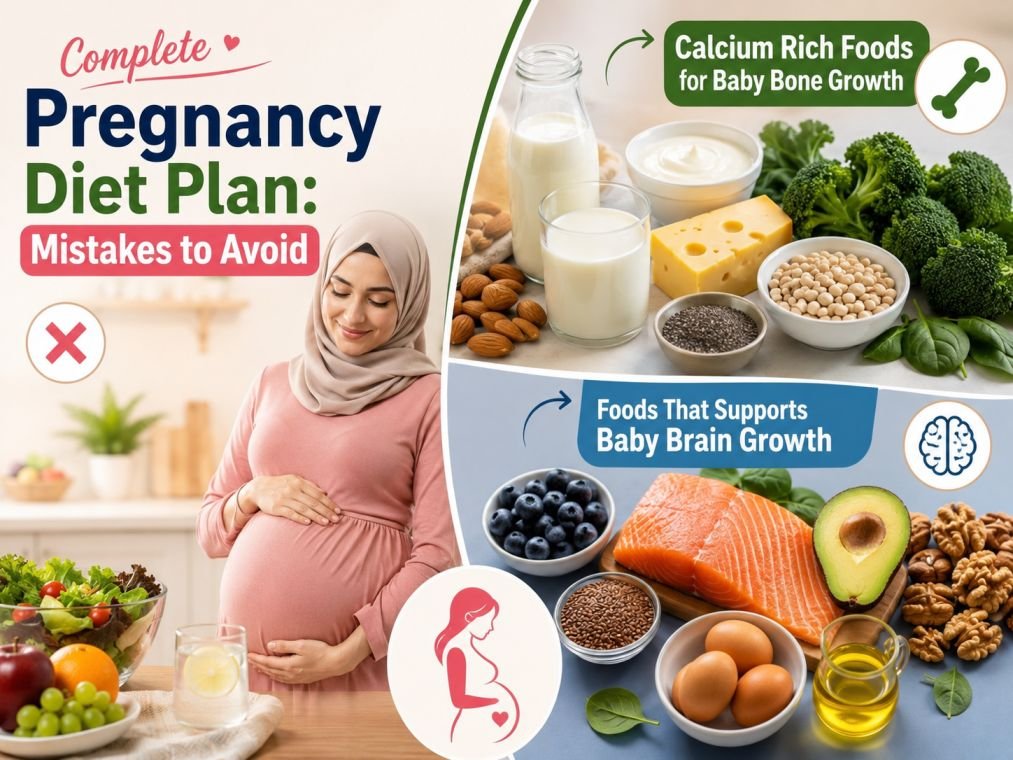
This month-by-month pregnancy diet guide explains which foods are helpful at different stages, which foods are often limited, and how small nutrition choices can make everyday routines easier. You’ll also find simple meal ideas, hydration tips, and balanced food suggestions that fit naturally into typical Western kitchens.
Table of Contents
Every pregnancy is different, but a steady, flexible approach to nutrition can help you feel more confident about your food choices throughout all nine months.
If you’re experiencing discomfort in the first trimester, read this helpful guide on Early Pregnancy Problems and Safe Solutions at Home for simple relief tips.
Why a Month-by-Month Pregnancy Diet Plan Matters
A pregnancy diet does not stay the same from beginning to end. As the baby grows and the body adjusts, nutrition needs can gradually change from month to month. Many women notice shifts in appetite, food preferences, and energy levels throughout pregnancy.
Following a pregnancy nutrition plan month by month can help mothers stay comfortable, energized, and confident about their daily food choices. Instead of guessing what to eat, a structured approach makes meal planning easier and more reassuring.
A balanced pregnancy meal plan also supports steady nourishment during each stage, helping mothers adapt naturally as their bodies change.
How Nutrition Affects Baby Growth Each Month
During pregnancy, the body works continuously to support new development. In the early months, nutrients such as folate, gentle proteins, and hydration can help support early formation and overall comfort. Many women benefit from small, frequent meals during this time, especially if appetite changes.
As pregnancy continues, the baby’s bones, muscles, and organs develop further. Calcium-rich foods, whole grains, fruits, vegetables, and healthy fats play an important role in maintaining steady energy and supporting growth through the middle months.
Later in pregnancy, nutrition often focuses more on maintaining strength, supporting daily activity, and preparing the body for delivery. Iron-rich foods, fiber-rich meals, and adequate fluids can help support comfort and balance during the final stage.
Because each month brings new changes, adjusting food choices gradually can make healthy pregnancy eating feel simpler and more manageable.
Common Diet Mistakes Pregnant Women Make
Many expecting mothers try their best to eat well, but small habits can sometimes make meal planning harder than it needs to be.
One common mistake is skipping meals due to a busy schedule or reduced appetite. Eating smaller portions more frequently is generally recommended and may help maintain steady energy throughout the day.
Another frequent challenge is relying too heavily on packaged snacks or convenience foods. While these can be helpful occasionally, adding fresh fruits, yogurt, whole grains, or simple home-prepared meals often provides more balanced nourishment.
Some women also avoid healthy fats without realizing their importance. Foods like nuts, seeds, olive oil, and avocados can be useful additions to a healthy pregnancy diet.
Drinking too little water is another common issue. Staying hydrated may help support comfort, digestion, and daily energy levels.
Making small adjustments step by step can make pregnancy meal planning feel more practical and realistic for everyday life.
During pregnancy, regular breast awareness is important, so follow this step-by-step guide on How to Perform Breast Self-Examination During Pregnancy (Safe & Doctor-Approved Guide) for safe monitoring at home.
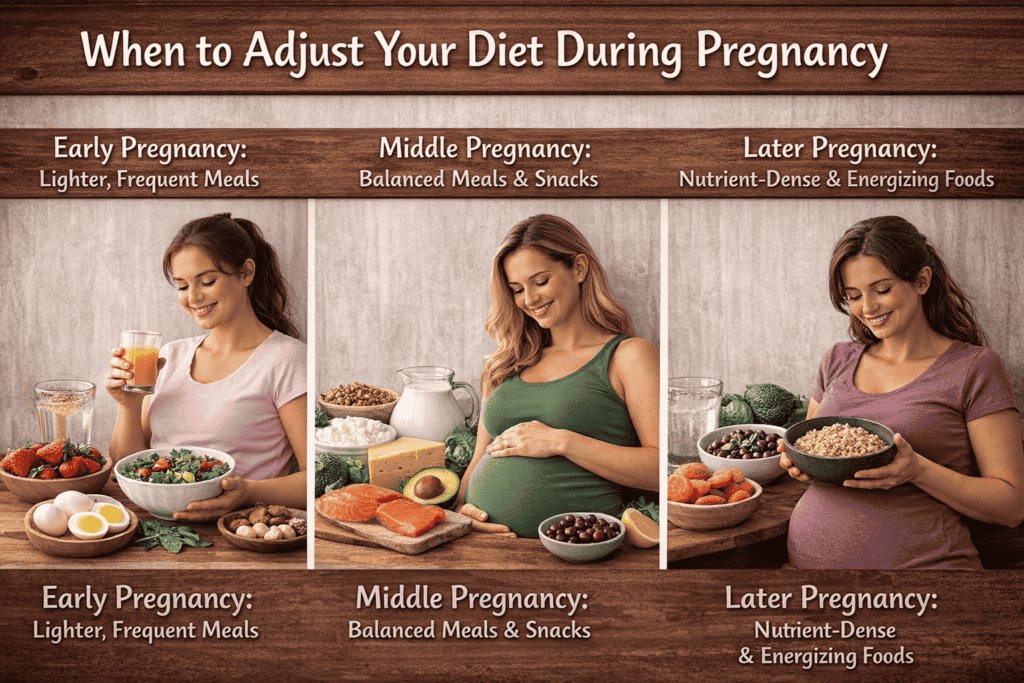
When to Adjust Your Diet During Pregnancy
It is normal for dietary needs to change as pregnancy progresses. Many women notice nausea or reduced appetite during the early months, which may make lighter meals easier to manage.
Later, appetite often increases naturally as energy needs grow. At this stage, adding balanced snacks between meals can help support daily activity and comfort.
Food preferences can also shift throughout pregnancy. Some women develop new cravings, while others temporarily avoid certain foods they previously enjoyed. Listening to these changes and choosing nourishing alternatives can make eating more enjoyable.
Fatigue, digestion changes, and daily routines may also influence meal choices from month to month. Flexible planning helps mothers adjust without feeling restricted.
Because every pregnancy experience is different, personal guidance from a qualified healthcare professional can help tailor nutrition choices when needed.
In the next section, we’ll look at a pregnancy diet month by month, with simple food ideas and practical tips for each stage.
Pregnancy Diet Chart – Month-by-Month Overview 1 to 9
A pregnancy diet month by month can make healthy eating feel more manageable and reassuring. As the body changes throughout pregnancy, nutrition needs often shift gradually. Many women find that adjusting meals step by step helps support comfort, steady energy, and confidence in daily food choices.
Below is a simple pregnancy nutrition guide with practical food ideas for each month using familiar foods commonly available in the United States and Europe.
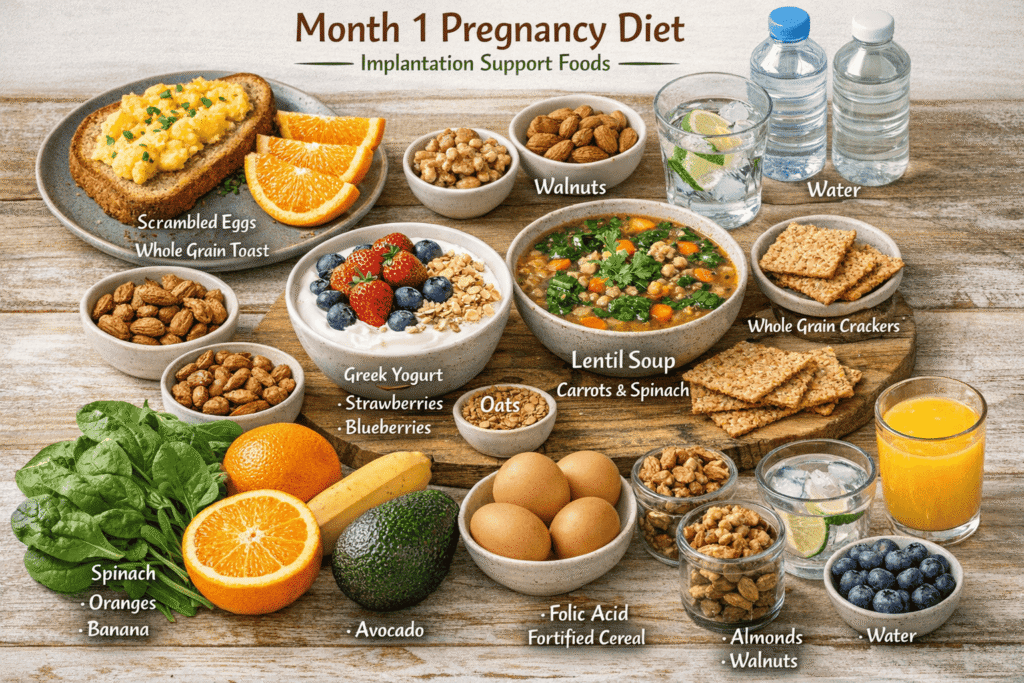
Month 1 Pregnancy Diet (Implantation Support Foods)
During the first month, the body begins adjusting to early pregnancy changes. Many women benefit from gentle, balanced meals that are easy to digest while maintaining hydration and regular eating habits.
Key nutrients: folate, protein, vitamin B6, fluids
Foods that can help support: spinach, oranges, fortified cereals, eggs, yogurt, whole-grain toast
Foods to limit: heavily processed snacks and very sugary drinks
Hydration suggestion: sip water regularly throughout the day, especially between meals
Simple meal ideas:
- Whole-grain toast with scrambled eggs and orange slices
- Greek yogurt with berries and oats
- Lentil soup with whole-grain crackers
Practical tip: keeping simple snacks nearby can help maintain steady energy when appetite changes unexpectedly.
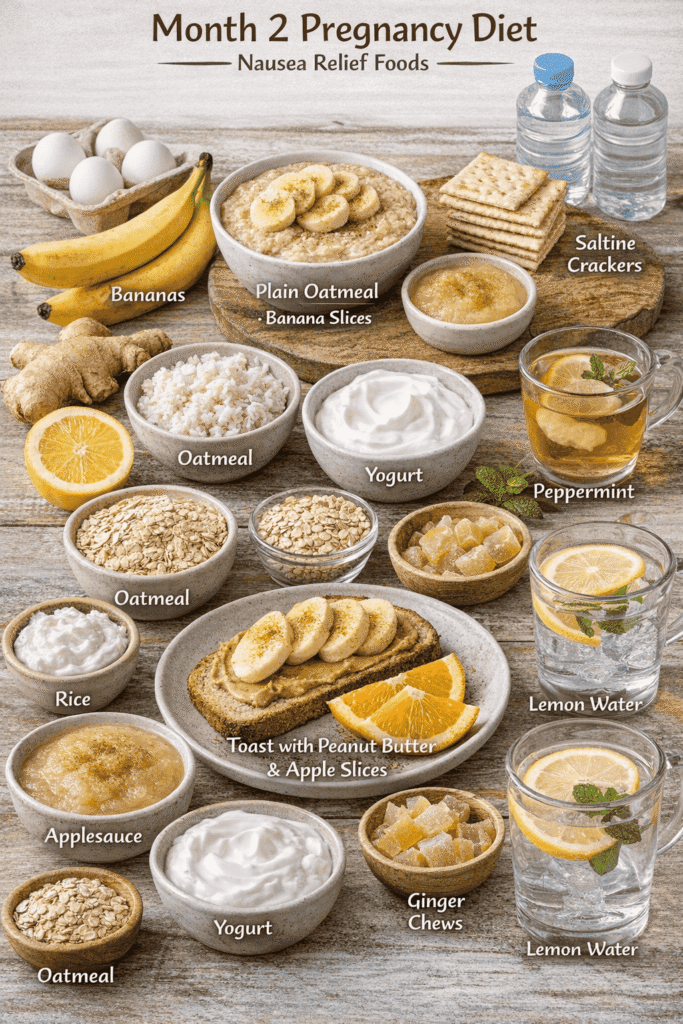
Month 2 Pregnancy Diet (Nausea Relief Foods)
This stage often includes morning nausea or changes in appetite. Many women benefit from smaller meals eaten more frequently and mild, familiar foods.
Key nutrients: vitamin B6, complex carbohydrates, fluids
Foods that can help support: bananas, oatmeal, crackers, applesauce, yogurt, rice
Foods to limit: greasy or strongly scented foods if they worsen nausea
Hydration suggestion: try small sips of water, ginger tea, or lemon water during the day
Simple meal ideas:
- Plain oatmeal with banana slices
- Crackers with cottage cheese
- Toast with peanut butter and apple slices
Practical tip: eating a small snack before getting out of bed may help some women feel more comfortable in the morning.
If your doctor mentions growth differences during pregnancy, learn more about Can an Incorrect Position Affect Uterine Size in Pregnancy? and what they may mean for you and your baby.
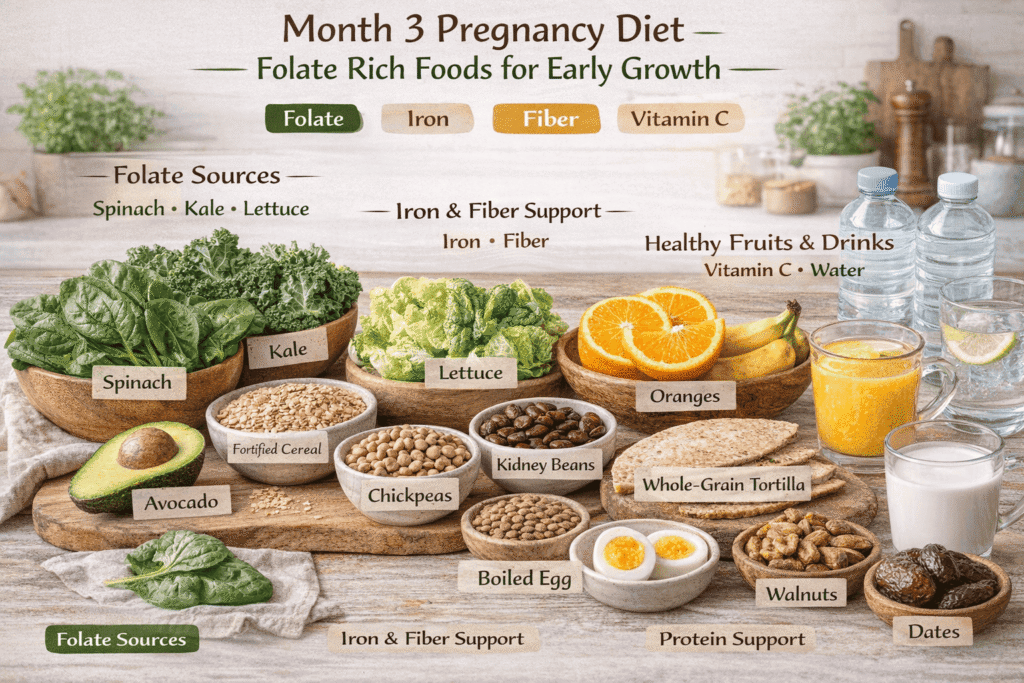
Month 3 Pregnancy Diet (Folic Acid Rich Foods)
By the third month, steady intake of folate-rich foods can help support early growth stages. Many women benefit from simple breakfast combinations that include fortified grains and fresh fruit.
Key nutrients: folate, iron, fiber
Foods that can help support: leafy greens, fortified cereals, beans, citrus fruits, avocado
Foods to limit: excess caffeine from multiple daily sources
Hydration suggestion: continue regular water intake alongside fruit-based snacks
Simple meal ideas:
- Fortified cereal with milk and orange slices
- Spinach and bean wrap with whole-grain tortilla
- Avocado toast with a boiled egg
Practical tip: adding leafy greens to one meal each day can make folate intake easier without changing your routine too much.
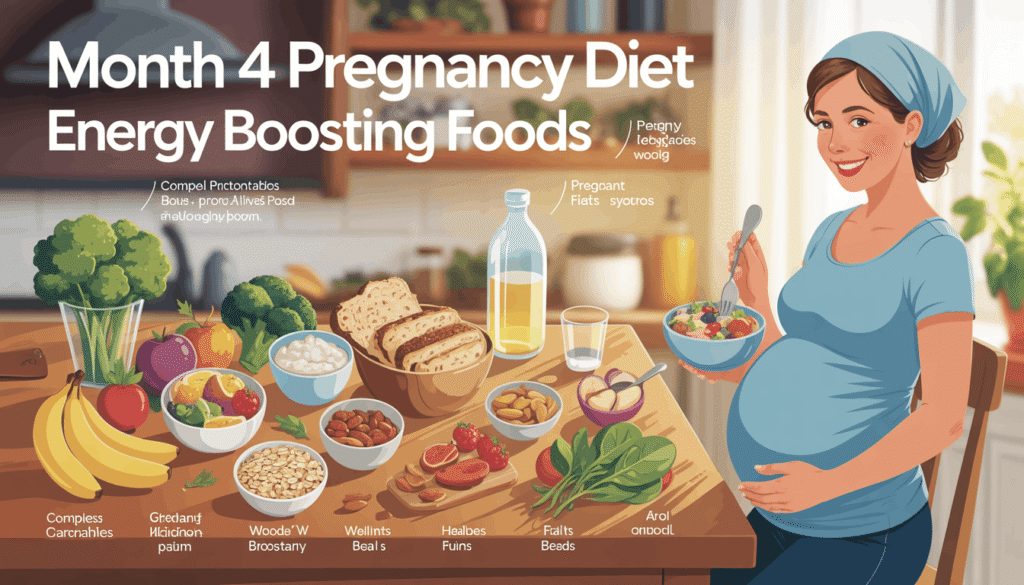
Month 4 Pregnancy Diet (Energy Boosting Foods)
Many women notice improved appetite during this month. Balanced meals with steady carbohydrates and protein can help support daily activity and comfort.
Key nutrients: complex carbohydrates, protein, healthy fats
Foods that can help support: brown rice, chicken, salmon, beans, nuts, olive oil
Foods to limit: highly refined snack foods that provide short bursts of energy
Hydration suggestion: include water with each meal and snack
Simple meal ideas:
- Brown rice bowl with grilled chicken and vegetables
- Whole-grain pasta with tomato sauce and beans
- Yogurt with granola and walnuts
Practical tip: planning three meals and two snacks each day can help maintain steady energy levels.
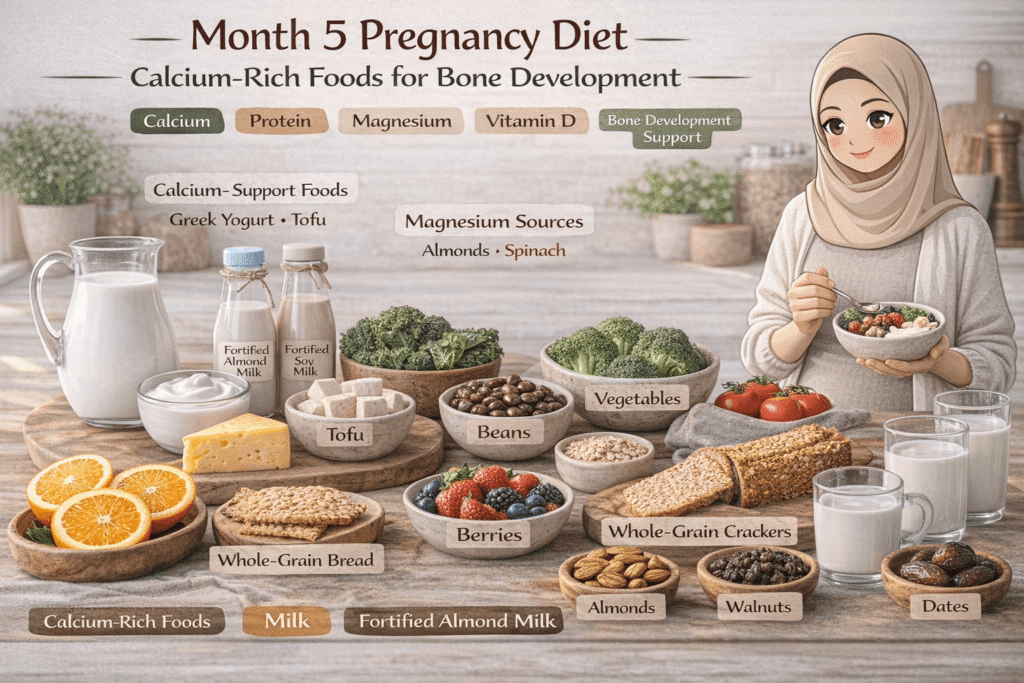
Month 5 Pregnancy Diet (Bone Development Foods)
This stage often includes increased attention to calcium-rich foods that help support growing structure and strength.
Key nutrients: calcium, protein, magnesium
Foods that can help support: milk, yogurt, cheese, tofu, almonds, fortified plant-based drinks
Foods to limit: salty processed foods if they replace balanced meals
Hydration suggestion: include milk or fortified plant drinks as part of daily fluid intake
Simple meal ideas:
- Yogurt with sliced almonds and berries
- Tofu stir-fry with vegetables
- Cheese and whole-grain crackers with fruit
Practical tip: adding one calcium-rich snack each day can help support balanced intake.
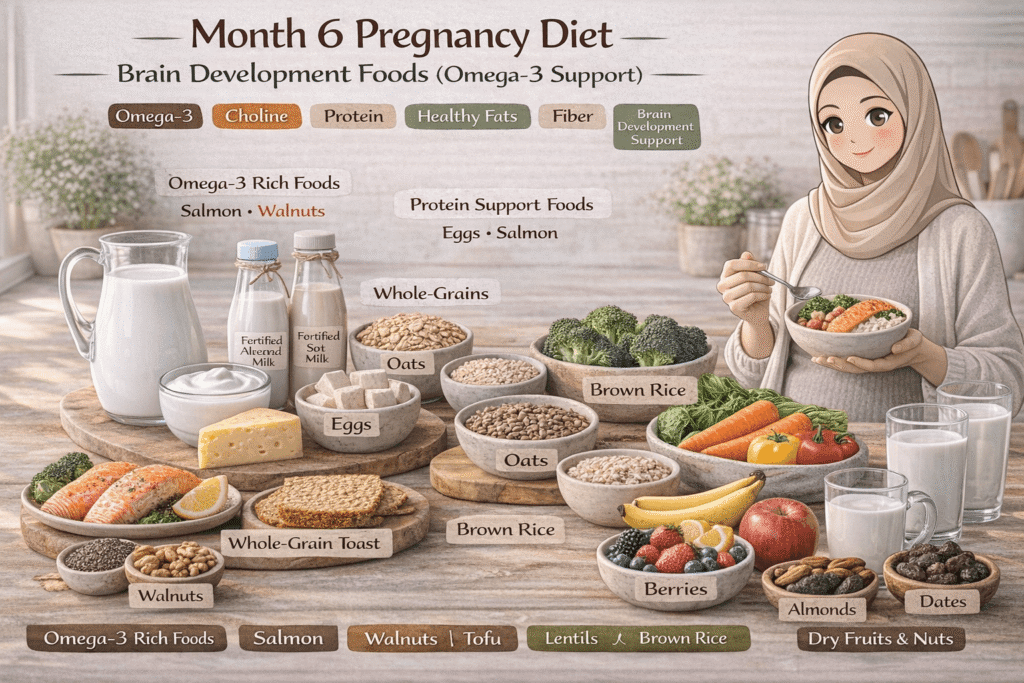
Month 6 Pregnancy Diet (Brain Development Foods)
During this stage, healthy fats become especially helpful additions to weekly meals. Many women benefit from including omega-3 foods regularly.
Key nutrients: omega-3 fats, protein, choline
Foods that can help support: salmon, walnuts, chia seeds, eggs, flaxseed
Foods to limit: highly processed fried foods
Hydration suggestion: continue steady water intake alongside balanced meals
Simple meal ideas:
- Baked salmon with roasted vegetables
- Chia seed pudding with fruit
- Whole-grain toast with scrambled eggs
Practical tip: including omega-3 foods two times per week can help keep meals varied and nourishing.
It’s important to understand warning signs early, so read Select When to Go to Hospital During Pregnancy to know the right time to seek medical care.
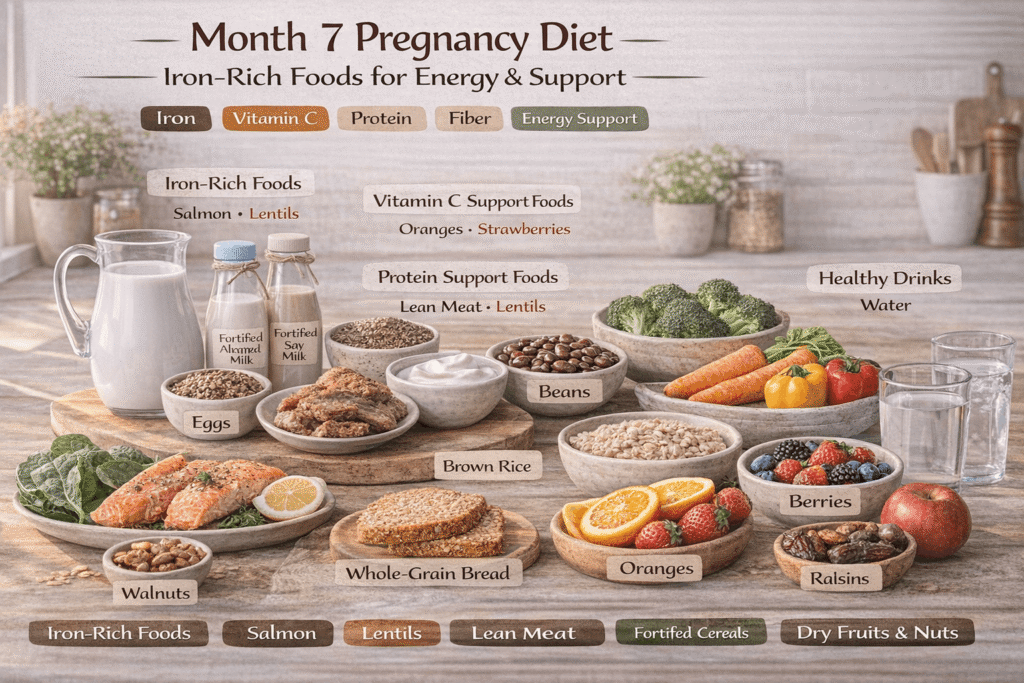
Month 7 Pregnancy Diet (Iron-Rich Foods)
As pregnancy continues, many women benefit from adding iron-supporting foods alongside vitamin-C-rich options that help balance meals.
Key nutrients: iron, vitamin C, protein
Foods that can help support: spinach, lentils, lean meats, fortified cereals, oranges, strawberries
Foods to limit: tea or coffee taken immediately with meals if they replace water intake
Hydration suggestion: drink water between meals to stay comfortable and energized
Simple meal ideas:
- Lentil soup with whole-grain bread
- Spinach salad with beans and citrus dressing
- Fortified cereal with berries
Practical tip: pairing iron-rich foods with fruits like oranges or strawberries can make meals more balanced and enjoyable.
Pregnancy Diet Chart – Month-by-Month Overview
| Month | Key Nutrients | Foods to Eat | Foods to Limit |
|---|---|---|---|
| Month 1 | Folate | Spinach, oranges | Junk snacks |
| Month 2 | Vitamin B6 | Bananas, toast | Greasy foods |
| Month 3 | Folate + Iron | Beans, cereals | Excess caffeine |
| Month 4 | Protein | Eggs, chicken | Sugary drinks |
| Month 5 | Calcium | Milk, yogurt | Salty snacks |
| Month 6 | Omega-3 | Salmon, walnuts | Fried foods |
| Month 7 | Iron | Lentils, spinach | Tea with meals |
| Month 8 | Fiber + Protein | Vegetables, oats | Heavy meals |
| Month 9 | Energy foods | Soups, fruits | Overeating late night |
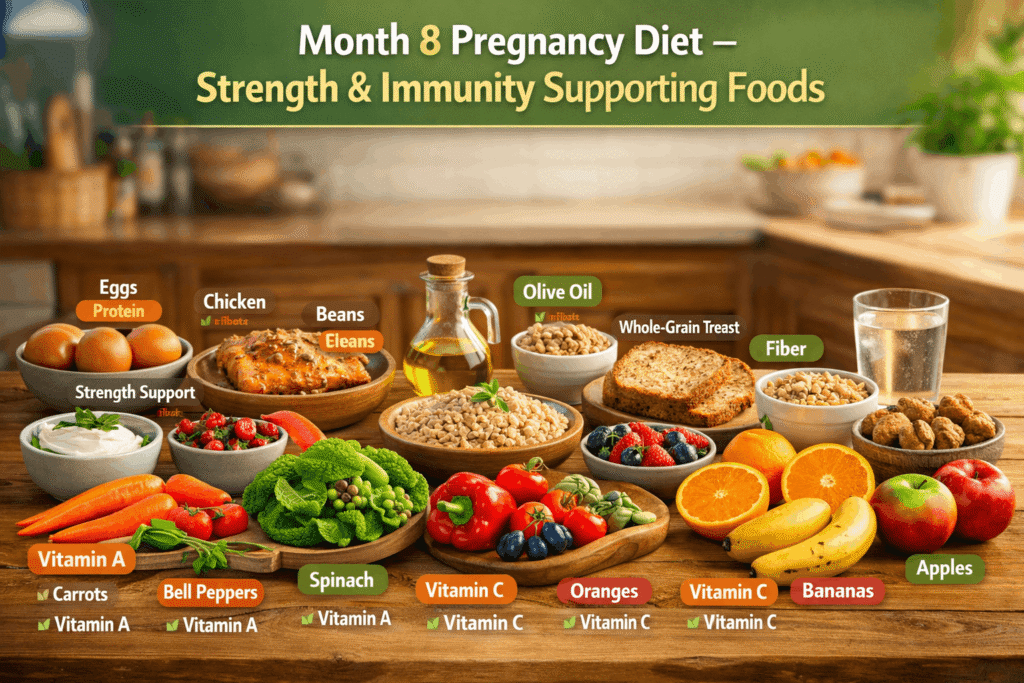
Month 8 Pregnancy Diet (Strength & Immunity Foods)
This stage often includes a focus on maintaining strength through steady meals and colorful vegetables. Many women benefit from adding protein-rich snacks between meals.
Key nutrients: protein, fiber, vitamins A and C
Foods that can help support: eggs, beans, chicken, carrots, bell peppers, oats
Foods to limit: very large meals late in the evening if they reduce comfort
Hydration suggestion: keep a water bottle nearby throughout the day
Simple meal ideas:
- Vegetable omelet with whole-grain toast
- Bean salad with olive oil dressing
- Oatmeal with berries and nuts
Practical tip: preparing simple snacks ahead of time can make daily eating easier during busy days.
To better understand possible complications, read In What Situations Pregnancy Becomes Difficult for Women for clear guidance on risk factors and warning signs.
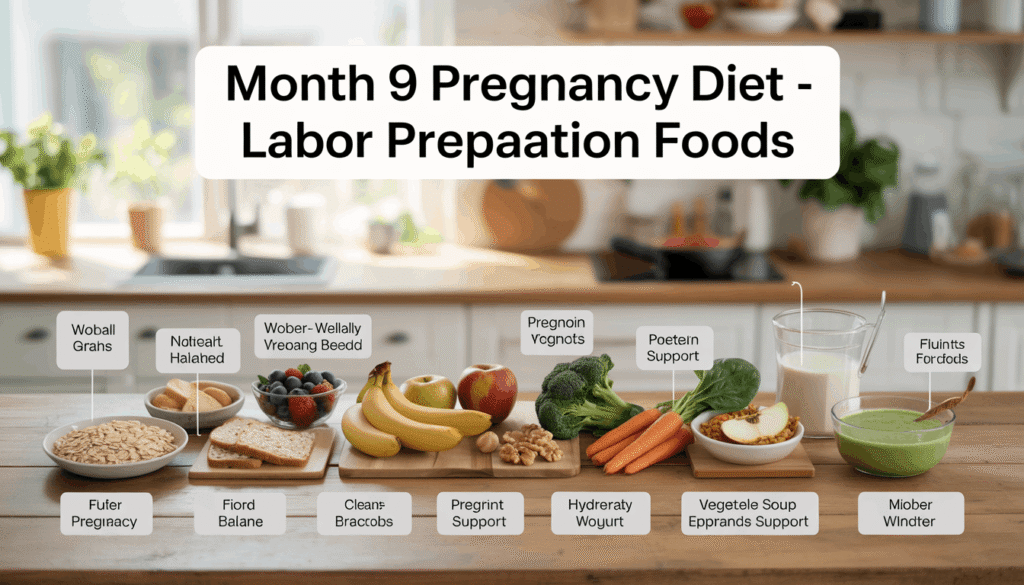
Month 9 Pregnancy Diet (Labor Preparation Foods)
During the final month, many women prefer lighter meals that feel comfortable and easy to digest. Balanced hydration and fiber-rich foods can support daily routine and energy.
Key nutrients: fiber, protein, fluids
Foods that can help support: whole grains, fruits, vegetables, yogurt, soups, smoothies
Foods to limit: very heavy meals close to bedtime
Hydration suggestion: continue regular water intake and include soups or smoothies if helpful
Simple meal ideas:
- Vegetable soup with whole-grain bread
- Smoothie with yogurt and berries
- Oatmeal with banana and walnuts
Practical tip: keeping meals simple and regular can help maintain comfort during the final weeks.
Pregnancy Diet Plan Month-by-Month: What to Eat & Avoid
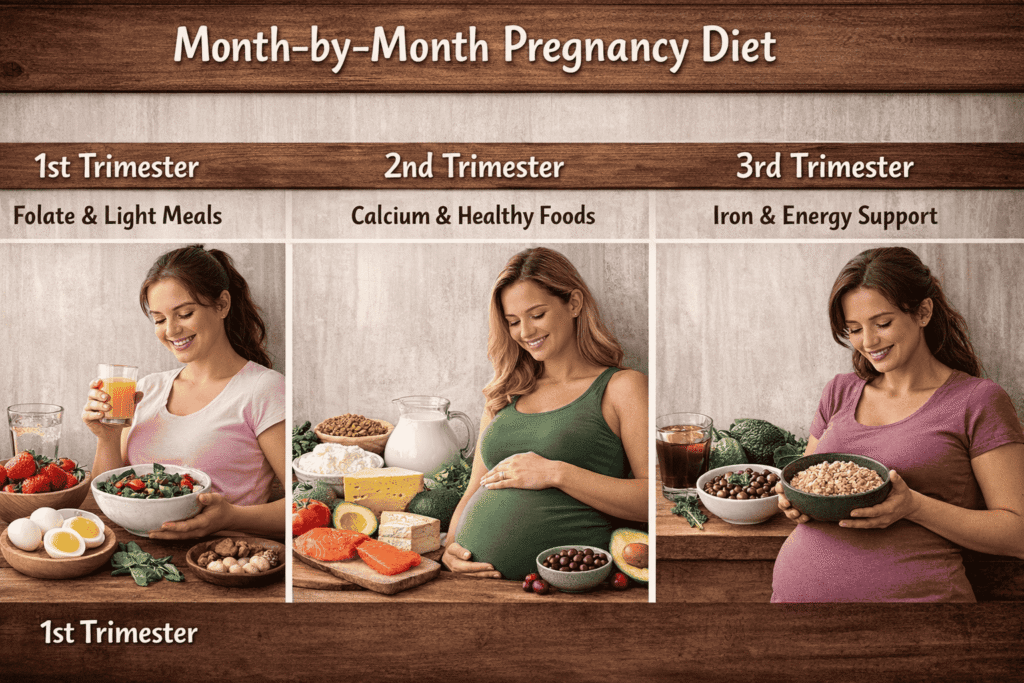
First Trimester Diet Plan (Months 1–3)
The first trimester is a time of adjustment as the body adapts to early pregnancy changes. Appetite may vary from day to day, and many women find that smaller, simple meals feel more comfortable. A gentle trimester pregnancy diet plan during these months can help support steady energy and daily well-being.
Best Foods for Early Pregnancy Weakness
Early pregnancy weakness is common, especially while the body adjusts to hormonal changes. Many women find that light, easy-to-digest meals help maintain comfort and energy throughout the day.
Key nutrients: complex carbohydrates, protein, vitamin B6, hydration
Helpful foods: oatmeal, yogurt, bananas, whole-grain toast, eggs, smoothies, soups, nut butters
Simple meal ideas:
- Oatmeal with banana and peanut butter
- Greek yogurt with berries and granola
- Vegetable soup with whole-grain crackers
Practical tip: keeping quick snacks like bananas or yogurt nearby can help support energy levels between meals.
Every pregnancy is different, so it is helpful to choose foods that feel comfortable and appealing during this stage.
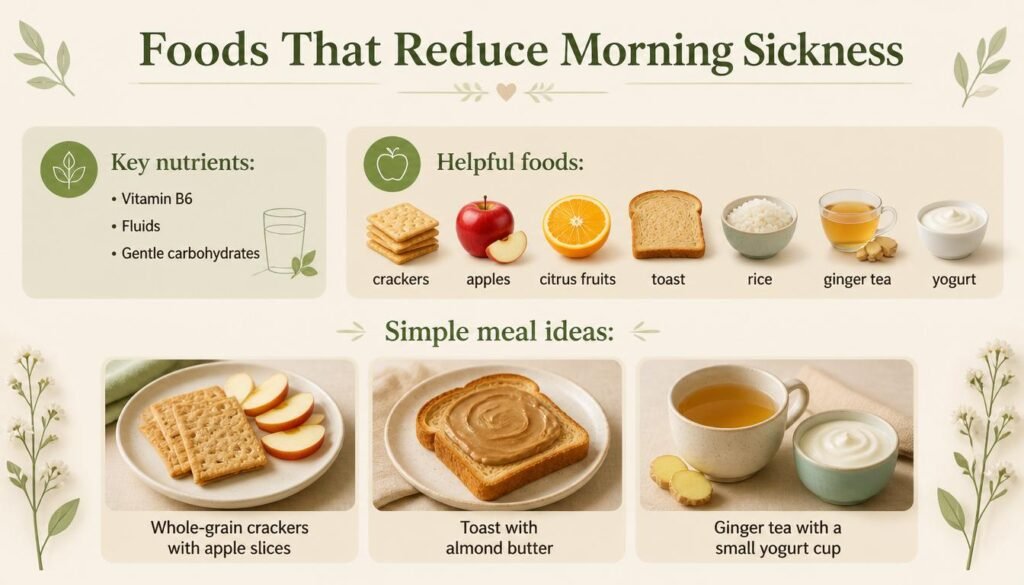
Foods That Reduce Morning Sickness
Morning sickness often appears during the first trimester and can change daily eating habits. Many women benefit from small, frequent meals and mild flavors.
Key nutrients: vitamin B6, fluids, gentle carbohydrates
Helpful foods: crackers, apples, citrus fruits, toast, rice, ginger tea, yogurt
Simple meal ideas:
- Whole-grain crackers with apple slices
- Toast with almond butter
- Ginger tea with a small yogurt cup
Practical tip: eating a small snack before getting out of bed may help some women feel more comfortable in the morning.
Since appetite can change quickly, flexible meal choices often make this stage easier to manage.
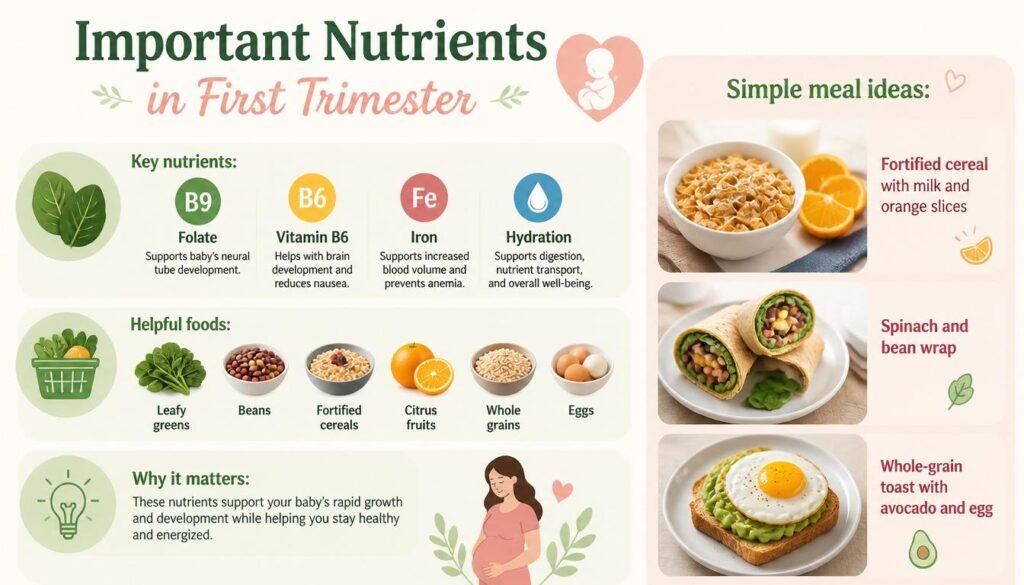
Important Nutrients in First Trimester
During early pregnancy, certain nutrients play an important role in supporting early growth and daily energy needs. A balanced pregnancy nutrition by trimester approach can help make these nutrients easier to include.
Key nutrients: folate, vitamin B6, iron, hydration
Helpful foods: leafy greens, beans, fortified cereals, citrus fruits, whole grains, eggs
Simple meal ideas:
- Fortified cereal with milk and orange slices
- Spinach and bean wrap
- Whole-grain toast with avocado and egg
Practical tip: adding one folate-rich food each day, such as spinach or beans, can help support a balanced routine.
Needs vary between individuals, so choosing familiar, nourishing foods is often the most practical approach.
First Trimester Diet Plan (Months 1–3)
| Nutrient | Why Helpful | Food Sources |
|---|---|---|
| Folate | Early development support | Spinach, beans |
| Vitamin B6 | Supports comfort | Bananas |
| Iron | Energy support | Lentils |
| Fluids | Hydration | Water, soups |
Second Trimester Diet Plan (Months 4–6)
The second trimester often brings improved appetite and more stable energy levels. Many women find this a comfortable time to focus on balanced meals that include calcium, protein, and healthy fats. A steady pregnancy nutrition by trimester plan can help support growth and daily activity during these months.
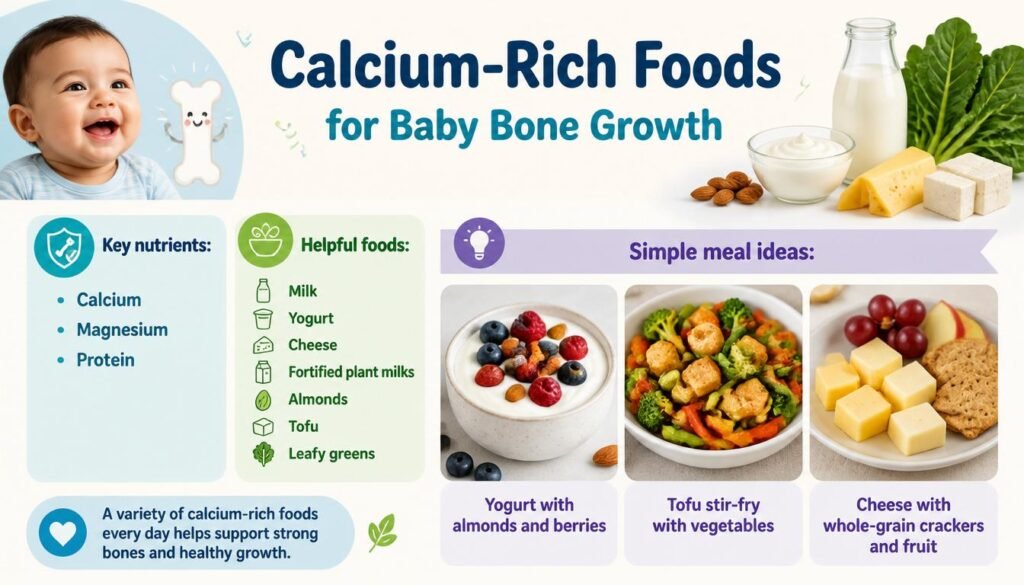
Calcium-Rich Foods for Baby Bone Growth
As pregnancy progresses, calcium becomes an important part of everyday meals. Including calcium-rich foods regularly can help support developing structure and strength.
Key nutrients: calcium, magnesium, protein
Helpful foods: milk, yogurt, cheese, fortified plant milks, almonds, tofu, leafy greens
Simple meal ideas:
- Yogurt with almonds and berries
- Tofu stir-fry with vegetables
- Cheese with whole-grain crackers and fruit
Practical tip: adding one calcium-rich snack daily is an easy way to support consistent intake.
Because dietary needs differ from person to person, it is helpful to choose options that fit your routine and preferences.
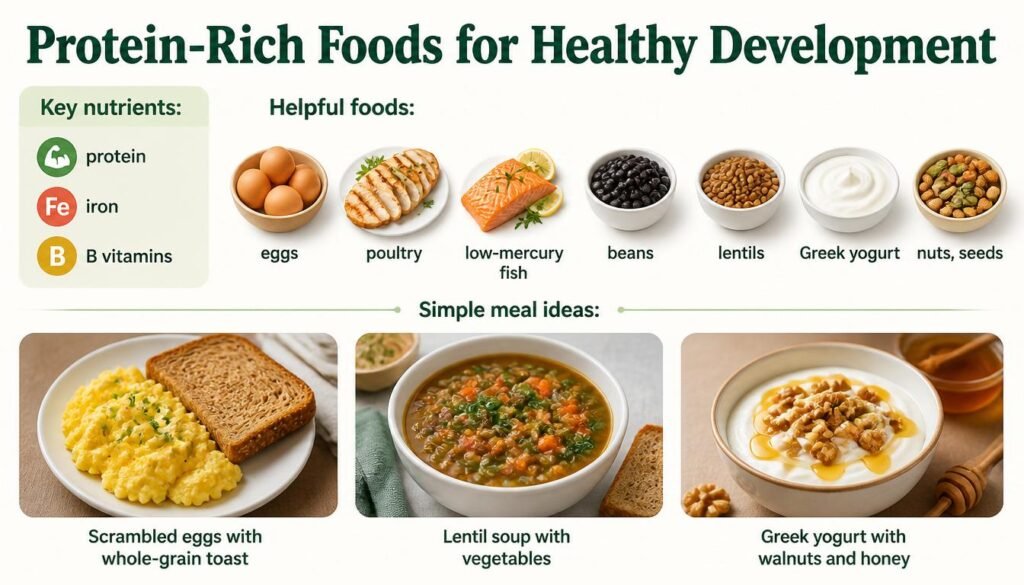
Protein-Rich Foods for Healthy Development
Protein supports steady growth and helps maintain energy throughout the day. Many women find that including protein in each meal keeps them feeling satisfied longer.
Key nutrients: protein, iron, B vitamins
Helpful foods: eggs, poultry, low-mercury fish, beans, lentils, Greek yogurt, nuts, seeds
Simple meal ideas:
- Scrambled eggs with whole-grain toast
- Lentil soup with vegetables
- Greek yogurt with walnuts and honey
Practical tip: pairing protein with whole grains or vegetables can help create balanced meals.
A flexible approach works best, since appetite and preferences often continue to change.
For long-term reproductive wellness, read How to Maintain Menstrual Health Step by Step (Complete Women’s Guide) to learn simple daily care habits
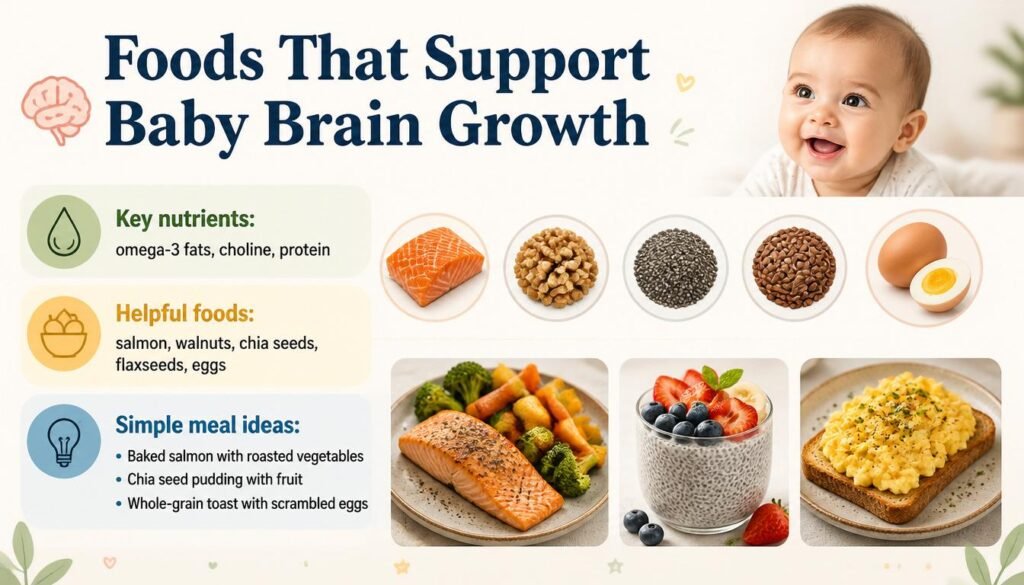
Foods That Support Baby Brain Growth
Healthy fats become especially useful during the middle months of pregnancy. Many women benefit from adding omega-3 foods to weekly meals.
Key nutrients: omega-3 fats, choline, protein
Helpful foods: salmon, walnuts, chia seeds, flaxseeds, eggs
Simple meal ideas:
- Baked salmon with roasted vegetables
- Chia seed pudding with fruit
- Whole-grain toast with scrambled eggs
Practical tip: including omega-3 foods once or twice a week can help keep meals varied and nourishing.
Every pregnancy is different, so simple adjustments based on comfort and taste are often most helpful.
Second Trimester Diet Plan (Months 4–6)
| Nutrient | Benefit | Foods |
|---|---|---|
| Calcium | Bone support | Milk, yogurt |
| Protein | Growth support | Eggs, beans |
| Omega-3 | Brain support | Salmon, walnuts |
Third Trimester Diet Plan (Months 7–9)
In the final trimester, nutrition often focuses on maintaining strength, supporting comfort, and preparing for delivery. Many women benefit from regular meals, iron-rich foods, and consistent hydration during this stage of a healthy pregnancy foods routine.
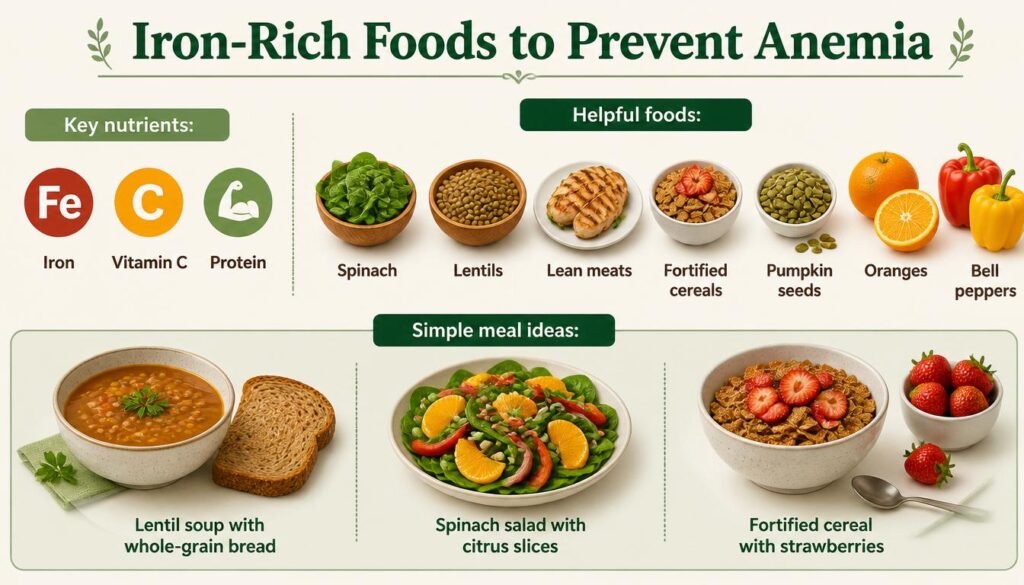
Iron-Rich Foods to Prevent Anemia
Iron becomes especially important later in pregnancy as the body supports increased circulation and energy needs. Balanced meals with iron-rich ingredients can help support daily strength.
Key nutrients: iron, vitamin C, protein
Helpful foods: spinach, lentils, lean meats, fortified cereals, pumpkin seeds, oranges, bell peppers
Simple meal ideas:
- Lentil soup with whole-grain bread
- Spinach salad with citrus slices
- Fortified cereal with strawberries
Practical tip: pairing iron-rich foods with vitamin-C foods like oranges or peppers can make meals more balanced.
Individual needs vary, so choosing enjoyable combinations often makes healthy eating easier to maintain.
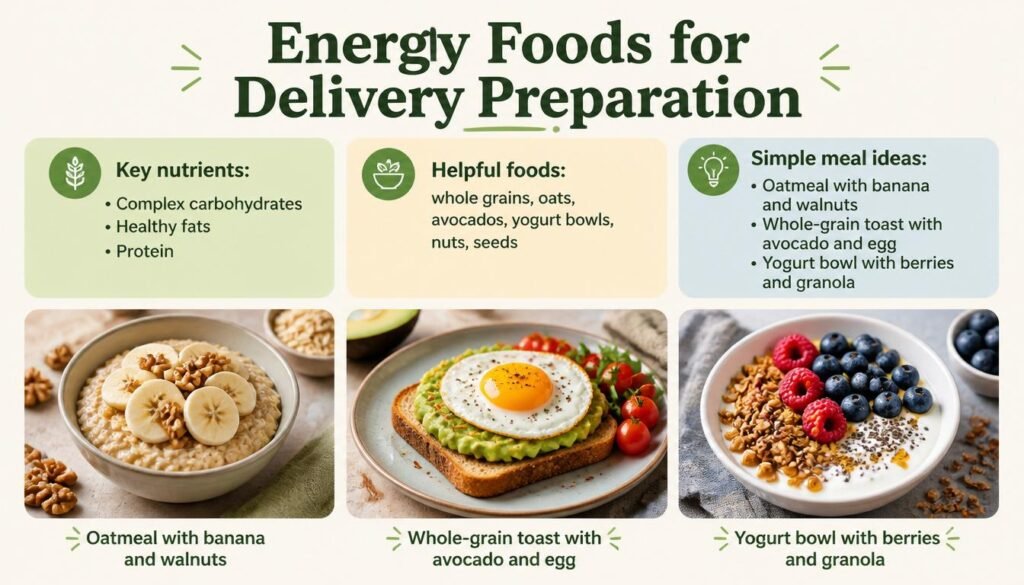
Energy Foods for Delivery Preparation
As delivery approaches, steady energy from balanced meals can feel especially helpful. Many women benefit from combining complex carbohydrates with healthy fats and protein.
Key nutrients: complex carbohydrates, healthy fats, protein
Helpful foods: whole grains, oats, avocados, yogurt bowls, nuts, seeds
Simple meal ideas:
- Oatmeal with banana and walnuts
- Whole-grain toast with avocado and egg
- Yogurt bowl with berries and granola
Practical tip: eating smaller meals more frequently may help maintain comfort and steady energy levels.
Because appetite can change late in pregnancy, flexible meal timing often works best.
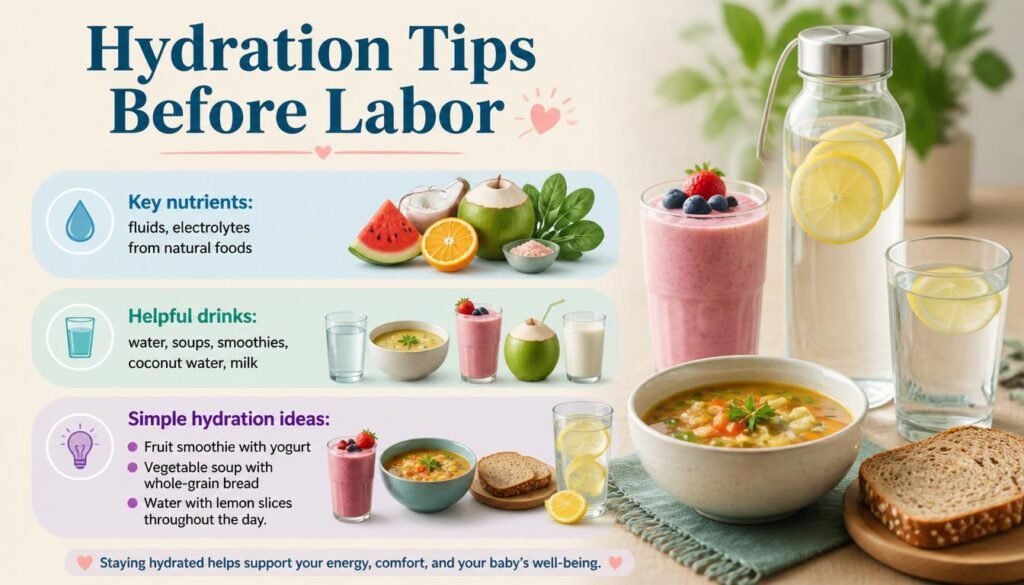
Hydration Tips Before Labor
Staying hydrated becomes especially important during the final weeks. Many women notice that regular fluids support comfort and daily routine as the body prepares for birth.
Key nutrients: fluids, electrolytes from natural foods
Helpful drinks: water, soups, smoothies, coconut water, milk
Simple hydration ideas:
- Fruit smoothie with yogurt
- Vegetable soup with whole-grain bread
- Water with lemon slices throughout the day
Practical tip: keeping a refillable water bottle nearby can make hydration easier to remember.
Since hydration needs vary, listening to your body’s signals can help guide daily fluid intake.
Third Trimester Diet Plan (Months 7–9)
| Nutrient | Benefit | Foods |
|---|---|---|
| Iron | Supports energy | Spinach |
| Fiber | Comfort support | Oats |
| Protein | Strength support | Chicken, tofu |
| Fluids | Hydration | Water, soups |
Foods to Eat During Pregnancy (Complete List)
Choosing the right foods during pregnancy can feel overwhelming at first, but a simple and balanced approach often works best. Many women benefit from including a variety of fruits, vegetables, proteins, dairy foods, and healthy snacks throughout the day. This type of pregnancy food list can help support steady energy and overall comfort during all stages of pregnancy.
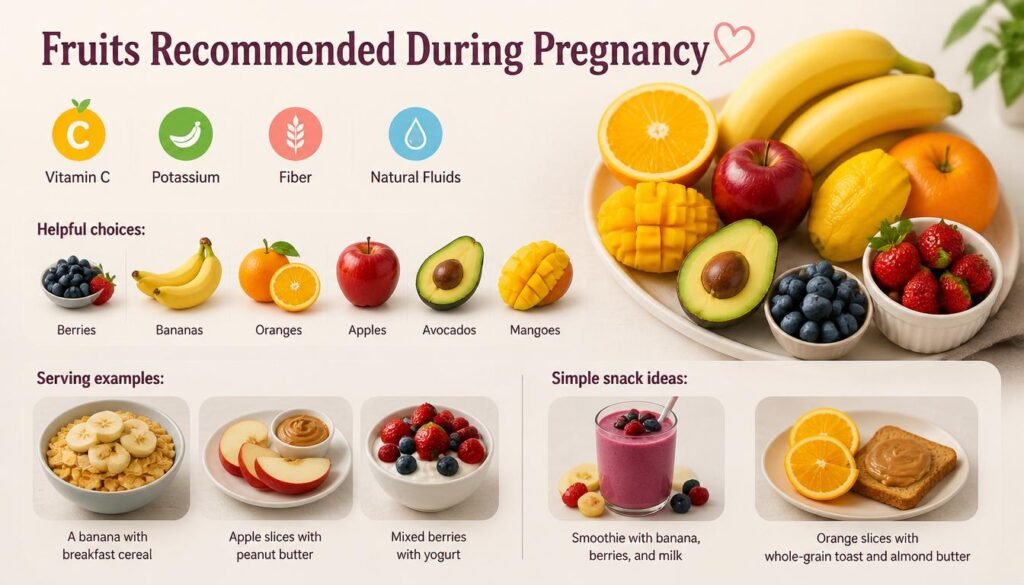
Fruits Recommended During Pregnancy
Fruits are often included in balanced prenatal diets because they provide vitamins, fiber, and natural hydration. Many women benefit from eating fruit as snacks or alongside meals.
Key nutrients: vitamin C, potassium, fiber, natural fluids
Helpful choices: berries, bananas, oranges, apples, avocados, mangoes
Serving examples:
- A banana with breakfast cereal
- Apple slices with peanut butter
- Mixed berries with yogurt
Simple snack ideas:
- Smoothie with banana, berries, and milk
- Orange slices with whole-grain toast and almond butter
Health experts commonly recommend washing fresh fruit well before eating and storing cut fruit safely in the refrigerator. Including two servings of fruit daily can support healthy pregnancy nutrition in an easy way.
Vegetables for Healthy Pregnancy
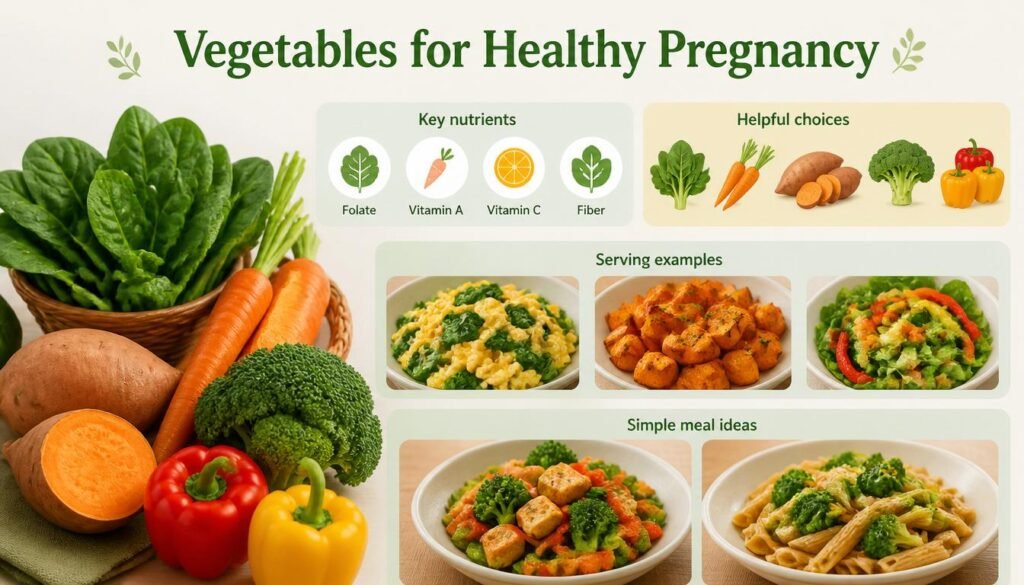
Vegetables provide fiber, vitamins, and minerals that can support balanced meals throughout pregnancy. Many women benefit from choosing vegetables of different colors to add variety and nutrition.
Key nutrients: folate, vitamin A, vitamin C, fiber
Helpful choices: leafy greens, carrots, sweet potatoes, broccoli, bell peppers
Serving examples:
- Spinach added to scrambled eggs
- Roasted sweet potatoes with dinner
- Bell peppers in salads or wraps
Simple meal ideas:
- Vegetable stir-fry with tofu or chicken
- Broccoli with olive oil and whole-grain pasta
Colorful vegetables are often included in pregnancy nutrition guides because they help make meals both nourishing and enjoyable.
Protein Sources for Pregnant Women
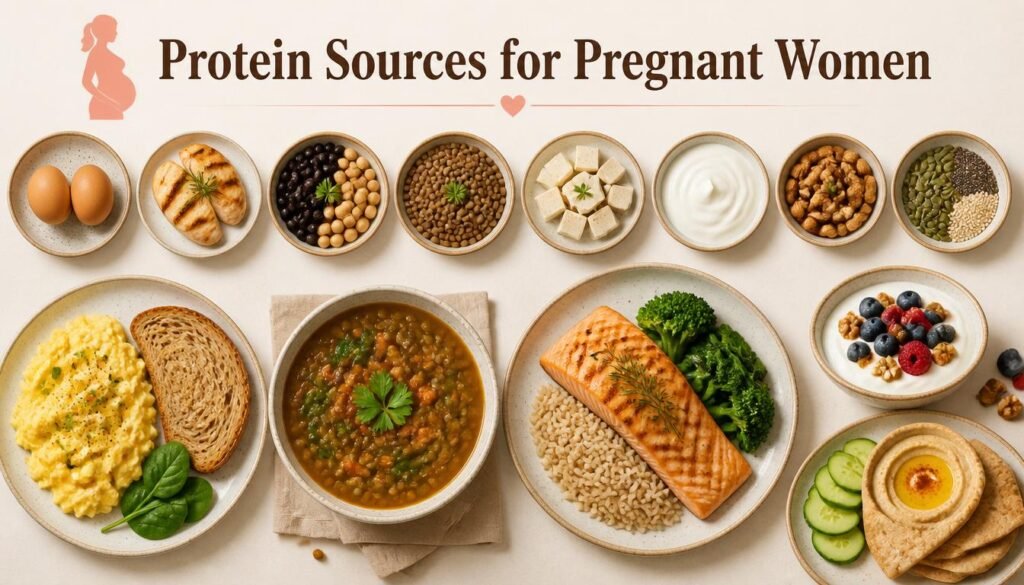
Protein supports everyday strength and helps maintain steady energy levels during pregnancy. Many women find it helpful to include protein in each meal.
Key nutrients: protein, iron, B vitamins, healthy fats
Helpful choices: eggs, poultry, beans, lentils, tofu, Greek yogurt, nuts, seeds, salmon
Serving examples:
- Scrambled eggs with whole-grain toast
- Lentil soup with vegetables
- Grilled salmon with rice and greens
Simple meal ideas:
- Greek yogurt with walnuts and berries
- Hummus with whole-grain pita and cucumber slices
Including both plant-based and animal protein options can support a flexible and balanced pregnancy diet.
Dairy Foods for Calcium Support
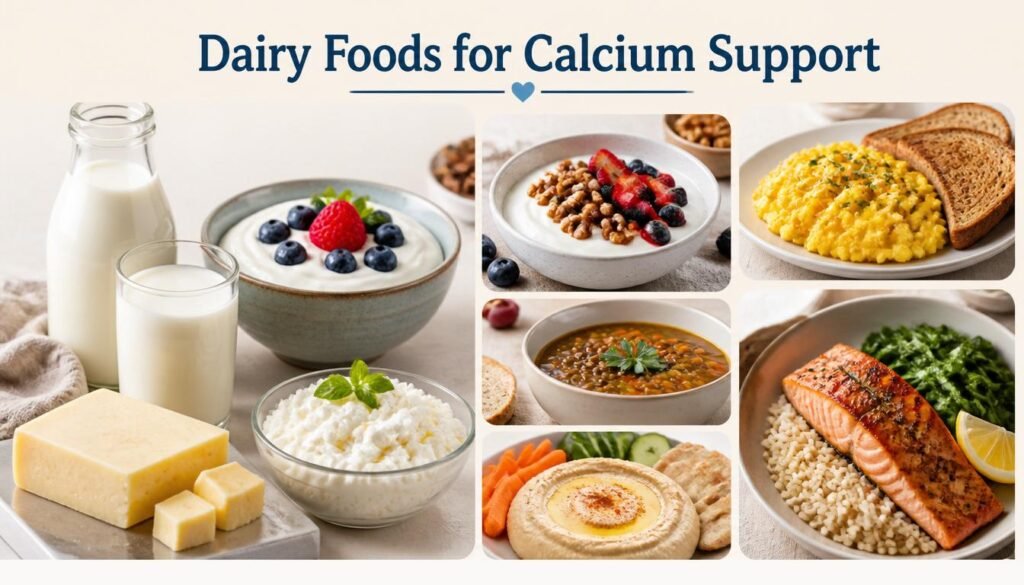
Calcium-rich foods are often included in foods to eat during pregnancy because they support bone strength and daily nutrition needs.
Key nutrients: calcium, protein, vitamin D (in fortified products)
Helpful choices: milk, yogurt, cheese, fortified almond milk, fortified oat milk
Serving examples:
- A glass of milk with breakfast
- Yogurt with fruit as a snack
- Cheese with whole-grain crackers
Simple snack ideas:
- Smoothie made with milk and banana
- Yogurt topped with granola and berries
Fortified plant-based alternatives can be helpful options for families who prefer non-dairy choices.
Healthy Snacks for Pregnancy
Healthy snacks can support steady energy between meals and help manage hunger throughout the day. Many women benefit from keeping simple snacks available at home or on the go.
Key nutrients: protein, fiber, healthy fats, calcium
Helpful choices: yogurt with fruit, nut butter toast, trail mix, smoothies, crackers with cheese, hummus with vegetables
Serving examples:
- Whole-grain crackers with cheese
- Apple slices with peanut butter
- Trail mix with nuts and dried fruit
Simple snack ideas:
- Banana smoothie with yogurt
- Carrot sticks with hummus
Planning snacks ahead of time can make pregnancy meal routines easier and more comfortable.
Foods to Eat During Pregnancy (Complete List)
| Food Group | Examples | Key Nutrients |
|---|---|---|
| Fruits | Apples, bananas | Vitamins |
| Vegetables | Broccoli, carrots | Fiber |
| Protein | Eggs, beans | Protein |
| Dairy | Milk, yogurt | Calcium |
| Snacks | Nuts, smoothies | Healthy fats |
Foods to Avoid During Pregnancy
Most everyday foods can be part of a healthy pregnancy routine. However, health experts commonly recommend limiting certain items during pregnancy as part of a simple pregnancy food safety checklist. Choosing safer alternatives can help support a balanced pregnancy diet while keeping meals enjoyable and practical.
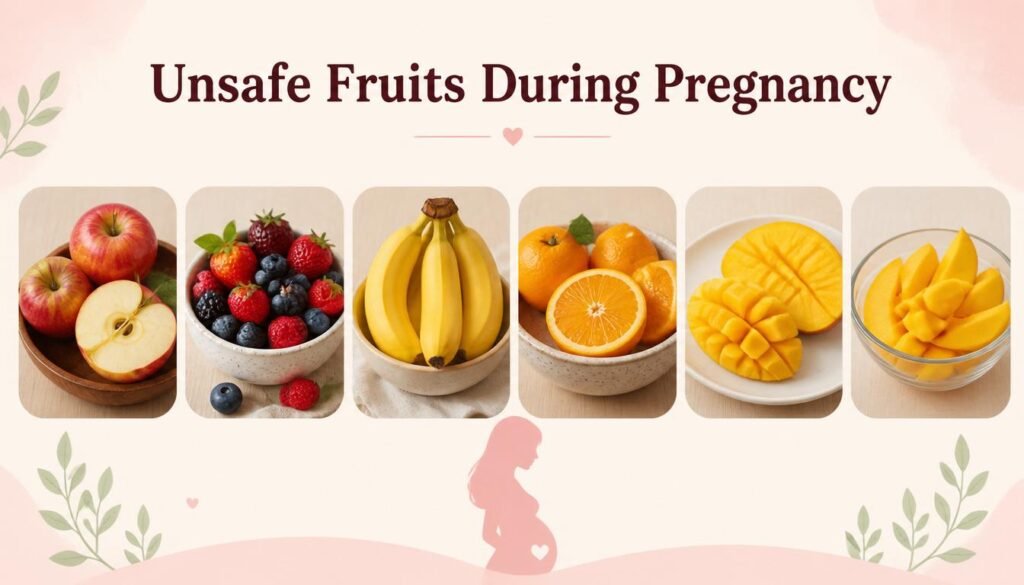
Unsafe Fruits During Pregnancy
Fresh fruit is usually encouraged as part of safe foods during pregnancy, especially when washed properly. However, a few situations may require extra attention.
Health experts commonly recommend limiting:
- unwashed fresh fruits
- pre-cut store fruit that has been left unrefrigerated
- fruit from open displays that may not be covered
Some fruits are sometimes debated in different cultures, but most can still be included in moderate portions as part of a varied diet.
Safer alternatives many women choose:
- whole apples
- berries
- bananas
- oranges
- mango slices prepared at home
Washing fruit well under running water before eating can help support everyday pregnancy nutrition tips.
Drinks to Avoid During Pregnancy
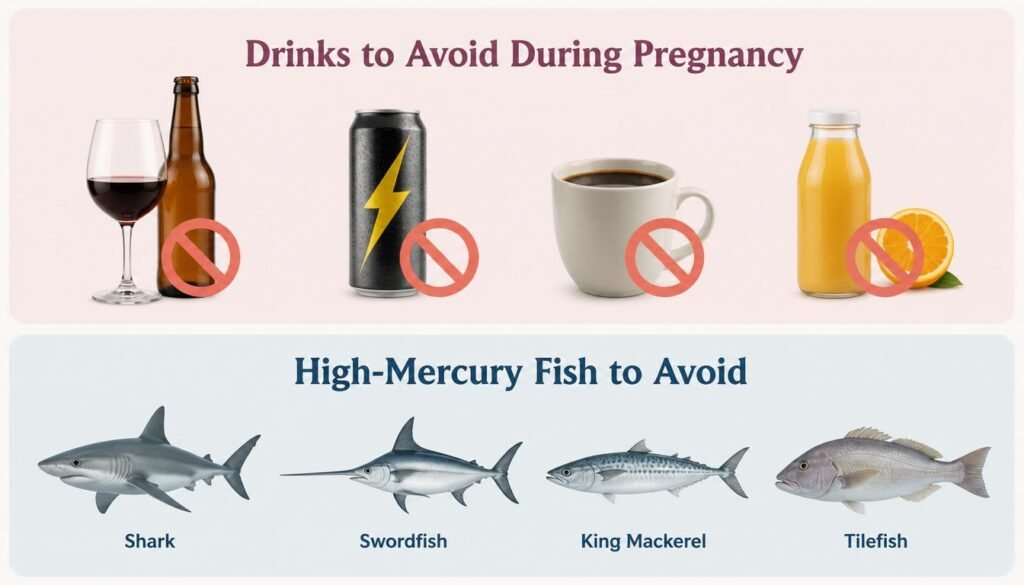
Beverage choices can affect hydration and comfort during pregnancy. Many women choose to limit certain drinks and replace them with gentler options.
Health experts commonly recommend limiting:
- alcohol
- energy drinks
- high-caffeine beverages in excess
- unpasteurized juices
Safer alternatives many women choose:
- water with lemon slices
- milk or fortified plant-based drinks
- fruit smoothies
- pregnancy-friendly herbal teas commonly used in the US and Europe
Choosing hydrating drinks throughout the day can help support a balanced pregnancy diet.
Raw and Processed Foods to Avoid
Some raw or lightly processed foods are often limited during pregnancy as part of general pregnancy nutrition tips.
Health experts commonly recommend limiting:
- raw seafood such as sushi made with uncooked fish
- undercooked meats or poultry
- deli meats unless heated before eating
- unpasteurized dairy products
Safer alternatives many women choose:
- fully cooked fish or chicken
- heated deli sandwiches
- pasteurized milk and cheeses available in most Western supermarkets
Preparing meals at home when possible can help support safer food choices during pregnancy.
High-Mercury Fish to Avoid
Fish can be a valuable part of pregnancy nutrition, but some varieties are often limited due to higher mercury levels.
Health experts commonly recommend limiting:
- shark
- swordfish
- king mackerel
- tilefish
Safer alternatives many women choose:
- salmon
- sardines
- cod
- trout
Including lower-mercury fish in weekly meals can help support a balanced pregnancy diet while maintaining variety.
Foods to Avoid During Pregnancy
| Category | Foods to Limit | Safer Alternatives |
|---|---|---|
| Drinks | Energy drinks | Milk |
| Fish | Swordfish | Salmon |
| Dairy | Unpasteurized cheese | Pasteurized cheese |
| Meat | Undercooked meat | Fully cooked meat |
Final Pregnancy Nutrition Checklist for Mothers
This simple pregnancy food safety checklist can help make daily nutrition easier to follow and share:
- eat a variety of fruits and vegetables daily
- include protein with each meal
- choose calcium-rich foods regularly
- drink water throughout the day
- select low-mercury fish options
- limit highly processed foods
- wash fresh produce before eating
- choose pasteurized dairy products
- prepare simple healthy snacks in advance
- adjust meals as pregnancy needs change
- seek personalized guidance if needed
Every pregnancy is unique, so speaking with a qualified healthcare professional can be helpful for personalized nutrition support throughout this journey.
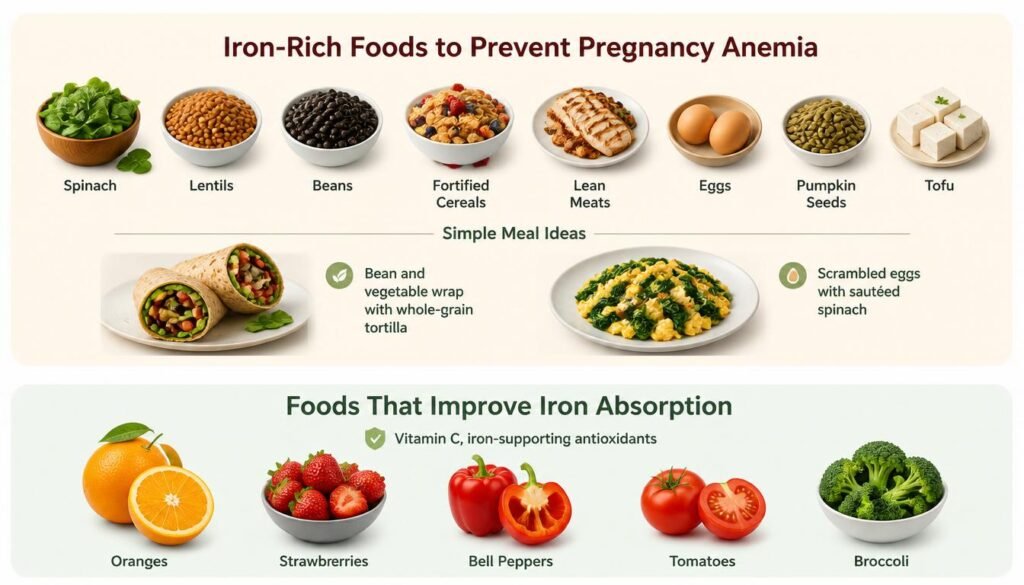
Iron-Rich Foods to Prevent Pregnancy Anemia
Iron plays an important role in supporting energy levels during pregnancy. Many women benefit from including a variety of iron-rich foods during pregnancy as part of everyday meals. A balanced diet that combines plant-based and animal-based options can help support healthy iron levels in a practical and flexible way.
Best Natural Iron Sources
Including natural iron sources in daily meals is often recommended as part of a balanced pregnancy diet. Both plant-based and animal-based foods can help support healthy iron intake.
Key nutrients: iron, protein, vitamin B12 (in animal foods), fiber (in plant foods)
Helpful foods: spinach, lentils, beans, fortified cereals, lean meats, eggs, pumpkin seeds, tofu
Serving examples:
- Spinach added to omelets or salads
- Lentil soup with vegetables
- Fortified cereal with milk
Simple meal ideas:
- Bean and vegetable wrap with whole-grain tortilla
- Scrambled eggs with sautéed spinach
Lifestyle tip: including one iron-rich food at each main meal can make daily nutrition easier to balance.
Every pregnancy is different, so choosing foods that fit your routine and preferences is often most helpful.
Foods That Improve Iron Absorption
Pairing iron-rich foods with vitamin-C foods can help the body absorb iron more effectively. Many women benefit from combining these foods within the same meal.
Key nutrients: vitamin C, iron-supporting antioxidants
Helpful foods: oranges, strawberries, bell peppers, tomatoes, broccoli
Serving examples:
- Spinach salad with orange slices
- Lentil soup with tomato base
- Fortified cereal with strawberries
Simple meal ideas:
- Bean bowl with roasted bell peppers
- Tofu stir-fry with broccoli
Lifestyle tip: adding a fruit or vegetable rich in vitamin C to one meal each day may help support healthy iron levels.
Small adjustments like these can make meals both enjoyable and nourishing.
Signs You Need More Iron
Iron needs can increase during pregnancy, and some women notice small changes in how they feel if intake is low. Paying attention to everyday signals can help guide food choices.
Common experiences some women notice:
- feeling unusually tired
- lower energy than usual
- pale-looking skin
- short periods of breathlessness during activity
Helpful foods to include more often: lentils, eggs, leafy greens, fortified cereals, lean meats
Simple meal idea:
- Whole-grain cereal with berries and milk
- Spinach and bean wrap with citrus fruit on the side
Lifestyle tip: keeping quick iron-rich snacks like pumpkin seeds or fortified cereal available at home can make it easier to include them regularly.
If energy levels feel different than usual, adjusting meals gradually can be a helpful first step.
Iron-Rich Foods to Prevent Pregnancy Anemia
| Food | Iron Type | Serving Idea |
|---|---|---|
| Spinach | Plant iron | Add to omelet |
| Lentils | Plant iron | Soup |
| Eggs | Moderate iron | Breakfast |
| Beef | Animal iron | Dinner bowl |
| Pumpkin seeds | Plant iron | Snack |
Healthy Drinks During Pregnancy
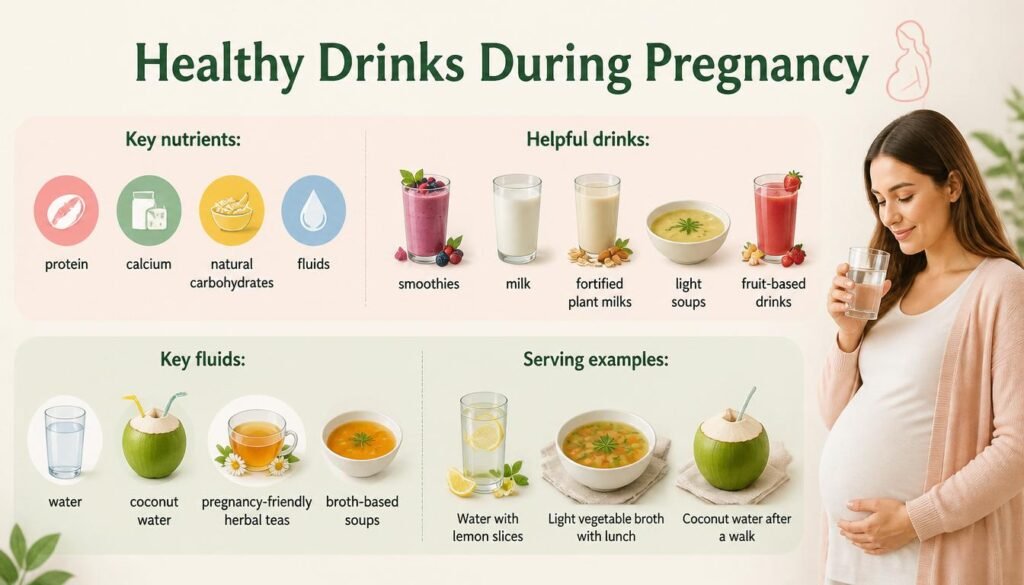
Staying hydrated is an important part of a balanced pregnancy routine. Many women benefit from choosing healthy pregnancy drinks that support comfort, digestion, and steady energy throughout the day.
Drinks That Reduce Weakness
Nutritious drinks can help support steady energy, especially on busy days or when appetite changes.
Key nutrients: protein, calcium, natural carbohydrates, fluids
Helpful drinks: smoothies, milk, fortified plant milks, light soups, fruit-based drinks
Serving examples:
- Banana smoothie with yogurt
- Warm vegetable soup with whole-grain toast
- Fortified almond milk with breakfast cereal
Simple drink ideas:
- Berry smoothie with milk or oat drink
- Mango yogurt smoothie
Lifestyle tip: keeping ingredients for simple smoothies at home can make quick energy support easier during the day.
Many women benefit from including one nourishing drink between meals when needed.
Fluids That Prevent Dehydration
Regular fluid intake supports comfort and helps maintain daily routine throughout pregnancy. Simple hydration habits can make a noticeable difference.
Key fluids: water, coconut water, pregnancy-friendly herbal teas, broth-based soups
Serving examples:
- Water with lemon slices
- Light vegetable broth with lunch
- Coconut water after a walk
Simple hydration ideas:
- Herbal tea in the evening
- Soup with whole-grain crackers
Lifestyle tip: carrying a refillable water bottle can make hydration easier to remember throughout the day.
Many women find that spreading fluids across the day feels more comfortable than drinking large amounts at once.
Natural Energy Drinks for Pregnant Women
Balanced homemade drinks can be helpful alternatives to caffeinated energy beverages. These options may help maintain steady energy while supporting hydration.
Key nutrients: natural carbohydrates, protein, healthy fats, calcium
Helpful drinks: banana smoothies, yogurt drinks, oat-based beverages, nut-based shakes
Serving examples:
- Banana and peanut butter smoothie
- Yogurt drink with berries
- Oat milk with cinnamon
Simple drink ideas:
- Almond butter smoothie with banana
- Strawberry yogurt shake
Lifestyle tip: preparing smoothies ahead of time and storing them in the refrigerator can make busy mornings easier.
Choosing simple ingredients often helps keep drinks both practical and nourishing.
Healthy Drinks During Pregnancy
| Drink | Benefit |
|---|---|
| Water | Hydration |
| Smoothies | Energy |
| Milk | Calcium |
| Coconut water | Electrolytes |
| Soup | Comfort hydration |
Sample One-Day Pregnancy Diet Chart (Easy Example)
A simple pregnancy diet chart example can make meal planning feel easier and more structured. Many women benefit from combining whole grains, fruits, vegetables, proteins, and healthy snacks throughout the day.
Breakfast Plan
Starting the day with a balanced breakfast may help maintain steady energy levels during the morning.
Key nutrients: fiber, protein, calcium, vitamins
Serving examples:
- Oatmeal with berries and milk
- Eggs with whole-grain toast
- Yogurt with fruit and granola
Simple meal idea:
- Smoothie with banana, nut butter, and milk
Lifestyle tip: preparing breakfast ingredients the night before can make mornings less rushed.
Breakfast choices can be adjusted depending on appetite and routine.
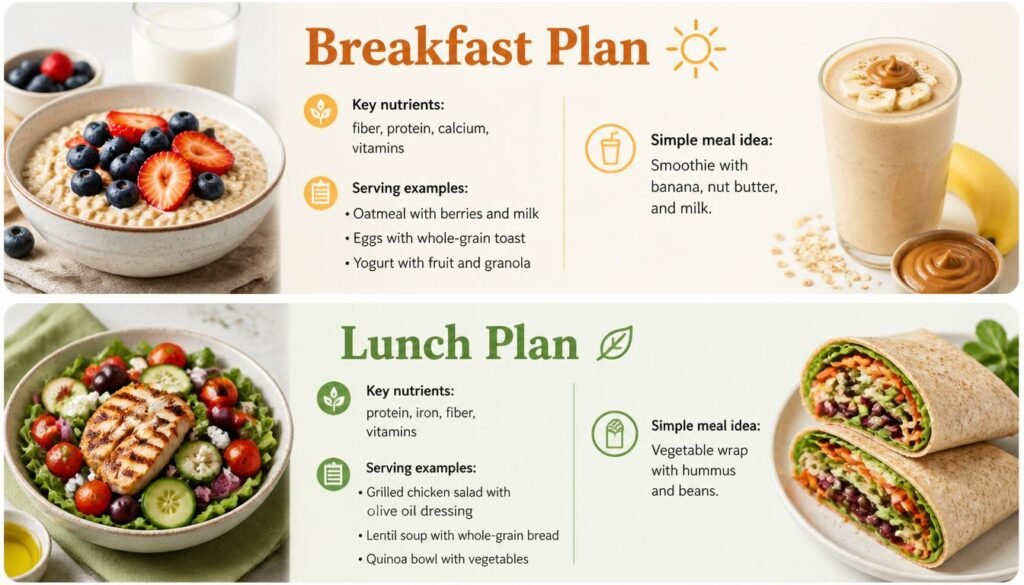
Lunch Plan
Lunch is a helpful opportunity to include vegetables, protein, and whole grains as part of a healthy pregnancy meal plan.
Key nutrients: protein, iron, fiber, vitamins
Serving examples:
- Grilled chicken salad with olive oil dressing
- Lentil soup with whole-grain bread
- Quinoa bowl with vegetables
Simple meal idea:
- Vegetable wrap with hummus and beans
Lifestyle tip: packing lunch ahead of time can make healthy choices easier during busy days.
Balanced midday meals often support steady afternoon energy.
Evening Snacks Plan
Healthy snacks can help maintain comfort between meals and support consistent nutrition throughout the day.
Key nutrients: protein, healthy fats, fiber
Serving examples:
- Fruit with yogurt
- Nuts and seeds
- Hummus with vegetables
Simple snack idea:
- Cheese with whole-grain crackers
Lifestyle tip: keeping snacks visible on the kitchen counter or in your bag can make them easier to remember.
Snack choices can be adjusted based on hunger and daily activity levels.
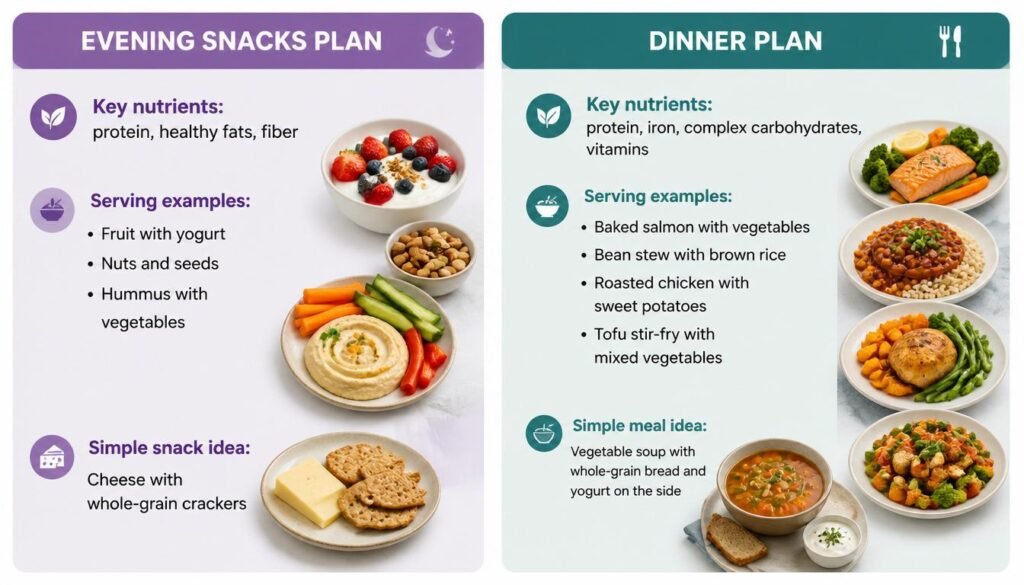
Dinner Plan
Dinner is a good time to include a variety of vegetables, proteins, and whole grains as part of a balanced evening routine.
Key nutrients: protein, iron, complex carbohydrates, vitamins
Serving examples:
- Baked salmon with vegetables
- Bean stew with brown rice
- Roasted chicken with sweet potatoes
- Tofu stir-fry with mixed vegetables
Simple meal idea:
- Vegetable soup with whole-grain bread and yogurt on the side
Lifestyle tip: cooking extra portions at dinner can provide leftovers for the next day’s lunch.
Nutritional needs can vary during pregnancy, so personalized advice from a qualified healthcare professional can be helpful when planning daily meals.
Sample One-Day Pregnancy Diet Chart (Easy Example)
| Meal | Example |
|---|---|
| Breakfast | Oatmeal + berries |
| Lunch | Chicken salad |
| Snack | Yogurt + fruit |
| Dinner | Salmon + vegetables |
Warning Signs Your Pregnancy Diet Needs Improvement
During pregnancy, eating patterns naturally change from time to time. However, some everyday signs may suggest that nutrition or hydration could use small adjustments. Paying attention to these signals can help support healthy pregnancy eating habits and maintain steady energy throughout the day.
Signs of Low Iron
Iron supports energy levels during pregnancy, and some women may notice small changes if their intake is lower than usual. These experiences are common and can often be improved by adjusting everyday food choices.
Some women may notice:
- feeling unusually tired during normal activities
- lower energy throughout the day
- pale-looking skin
- difficulty staying active for longer periods
Including iron-rich foods such as leafy greens, beans, fortified cereals, eggs, and lean meats can help support healthy nutrition during pregnancy.
Simple meal ideas:
- spinach omelet with whole-grain toast
- lentil soup with vegetables
- fortified cereal with berries and milk
Lifestyle tip: adding one iron-supporting food to each main meal may be helpful for maintaining energy levels.
Because nutrition needs vary between individuals, flexible food choices often work best.
Signs of Dehydration
Hydration plays an important role in comfort and daily energy. Some women may notice signs of low fluid intake when routines become busy or appetite changes.
Common signs may include:
- feeling thirsty more often
- dry lips
- headaches
- darker-colored urine
- lower energy levels
Increasing fluids such as water, soups, smoothies, and fruit with high water content can help support pregnancy hydration tips.
Simple hydration ideas:
- water with lemon slices
- vegetable soup with lunch
- smoothies with berries and yogurt
Lifestyle tip: keeping a refillable water bottle nearby often makes hydration easier throughout the day.
Every pregnancy routine is different, so fluid needs may change from person to person.
Signs of Poor Nutrition Intake
Busy schedules or changing appetite can sometimes make balanced meals harder to maintain. Some women may notice patterns that suggest their diet could benefit from small improvements.
Common experiences include:
- skipping meals regularly
- relying mostly on packaged foods
- limited variety in daily meals
- feeling tired more often than expected
Adding fruits, vegetables, whole grains, and protein foods to meals can help support healthy pregnancy eating habits.
Simple meal ideas:
- yogurt with fruit and granola
- vegetable wrap with beans or chicken
- oatmeal with banana and nuts
Lifestyle tip: planning one balanced meal each day in advance can make healthy choices easier to maintain.
Needs vary throughout pregnancy, so adjusting meals gradually is often helpful.
Warning Signs Your Pregnancy Diet Needs Improvement
| Sign | Possible Reason | Food Adjustment |
|---|---|---|
| Low energy | Low iron | Add lentils |
| Thirst | Low fluids | Drink water |
| Fatigue | Skipped meals | Add snacks |
Practical Pregnancy Diet Tips for Busy Mothers
Maintaining balanced meals during pregnancy can feel challenging with work, family responsibilities, and daily routines. Simple planning strategies can make healthy eating more manageable and consistent.
Easy Meal Planning Tips
Creating a flexible weekly routine can help support steady nutrition without adding stress to busy schedules.
Many health experts recommend:
- preparing simple weekly meal outlines
- batch cooking soups, grains, or roasted vegetables
- keeping healthy snacks ready in the kitchen
- choosing quick breakfast options like oatmeal or yogurt
Simple meal examples:
- overnight oats with berries
- vegetable soup prepared ahead for two days
- whole-grain toast with nut butter and banana
Lifestyle tip: preparing ingredients the evening before can make mornings easier and more relaxed.
Meal planning styles vary, so choosing routines that fit your lifestyle is often most helpful.
Budget-Friendly Nutrition Choices
Healthy pregnancy eating habits do not need to be expensive. Many affordable foods available in US and European supermarkets can support balanced nutrition.
Helpful options include:
- oats
- lentils
- beans
- eggs
- frozen vegetables
- bananas
- yogurt
- whole-grain bread
Simple meal ideas:
- lentil stew with carrots and onions
- oatmeal with banana slices
- scrambled eggs with toast and spinach
Lifestyle tip: buying frozen vegetables can be a practical way to include variety while saving time and money.
Balanced nutrition can be achieved with simple everyday ingredients.
Safe Supplement Guidance
Some women may benefit from prenatal supplements as part of their pregnancy routine. These are often recommended by healthcare providers to support overall nutrition alongside regular meals.
Supplements are usually intended to support—not replace—a balanced pregnancy diet.
Helpful habits include:
- taking supplements at the same time each day
- combining supplements with meals if comfortable
- continuing to include whole foods like fruits, vegetables, and proteins
Lifestyle tip: keeping supplements near breakfast items can make daily routines easier to remember.
Since needs vary between individuals, personalized guidance can be helpful when choosing supplements.
Final Pregnancy Nutrition Checklist for Mothers
| Daily Habit | Done? |
|---|---|
| Eat fruits | ☐ |
| Drink water | ☐ |
| Include protein | ☐ |
| Eat calcium foods | ☐ |
| Choose safe fish | ☐ |
| Limit processed food | ☐ |
Highly shareable format.
Final Pregnancy Nutrition Checklist for Mothers
This simple pregnancy nutrition checklist can help support consistent healthy eating habits throughout pregnancy:
- eat fruits and vegetables daily
- include protein at each meal
- choose calcium-rich foods regularly
- stay hydrated throughout the day
- limit highly processed foods
- select low-mercury fish options
- include iron-supporting foods regularly
- prepare simple healthy snacks in advance
- adjust meals as pregnancy progresses
- seek personalized nutrition guidance when needed
Following these practical pregnancy diet tips can help make daily nutrition feel easier and more manageable.
For personalized guidance that matches your individual needs, speaking with a qualified healthcare professional can be especially helpful during pregnancy.
1. What to eat in every month of pregnancy?
Eat folate-rich foods in early months (spinach, oranges), protein and calcium in mid-pregnancy (eggs, yogurt, lentils), and iron-rich foods in later months (dates, beans, leafy greens) to support baby growth at each stage.
2. Can I do 10,000 steps while pregnant?
Yes, most healthy pregnancies allow walking 10,000 steps daily, but reduce intensity if you feel dizziness, pain, or fatigue, and always follow your doctor’s advice. 🚶♀️
3. What are the complete foods in a pregnant woman’s diet?
A balanced pregnancy diet includes fruits, vegetables, whole grains, dairy, protein sources (eggs, beans, fish), healthy fats, and plenty of water for full nutrition support.
4. What not to eat in which months of pregnancy?
Avoid raw foods, unpasteurized dairy, high-mercury fish, excess caffeine, and processed junk foods throughout pregnancy, especially during the first trimester when baby development begins
5. What are 5 foods to avoid while pregnant?
Avoid raw fish, unpasteurized milk, undercooked meat, high-mercury fish, and alcohol to reduce infection and development risks.
6. Will my baby be hungry if I don’t eat?
If you skip meals occasionally, your baby still gets nutrients first, but frequent missed meals can affect your energy and your baby’s growth, so regular healthy eating is important.
7. Which fruit is not good in pregnancy?
Avoid unripe papaya and excessive pineapple in early pregnancy; otherwise, most fresh fruits like bananas, apples, and berries are safe and beneficial.
8. What is the hardest month of pregnancy?
Many women find the first trimester hardest due to nausea and fatigue, while others feel more discomfort in the last months because of weight, sleep issues, and body changes.
9. What is the golden rule for every pregnant woman?
Eat balanced meals, stay hydrated, attend regular checkups, and listen to your body’s warning signs to keep both mother and baby safe.
Leave a Reply