Introduction
Pregnancy brings many physical and emotional changes, especially for beginners experiencing it for the first time. As the body changes month by month, many women wonder whether exercise is still safe or if movement could harm the baby. Concerns about fatigue, back pain, pelvic discomfort, and low energy are also very common during pregnancy.
The good news is that gentle movement and safe prenatal exercise can often support both physical and emotional wellness during a healthy pregnancy. Simple activities like walking, stretching, breathing exercises, and beginner-friendly prenatal workouts may help improve circulation, posture, flexibility, and everyday comfort. Many women also find that staying active helps reduce stiffness and supports better sleep during pregnancy.
For beginners, exercise does not need to feel intense or complicated. Small amounts of gentle movement done consistently can make daily activities feel easier as the belly grows and posture changes. Safe pregnancy exercises may also help support balance, mobility, and muscle strength needed during labor and recovery.
Research and professional prenatal wellness guidelines suggest that moderate physical activity during healthy pregnancies can offer several benefits when approved by a healthcare provider. Organizations like the World Health Organization support regular moderate exercise for many healthy pregnant women because it may help improve overall well-being during pregnancy.
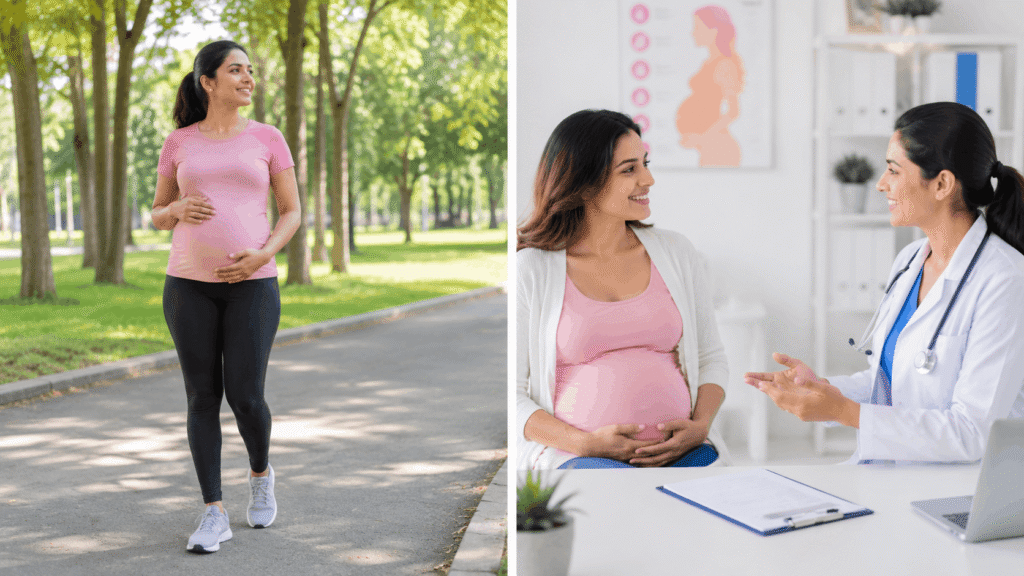
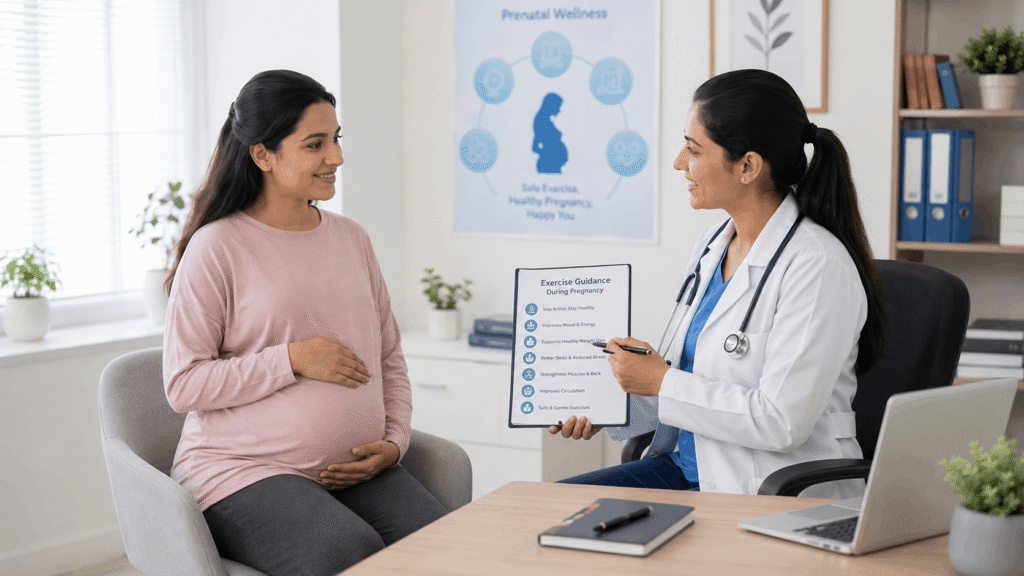
Before starting any prenatal workout or exercise routine, it is important to speak with a doctor or qualified healthcare provider. Every pregnancy is different, and professional guidance can help ensure exercises are appropriate for individual health needs and pregnancy stages.
Combining safe physical activity with a healthy pregnancy diet plan month-by-month can support both maternal and baby health throughout pregnancy.
Table of Contents
Benefits of Exercise During Pregnancy
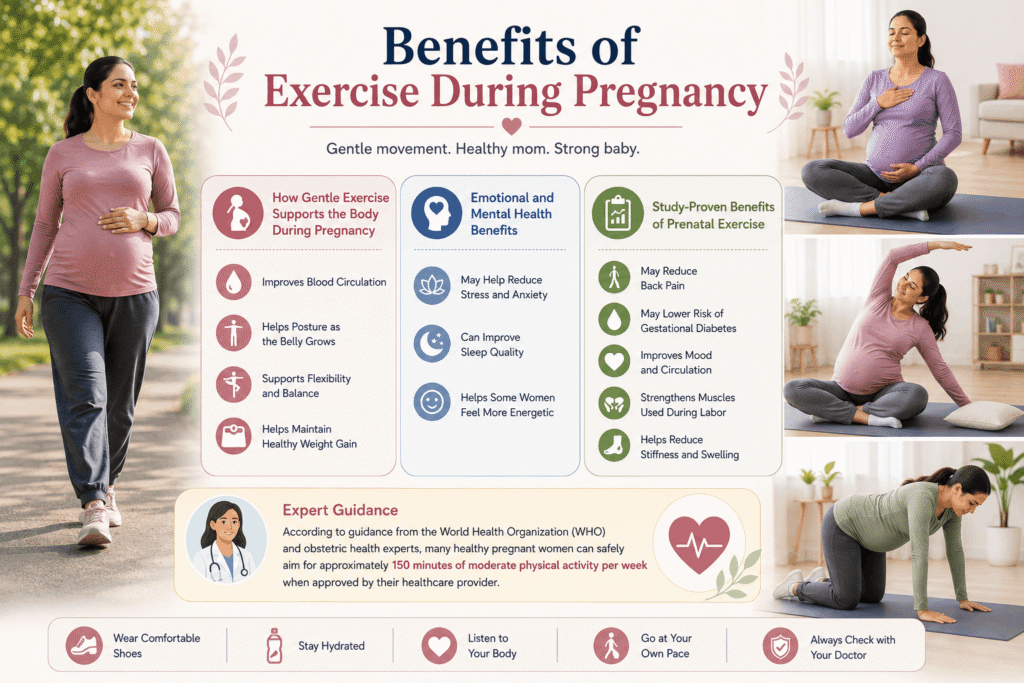
Gentle pregnancy exercise can support the body in many ways throughout all three trimesters. While every pregnancy experience is different, safe movement often helps improve comfort, flexibility, circulation, and emotional well-being. For many beginners, understanding these benefits can make exercise feel less intimidating and more manageable.
How Gentle Exercise Supports the Body During Pregnancy
As pregnancy progresses, the body works harder to support both mother and baby. Gentle prenatal workouts can help the body adjust to these changes more comfortably.
Improves Blood Circulation
Pregnancy naturally increases blood volume, which can sometimes lead to swelling and discomfort in the legs and feet. Gentle activities like walking and simple stretching exercises can encourage better circulation and help maintain steady blood flow during pregnancy.
Better circulation may also help reduce feelings of heaviness and mild swelling during pregnancy, especially later in the third trimester.
Helps Posture as the Belly Grows
As the baby bump grows, many women naturally notice changes in posture and body balance. As pregnancy progresses, increased body weight and posture changes can place additional strain on the lower back, hips, and shoulder area.
Beginner-friendly pregnancy exercises can help support posture by strengthening muscles that stabilize the body.
Gentle core support exercises, pelvic tilts, and stretching routines may help reduce some of the discomfort caused by posture changes during pregnancy.
Supports Flexibility and Balance
Pregnancy hormones can affect joints and flexibility, sometimes making balance feel different than usual. Safe prenatal movement can help improve mobility and flexibility while supporting safer body movement during daily activities.
Exercises focused on balance and gentle stretching may also help reduce stiffness in the hips, legs, and lower back.
Helps Maintain Healthy Weight Gain
Healthy pregnancy weight gain is normal and important for baby development. Gentle physical activity may help support healthy weight management during pregnancy when combined with proper nutrition and medical guidance.
The goal during pregnancy is not weight loss. Instead, safe movement can support overall health, mobility, and energy levels.
Emotional and Mental Health Benefits
Pregnancy affects emotional health as much as physical health. Hormonal changes, sleep disruptions, and stress can sometimes feel overwhelming, especially for first-time mothers.
May Help Reduce Stress and Anxiety
Many women find that gentle exercise helps them feel calmer and more relaxed. Walking, breathing exercises, and prenatal stretching can create a sense of routine and emotional balance during pregnancy.
Even short periods of movement may help some women manage daily stress more comfortably.
Can Improve Sleep Quality
Sleep difficulties are common during pregnancy, especially as the pregnancy progresses. Gentle movement during the day may help the body relax more naturally at night.
Stretching and light walking are often easier for beginners who feel uncomfortable with more intense workouts.
Helps Some Women Feel More Energetic
Pregnancy fatigue can make even simple daily tasks feel exhausting. Although rest is important, light movement may help improve energy levels for some women by supporting circulation and reducing stiffness.
The key is choosing exercises that feel gentle rather than exhausting.
Study-Proven Pregnancy Exercises for Beginners Guide 1-9
Research and professional prenatal wellness guidelines continue to support safe moderate exercise during healthy pregnancies. Experts suggest that gentle physical activity may help improve both maternal comfort and overall pregnancy wellness when performed safely.
Studies and women’s health exercise recommendations suggest that regular moderate prenatal exercise may help:
- Reduce lower back pain
- Improve circulation
- Lower the risk of gestational diabetes
- Improve mood and emotional wellness
- Reduce stiffness and swelling
- Support healthy pregnancy weight gain
- Strengthen muscles used during labor and recovery
Many healthcare organizations, including global health experts and obstetric wellness guidelines, commonly recommend around 150 minutes of moderate weekly activity for healthy pregnancies when approved by a healthcare provider.
This does not mean intense workouts are necessary. For beginners, gentle activities such as walking, stretching, prenatal yoga, breathing exercises, and low-impact movement are often enough to support many of these benefits safely.
Most importantly, pregnancy exercise should feel supportive rather than stressful. Listening to the body, moving gently, and focusing on comfort are often the safest and most realistic approaches for beginners.
Is Exercise Safe During Pregnancy?
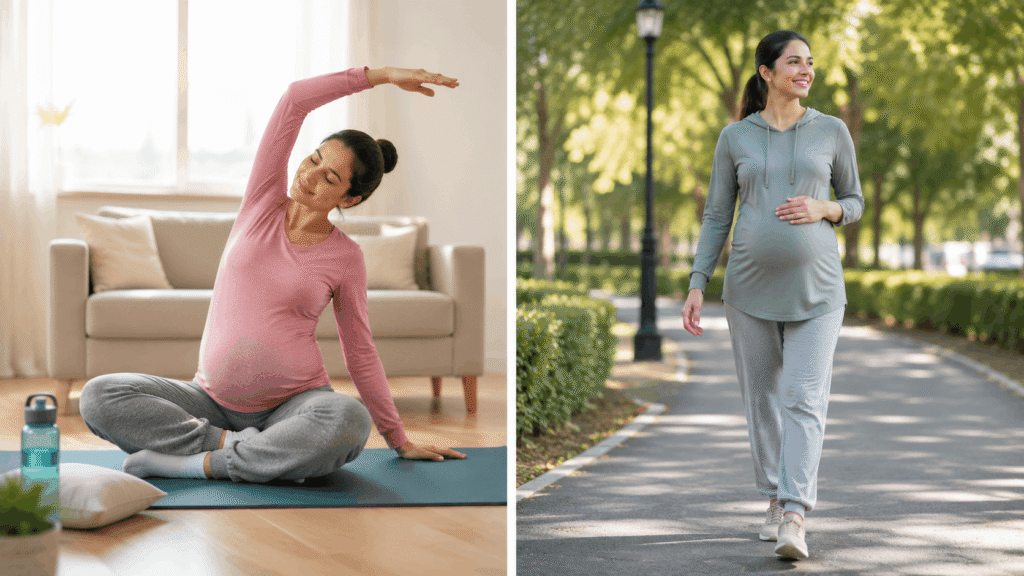
Many pregnant beginners worry that exercise could harm the baby or cause complications. These fears are completely understandable, especially during a first pregnancy. The good news is that gentle prenatal exercise is considered safe for many women with healthy pregnancies when approved by a healthcare provider.
Safe movement during pregnancy is usually focused on comfort, circulation, flexibility, posture, and overall wellness rather than intense fitness goals. Research and prenatal wellness guidelines suggest that moderate physical activity during healthy pregnancies may help reduce lower back pain, improve circulation, support emotional well-being, and maintain healthy movement throughout pregnancy.
For beginners, the safest approach is usually gentle, low-impact activity that feels comfortable and manageable.
When Pregnancy Exercise Is Usually Safe
Many women with healthy pregnancies can safely stay active throughout all three trimesters. Exercise routines often need small adjustments as the body changes, but gentle movement is commonly encouraged during uncomplicated pregnancies.
Healthy Low-Risk Pregnancies
Exercise is often considered safe during low-risk pregnancies when approved by a doctor or qualified healthcare provider. Women without serious pregnancy complications are commonly encouraged to stay active with gentle movement and beginner-friendly prenatal workouts.
Research suggests that moderate exercise during healthy pregnancies may support circulation, posture, mobility, and emotional wellness. Many prenatal wellness experts also recommend regular activity to help reduce stiffness and maintain comfortable movement as pregnancy progresses.
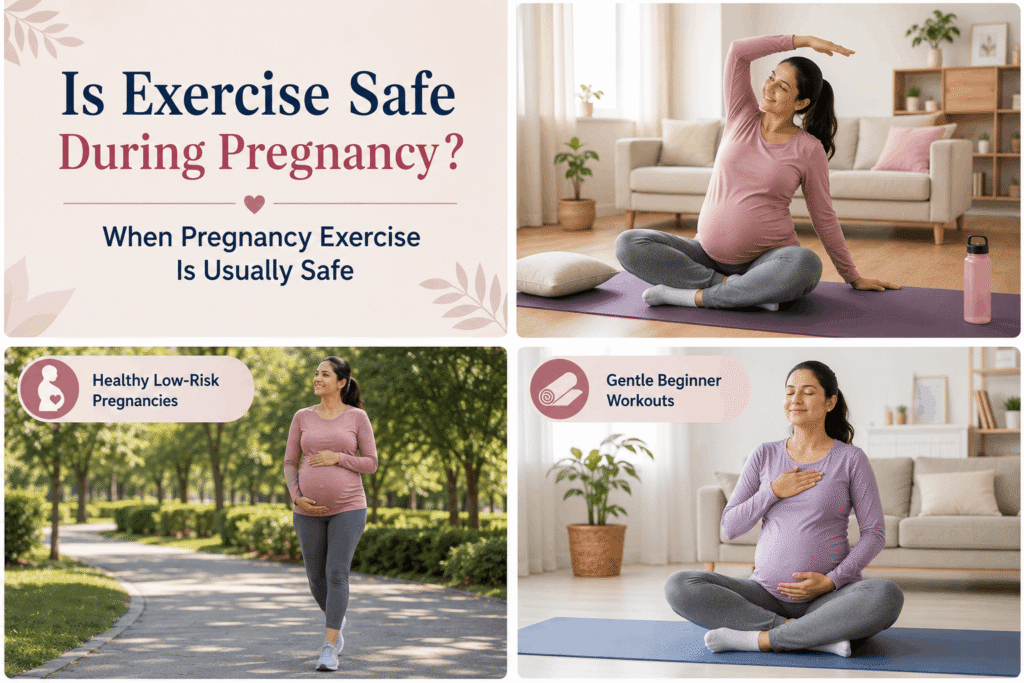
Gentle Beginner Workouts
Pregnancy workouts do not need to feel intense to be beneficial. Simple exercises such as walking, stretching, breathing exercises, and light prenatal movement are often enough for beginners.
Gentle workouts are usually easier on the joints and muscles while still supporting flexibility and circulation. For many women, slow and consistent movement feels more realistic and comfortable than high-intensity workouts during pregnancy.
Low-Impact Movement
Low-impact exercises are generally safer during pregnancy because they place less pressure on the joints and reduce fall risk. Walking, prenatal stretching, pelvic tilts, and controlled mobility exercises are commonly recommended beginner options.
As the belly grows and balance changes, low-impact movement may help women stay active more comfortably without putting unnecessary stress on the body.
When to Talk to Your Doctor First
Although exercise is safe for many pregnant women, some situations require medical guidance before starting or continuing physical activity.
High-Risk Pregnancy
Women with high-risk pregnancies should always speak with their healthcare provider before beginning a prenatal workout routine. Certain medical conditions or pregnancy complications may require exercise restrictions or specialized guidance.
Bleeding or Severe Pain
Exercise should stop immediately if vaginal bleeding, severe abdominal pain, or unusual discomfort occurs. These symptoms should always be discussed with a healthcare provider as soon as possible.
Pain is the body’s warning sign. Pregnancy exercise should never feel extreme or painful.
Dizziness or Breathing Difficulty
Feeling lightheaded, dizzy, faint, or extremely short of breath during movement can signal that the body needs rest or medical attention. Gentle exercise should allow comfortable breathing and controlled movement.
Pregnancy Complications
Women experiencing complications such as severe swelling, contractions, placenta concerns, or other medical issues should always follow professional medical advice regarding exercise safety.
Every pregnancy is different, and personalized guidance is important for safe prenatal fitness.
Pregnancy Exercise Safety Rules
Pregnancy exercise should focus on safety, comfort, and gentle movement instead of pushing physical limits. Following basic safety habits can help beginners feel more confident and comfortable staying active during pregnancy.
Important Safety Tips for Beginners
Stay Hydrated
Hydration becomes especially important during pregnancy because the body needs extra fluids to support circulation and temperature regulation.
Drink water before, during, and after exercise. Even light activity can increase fluid needs, especially in warmer environments.
As pregnancy progresses, factors such as baby positioning become increasingly important. Read more about can an incorrect position affect uterine size in pregnancy.
Avoid Overheating
Pregnant women may become overheated more easily during exercise. Workouts should feel light to moderate rather than exhausting.
Choose breathable clothing, avoid extremely hot environments, and stop exercising if overheating occurs.
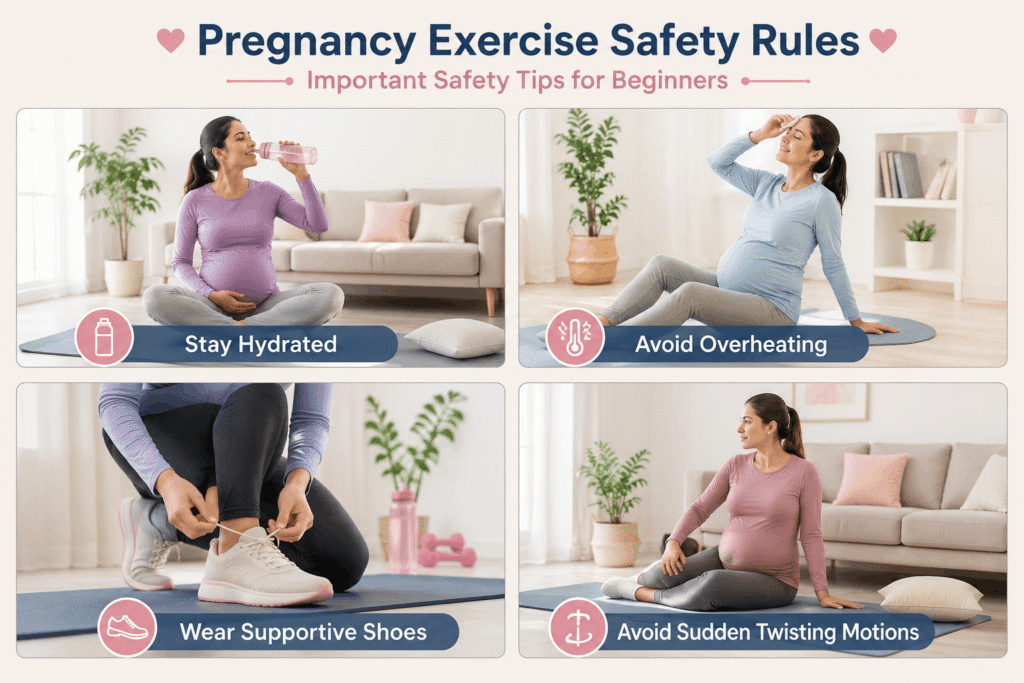
Wear Supportive Shoes
Supportive footwear may help reduce strain on the knees, hips, and lower back. Proper shoes also improve balance and stability as posture changes during pregnancy.
During pregnancy, feeling comfortable and supported is more important than focusing on fitness performance.
Move Slowly
Sudden movements can sometimes feel uncomfortable as balance and flexibility change throughout pregnancy. Slow, controlled movement is usually safer and easier for beginners.
Transition carefully between positions, especially when standing up from the floor.
Avoid Sudden Twisting Motions
Twisting movements may place unnecessary pressure on the core and lower back during pregnancy. Gentle stretching and smooth movement patterns are generally more comfortable and beginner friendly.
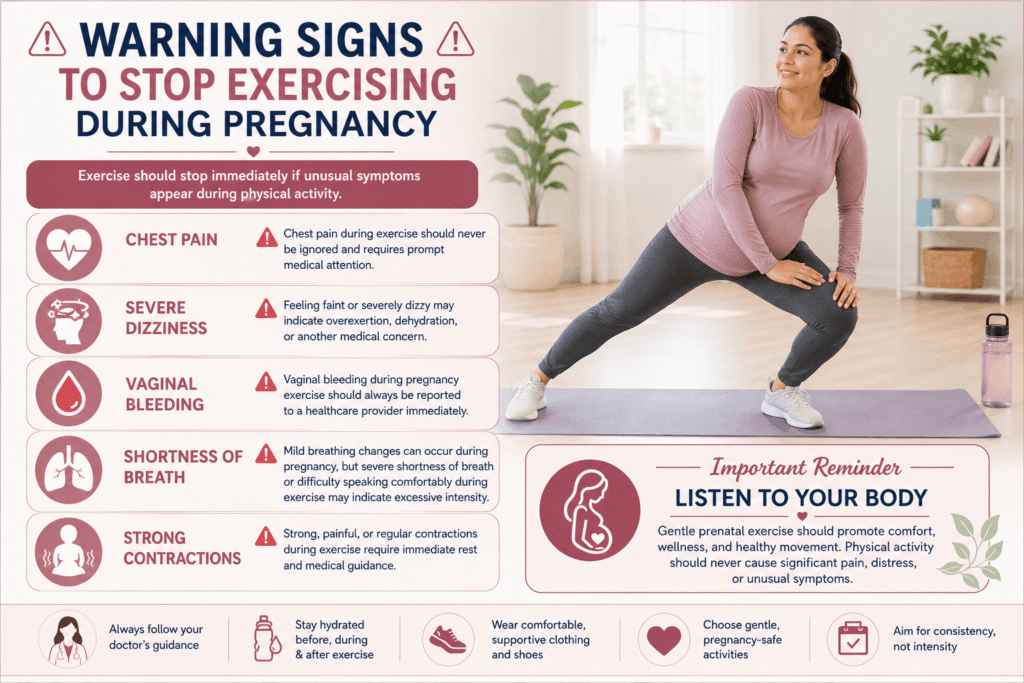
Warning Signs to Stop Exercising
Exercise should stop immediately if unusual symptoms appear during physical activity.
Chest Pain
Chest pain during exercise should never be ignored and requires medical attention.
Severe Dizziness
Feeling faint or severely dizzy may signal overexertion, dehydration, or other concerns.
Vaginal Bleeding
Bleeding during pregnancy exercise should always be discussed with a healthcare provider immediately.
Shortness of Breath
Mild breathing changes can happen during pregnancy, but severe shortness of breath or difficulty speaking comfortably during exercise may indicate that the intensity is too high.
Strong Contractions
Strong or painful contractions during exercise require immediate rest and medical guidance.
Listening to the body is one of the most important pregnancy fitness habits. Gentle movement should support comfort, not create stress or discomfort.
Gentle Pregnancy Exercises Month 1 to 9
Pregnancy workouts often change throughout each trimester because the body changes significantly from month to month. Energy levels, balance, flexibility, and comfort all shift during pregnancy, which is why exercise routines should stay flexible and gentle.
The goal is not intense training. Instead, safe prenatal exercise focuses on helping women move comfortably, maintain mobility, and support overall wellness during pregnancy.
Why Exercise Changes Throughout Pregnancy
Energy Changes by Trimester
Some women feel exhausted during the first trimester because of hormonal changes and nausea. Energy often improves during the second trimester before physical discomfort increases later in pregnancy.
Changing your workout routine based on how energetic or tired you feel each day is a normal part of pregnancy.
Belly Growth Affects Balance
As the belly grows, posture and balance naturally change. Exercises that once felt easy may become uncomfortable later in pregnancy.
This is why many prenatal workouts become slower and more supportive during the third trimester.
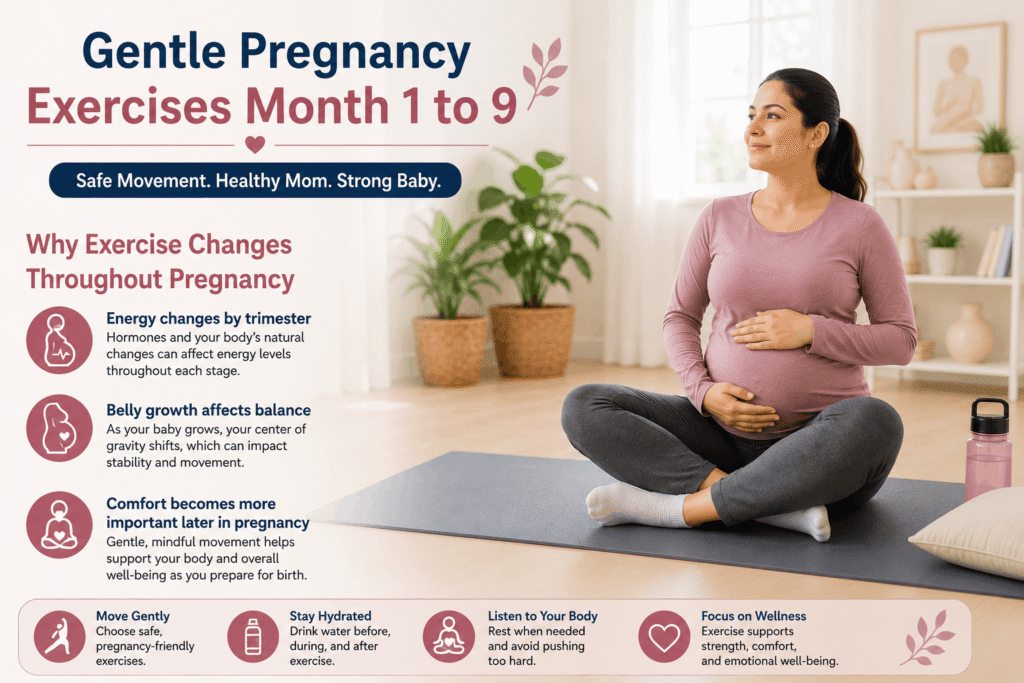
Comfort Becomes More Important Later in Pregnancy
Late pregnancy workouts are usually focused more on mobility, stretching, circulation, breathing, and relaxation instead of strength or endurance.
Listening to the body becomes increasingly important during months 7 to 9.
First Trimester Exercise Routine (Months 1–3)
The first trimester can feel physically and emotionally overwhelming for many beginners. Fatigue, nausea, and body changes often make exercise feel difficult at first.
Gentle movement is usually the safest and most comfortable starting point during early pregnancy.
Women experiencing nausea, fatigue, or discomfort may also benefit from learning about early pregnancy problems and safe solutions at home.
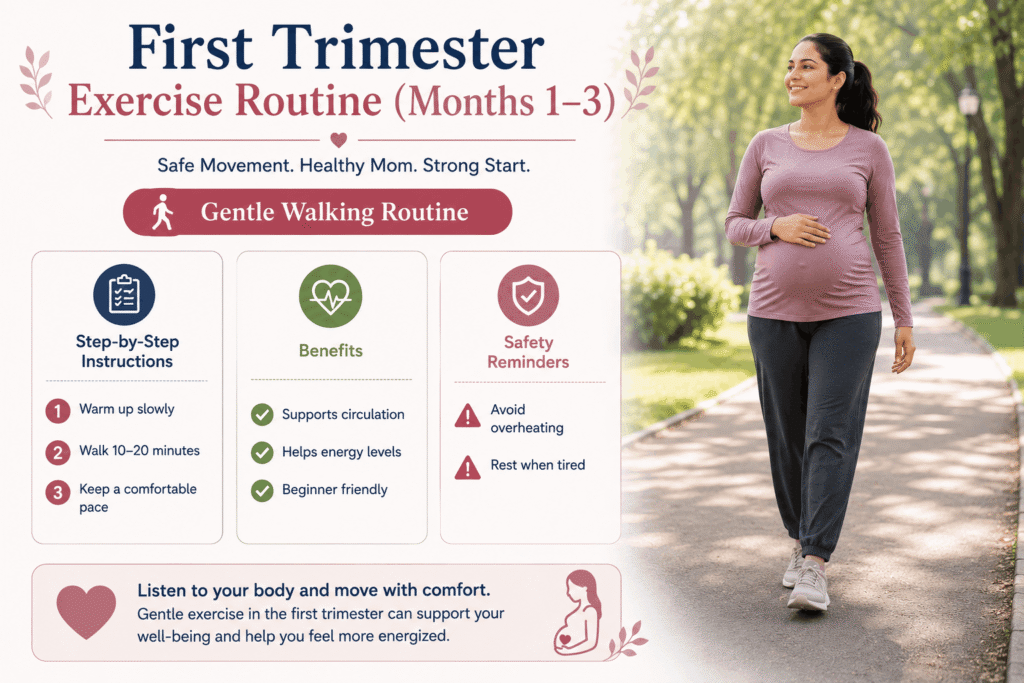
Gentle Walking Routine
Walking is one of the most beginner-friendly pregnancy exercises because it is gentle, low impact, and easy to adjust based on energy levels.
Step-by-Step Instructions
- Start with comfortable supportive shoes.
- Warm up slowly for 2–3 minutes.
- Walk at a comfortable pace for 10–20 minutes.
- Keep shoulders relaxed and posture natural.
- Slow down gradually before finishing.
Benefits
- Supports circulation
- Helps maintain gentle daily movement
- May improve mood and energy levels
- Beginner friendly and low impact
Safety Reminders
- Avoid overheating during walks
- Drink water regularly
- Slow down if breathing feels uncomfortable
- Rest when tired
Beginner Modifications
Women experiencing fatigue can start with shorter 5–10 minute walks and gradually increase time when energy improves.
Common Mistakes to Avoid
- Walking too fast
- Exercising in extreme heat
- Ignoring exhaustion
- Wearing unsupportive shoes
When to Stop
Stop walking if severe dizziness, pain, bleeding, or shortness of breath occurs.
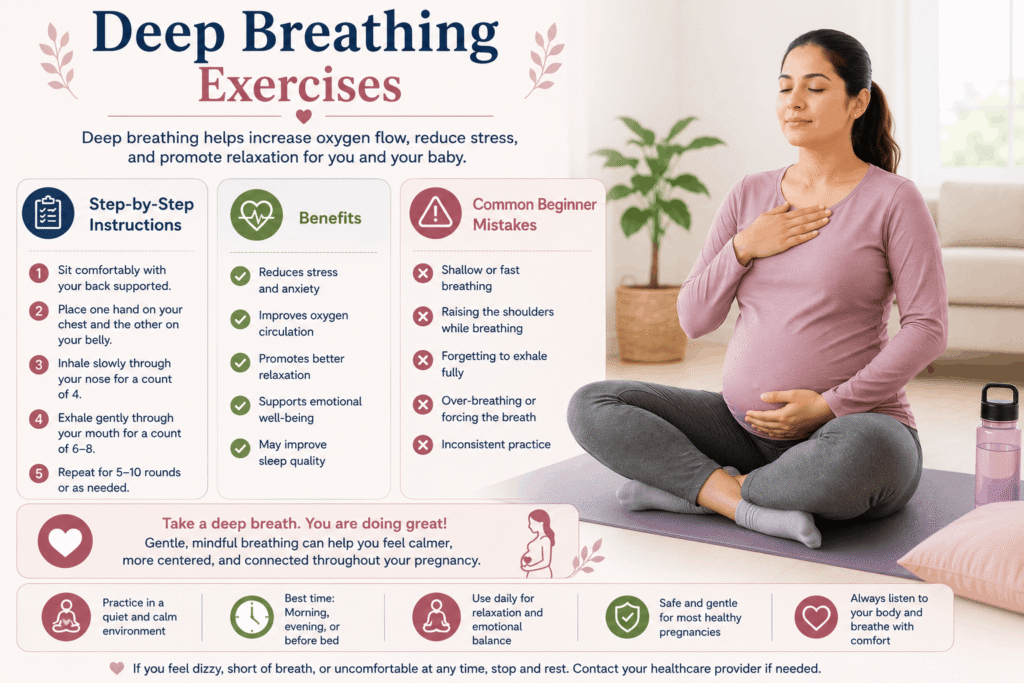
Deep Breathing Exercises
Breathing exercises may help pregnant women feel calmer and more relaxed while also supporting stress management and body awareness.
Step-by-Step Instructions
- Sit comfortably in a quiet space.
- Relax your shoulders and neck.
- Slowly inhale through the nose for several seconds.
- Exhale gently through the mouth.
- Repeat slowly for 5–10 minutes.
Benefits
- Encourages relaxation
- May help reduce stress and anxiety
- Supports calm breathing habits
- Beginner friendly for all fitness levels
Safety Reminders
Breathing exercises should feel calming rather than forced. Stop if dizziness occurs.
Beginner Modifications
Women uncomfortable sitting on the floor can perform breathing exercises in a chair or supported position.
Common Beginner Mistakes
- Breathing too quickly
- Tensing shoulders
- Holding the breath too long
When to Stop
Pause immediately if breathing exercises cause dizziness or discomfort
Gentle Stretching for Early Pregnancy
Stretching can help reduce stiffness and improve flexibility during the first trimester when body changes begin affecting posture and comfort.
Step-by-Step Instructions
- Stand or sit comfortably.
- Stretch slowly without bouncing.
- Focus on shoulders, neck, hips, and legs.
- Hold each stretch gently for 10–20 seconds.
- Breathe normally throughout the movement.
Benefits
- Helps flexibility
- May reduce stiffness
- Supports posture and mobility
- Encourages relaxation
Safety Reminders
Avoid deep or painful stretching. Pregnancy hormones naturally loosen joints, which can increase strain if overstretching occurs.
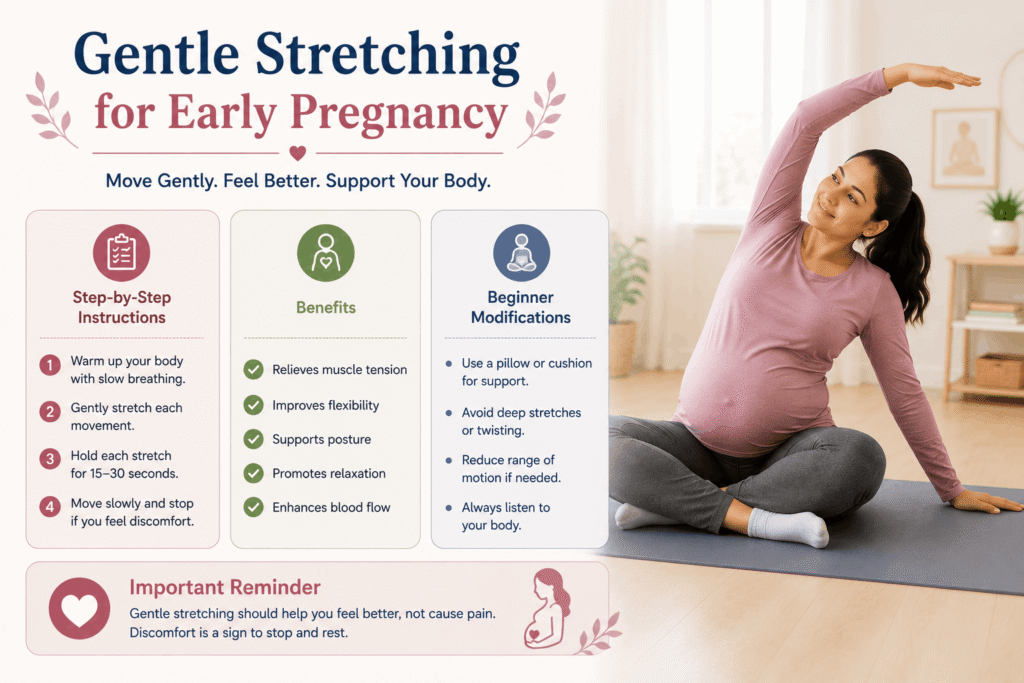
Beginner Modifications
If balance feels difficult, using a chair or wall for support can help you move more safely and comfortably.
Common Mistakes to Avoid
- Stretching too deeply
- Holding the breath
- Moving too quickly
When to Stop
Stop immediately if stretching causes pain, cramping, dizziness, or discomfort.
Second Trimester Beginner Exercises (Months 4–6)
Many women start feeling a little more energetic during the second trimester. Morning sickness often improves, and gentle movement may begin to feel more comfortable again. At the same time, the growing belly can place extra pressure on the lower back, hips, and pelvis, which is why safe prenatal exercises during this stage should focus on posture, balance, flexibility, and gentle strength.
Research and prenatal wellness guidance suggest that moderate exercise during healthy pregnancies may help improve circulation, reduce stiffness, support healthy weight gain, and strengthen muscles used during labor. Many healthcare organizations also commonly recommend around 150 minutes of moderate weekly activity during healthy pregnancies when approved by a healthcare provider.
For beginners, slow and low-impact movement is usually the safest and most comfortable approach.
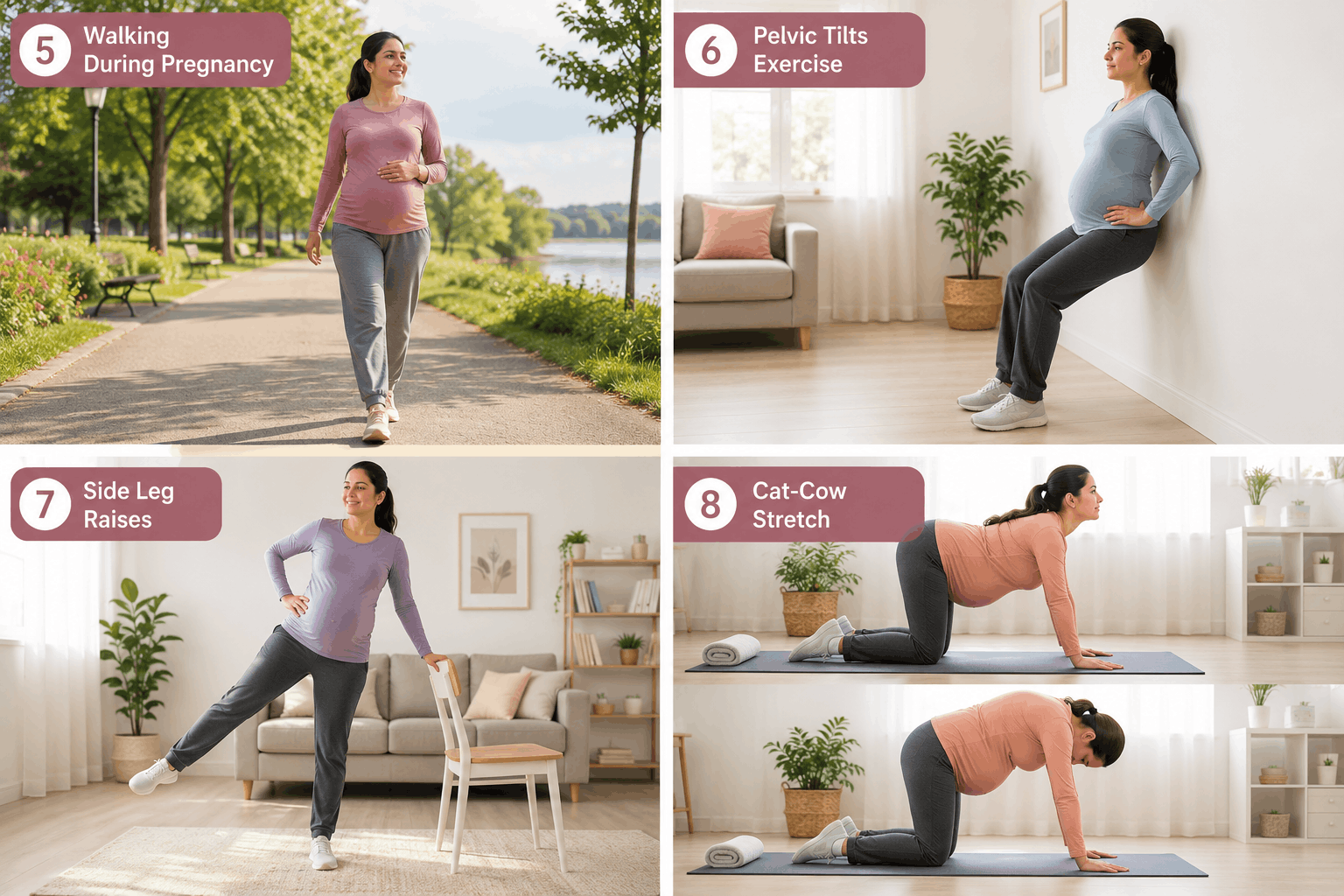
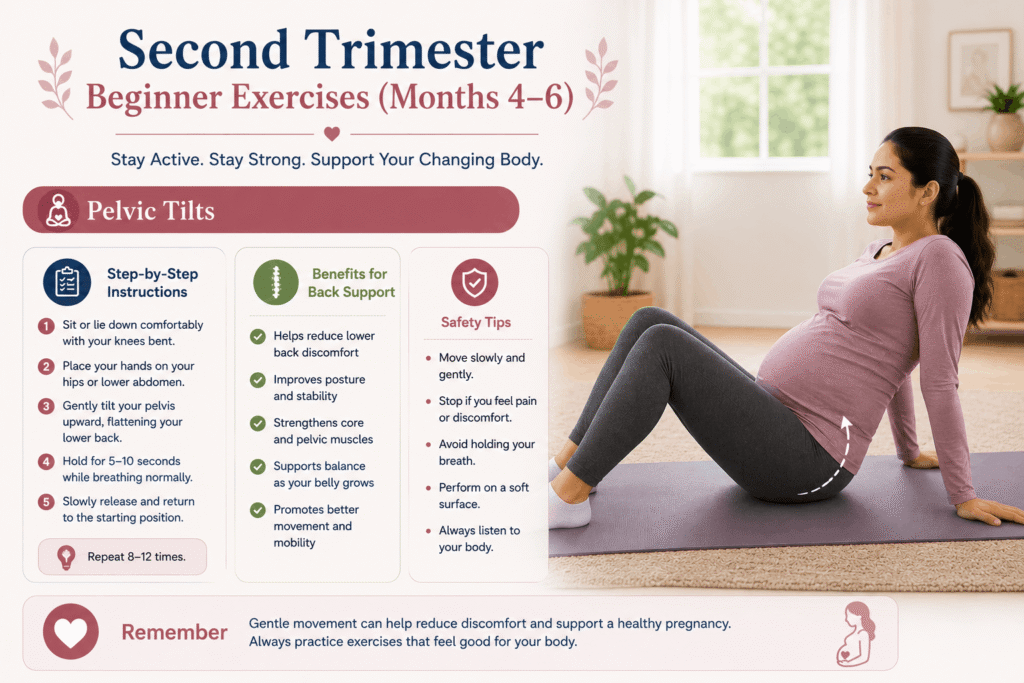
Pelvic Tilts
Pelvic tilts are one of the most beginner-friendly pregnancy exercises for supporting posture and reducing lower back discomfort. As the belly grows during the second trimester, many women notice increased strain on the lower back. This gentle movement may help support the muscles around the pelvis and spine.
Step-by-Step Instructions
- Place your back gently against a wall, or get into a comfortable hands-and-knees position.
- Relax your shoulders and neck.
- Gently tighten your stomach muscles.
- Slowly tilt your pelvis slightly forward and upward.
- Stay in the position briefly while breathing normally.
- Return to a neutral position slowly.
- Repeat 8–10 times at a comfortable pace.
Benefits for Back Support
- May help reduce lower back tension
- Supports posture as the belly grows
- Encourages gentle core engagement
- Helps improve pelvic mobility
- Beginner friendly and low impact
Many pregnant women find pelvic tilts especially helpful during the second and third trimesters when posture changes become more noticeable.
Safety Tips
- Move slowly and avoid forcing the movement
- Keep breathing normally throughout the exercise
- Stop if you feel pain or dizziness
- Avoid over-tightening the stomach muscles
Beginner Modifications
Women who feel uncomfortable standing can try pelvic tilts on hands and knees or while seated on a stability ball if approved by their healthcare provider.
Common Mistakes to Avoid
- Arching the back too aggressively
- Holding the breath
- Moving too quickly
- Continuing despite discomfort
When to Stop
Stop immediately if pelvic tilts cause sharp pain, cramping, severe dizziness, or unusual discomfort.
Side Leg Raises
Side leg raises are gentle pregnancy exercises that may help support hip strength and balance during the second trimester. As body weight and posture change, strengthening the hips can help improve stability and support daily movement.
Step-by-Step Instructions
- Stand beside a chair or wall for support.
- Keep your posture upright with relaxed shoulders.
- Slowly raise one leg outward to the side in a controlled motion.
- Keep the movement controlled and gentle.
- Lower the leg slowly.
- Repeat 8–10 times on each side.
Benefits for Hip Strength and Balance
- Helps strengthen hip muscles
- Supports balance during pregnancy
- May reduce pelvic stiffness
- Encourages gentle lower body movement
- Beginner friendly and low impact
Hip-strengthening exercises may also help some women feel more stable as the belly grows and balance changes.
Safety Reminders
- Hold onto support if balance feels unsteady
- Avoid sudden movements
- Move within a comfortable range of motion
- Stop if pelvic pain increases
Beginner Modifications
Women with balance concerns can perform smaller leg lifts or complete the exercise while lightly holding onto a sturdy surface.
Common Mistakes to Avoid
- Lifting the leg too high
- Leaning the body sideways
- Moving too fast
- Locking the knees
When to Stop
Pause the exercise if you feel pelvic pressure, dizziness, cramping, or pain in the hips or lower back.
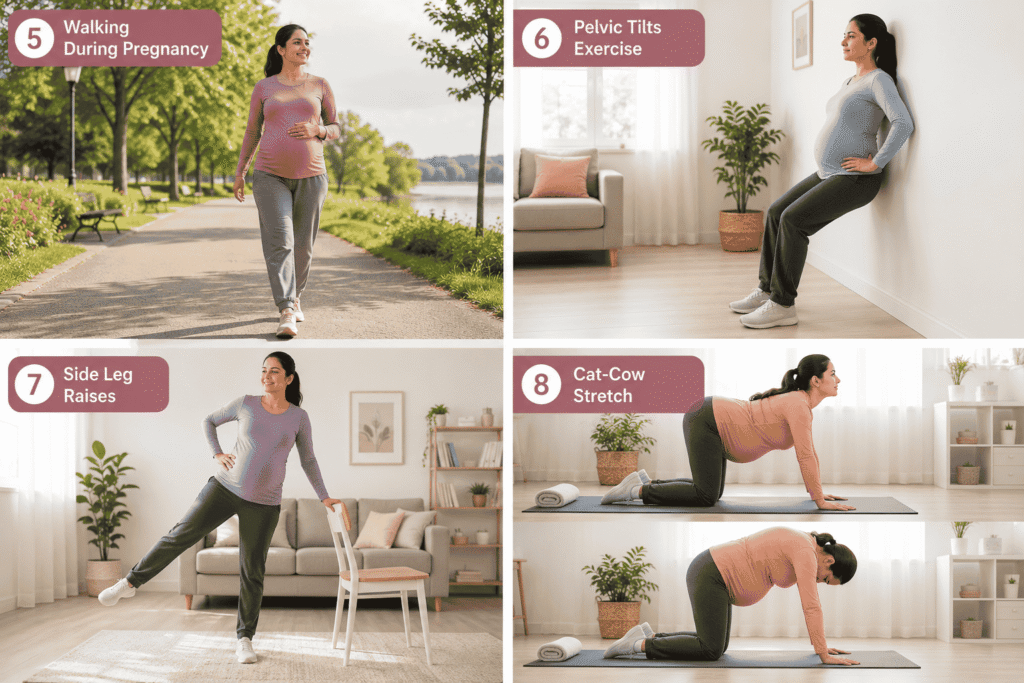
Cat-Cow Stretch
The cat-cow stretch is a gentle prenatal mobility exercise that may help reduce back stiffness and improve flexibility during pregnancy. Many women enjoy this movement because it feels soothing for the spine and encourages gentle body movement without high impact.
Step-by-Step Instructions
- Start on your hands and knees on a soft surface.
- Position your hands under your shoulders and your knees beneath your hips.
- Slowly round your back upward while lowering your head slightly.
- Then gently lower your belly while lifting your chest and head slightly.
- Move slowly between both positions.
- Repeat 6–10 times comfortably.
Benefits for Back Pain Relief
- May help reduce back stiffness
- Encourages spinal mobility
- Supports posture and flexibility
- Promotes gentle pelvic movement
- Helps some women feel more relaxed
Research suggests that gentle prenatal stretching and mobility exercises may help improve comfort and reduce muscle tension during pregnancy.
Safety Tips
- Move slowly without forcing stretches
- Keep movements gentle and controlled
- Avoid extreme arching of the back
- Stop if wrist discomfort or dizziness occurs
Beginner-Friendly Modifications
Women with wrist discomfort can place folded towels under the hands or perform smaller movements while seated.
Common Mistakes to Avoid
- Moving too quickly
- Forcing deep back arches
- Holding the breath
- Ignoring discomfort
When to Stop
Stop immediately if the movement causes sharp pain, contractions, dizziness, or abdominal discomfort.
Third Trimester Gentle Workouts (Months 7–9)
During the third trimester, comfort and safety become even more important. The growing belly places extra strain on the hips, pelvis, lower back, and legs. Many pregnant women also experience increased fatigue, swelling, and reduced mobility during the final months.
Gentle prenatal exercise during this stage should focus on flexibility, circulation, breathing, relaxation, and comfortable movement rather than intensity.
Research suggests that safe moderate movement during healthy pregnancies may help improve circulation, reduce stiffness, support emotional wellness, and strengthen muscles used during labor and recovery.
Butterfly Stretch
The butterfly stretch is a gentle pregnancy stretch that may help improve hip flexibility and reduce tightness in the inner thighs and pelvic area.
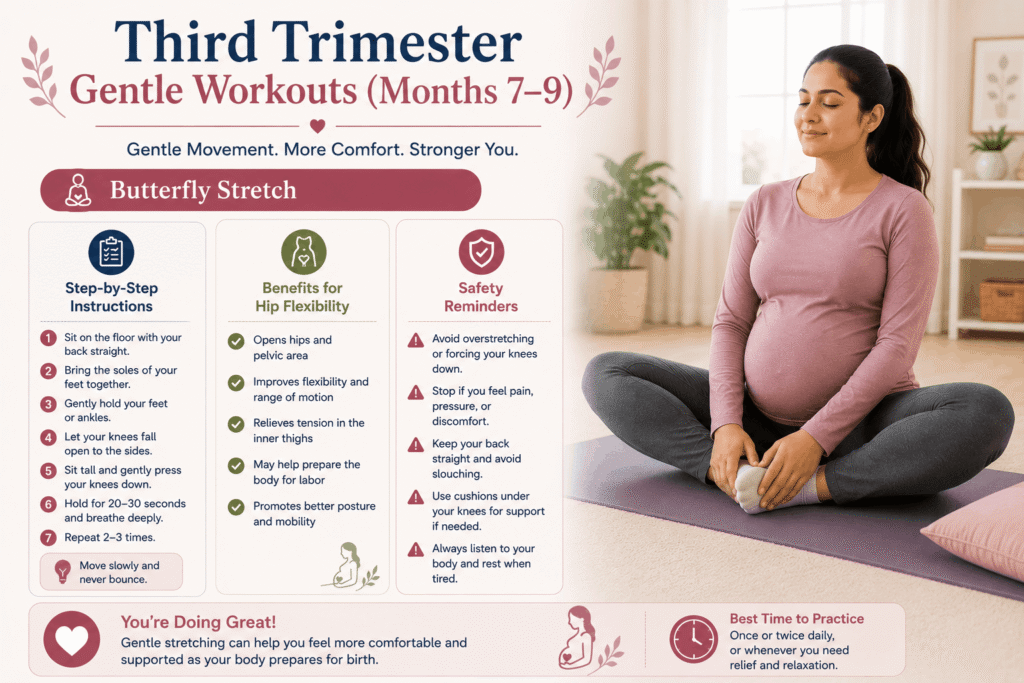
Step-by-Step Instructions
- Sit comfortably on the floor or a soft mat.
- Place the bottoms of your feet together comfortably in front of you.
- Allow your knees to relax outward naturally.
- Hold your feet gently with your hands.
- Sit tall and breathe slowly.
- Hold the stretch comfortably for 15–30 seconds.
Benefits for Hip Flexibility
- May help reduce hip tightness
- Encourages gentle pelvic flexibility
- Supports relaxation
- Helps some women feel more comfortable during late pregnancy
This stretch is commonly included in beginner prenatal fitness routines because it feels gentle and calming for many pregnant women.
Safety Reminders
- Avoid pushing the knees downward forcefully
- Sit on a pillow if hip tightness feels uncomfortable
- Keep the stretch gentle and relaxed
- Stop if pelvic pain increases
Beginner Modifications
Women with limited flexibility can keep their feet farther away from the body to reduce strain.
Common Mistakes Beginners Make
- Forcing deep stretches
- Slouching the back
- Holding the breath
- Stretching through pain
When to Stop
Stop the stretch if you feel sharp pelvic pain, dizziness, cramping, or unusual discomfort.
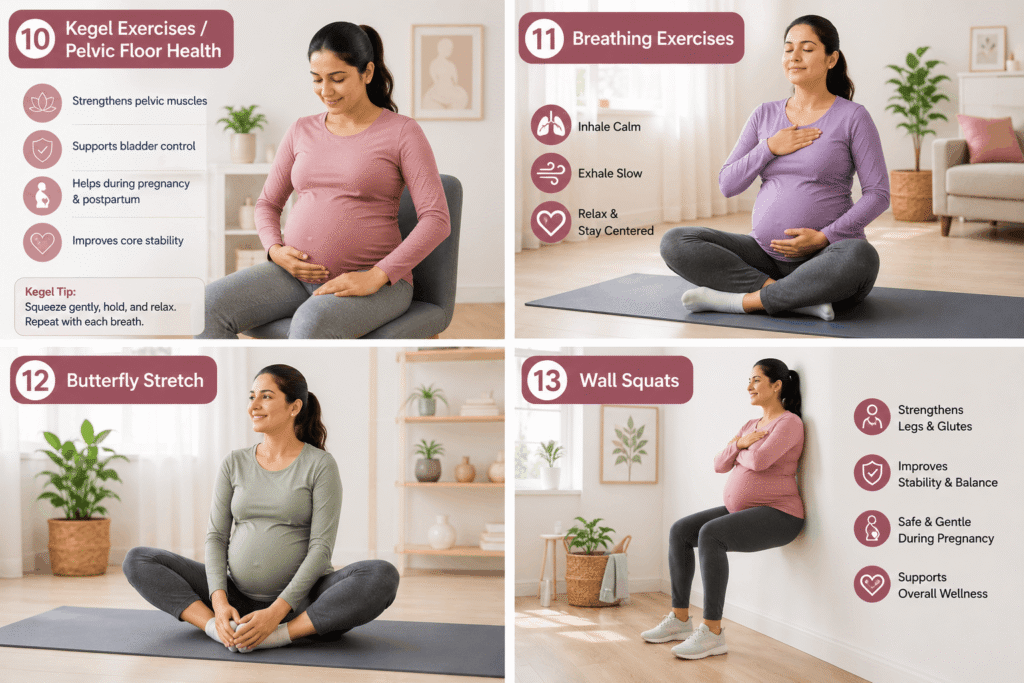
Wall Squats
Wall squats are a beginner-friendly lower body exercise that may help strengthen the legs and support posture during late pregnancy.
Step-by-Step Instructions
- Stand with your back against a wall.
- Place your feet shoulder-width apart slightly in front of you.
- Slowly bend your knees while sliding down the wall slightly.
- Keep the movement shallow and controlled.
- Hold briefly if comfortable.
- Slowly return to standing.
- Repeat 5–10 times.
Benefits for Lower Body Strength
- Helps support leg strength
- Encourages posture awareness
- May support daily mobility
- Strengthens muscles used during labor and movement
Gentle lower body exercises may also help improve stability during the third trimester.
Safety Tips
- Avoid deep squatting
- Keep movements slow
- Hold onto support nearby if needed
- Stop if pelvic pressure increases
Beginner Modifications
Women with discomfort can perform smaller squat movements or reduce repetitions.
Common Mistakes Beginners Make
- Squatting too deeply
- Moving too quickly
- Holding the breath
- Locking the knees when standing up
When to Stop
Stop immediately if you experience pain, dizziness, contractions, or severe pelvic pressure.
Relaxation and Mobility Exercises
Late pregnancy workouts should also include relaxation and gentle mobility exercises that support comfort, circulation, and stress reduction.
Gentle Movements for Comfort
Simple movements such as shoulder rolls, ankle circles, seated stretches, and gentle walking may help reduce stiffness and improve circulation during the third trimester.
Slow movement often feels more comfortable than structured workouts during the final months of pregnancy.
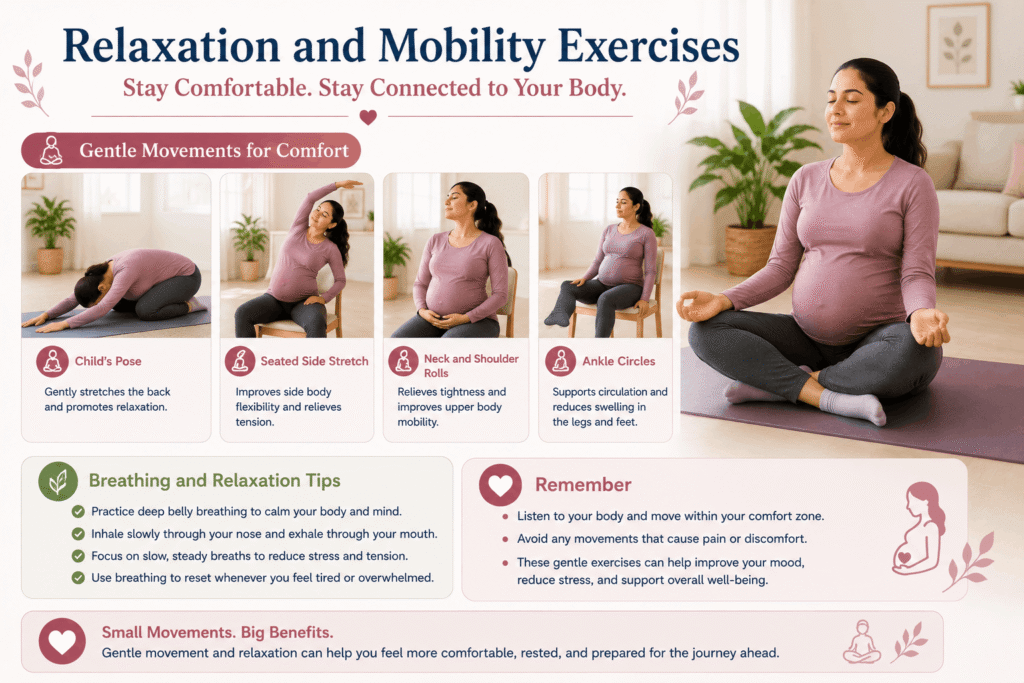
Breathing and Relaxation Tips
Deep breathing exercises may help some women feel calmer and more relaxed as labor approaches. Slow breathing can also encourage body awareness and gentle relaxation during stressful moments.
Try these simple relaxation tips:
- Practice slow deep breathing daily
- Stretch gently before bedtime
- Avoid overexertion
- Rest when the body feels tired
- Focus on comfortable movement instead of intensity
Safety Reminders
- Avoid overheating
- Stay hydrated during all movement
- Exercise in a cool, comfortable space
- Stop immediately if unusual symptoms appear
When to Stop Exercising
Exercise should stop immediately if you experience:
- Vaginal bleeding
- Severe dizziness
- Strong contractions
- Chest pain
- Shortness of breath
- Severe pelvic pain
Listening to your body is one of the safest and most important parts of prenatal exercise. Gentle movement should support comfort and confidence, not create stress or discomfort during pregnancy.
Pelvic Floor Exercises During Pregnancy
Pelvic floor exercises are often recommended during pregnancy because they help support the muscles around the bladder, pelvis, and lower body. As the baby grows, extra pressure is placed on these muscles, which can sometimes lead to bladder leaks, pelvic discomfort, or feelings of heaviness.
For many beginners, pelvic floor exercises feel less intimidating than full workouts because they are gentle, simple, and easy to do at home. Research and prenatal wellness guidance suggest that safe moderate movement during healthy pregnancies may help strengthen muscles used during labor and support postpartum recovery when approved by a healthcare provider.
Many pregnancy exercise guidelines also commonly recommend around 150 minutes of moderate weekly activity during healthy pregnancies, including low-impact movement and gentle strengthening exercises.
What Are Kegel Exercises?
Kegel exercises are gentle movements that focus on strengthening the pelvic floor muscles. These muscles help support the bladder, uterus, and bowel.
A simple way to identify pelvic floor muscles is to imagine stopping the flow of urine briefly. The muscles used in that motion are the same muscles targeted during Kegel exercises.
Kegels are popular in prenatal fitness routines because they are low impact, beginner friendly, and can usually be done sitting, standing, or lying comfortably.
Many women include pelvic floor exercises throughout pregnancy because they may help improve muscle awareness and pelvic support as the body changes.
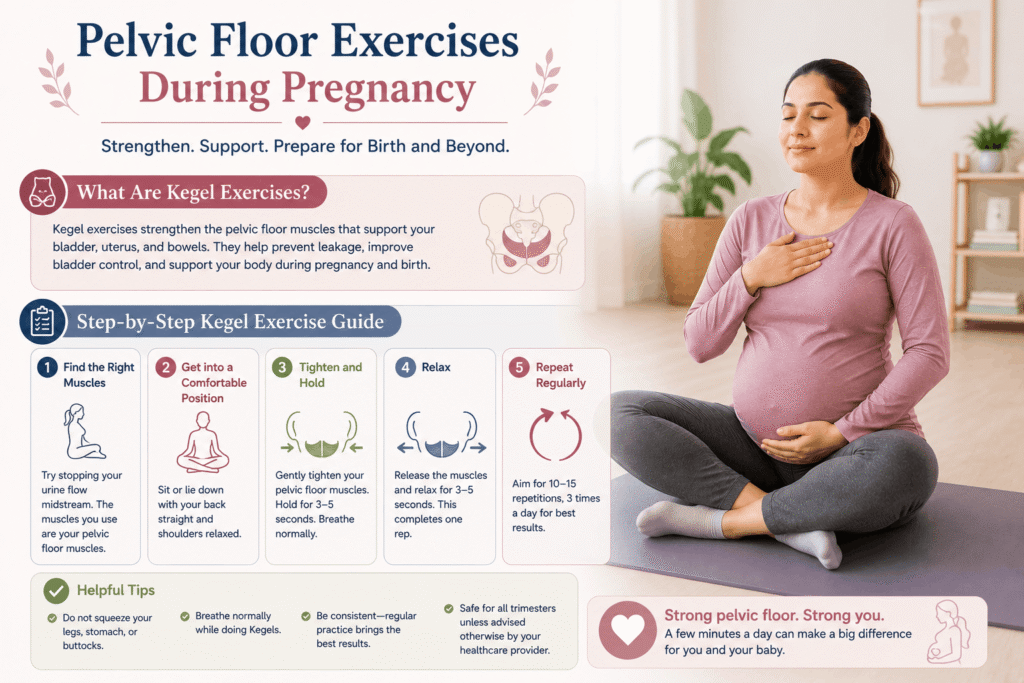
Step-by-Step Kegel Exercise Guide
Kegel exercises should feel gentle and controlled rather than intense. Beginners often benefit from starting slowly and focusing on proper technique.
Step-by-Step Instructions
- Sit or lie down in a comfortable position.
- Relax your legs, hips, and stomach muscles.
- Gently tighten the pelvic floor muscles.
- Hold the squeeze for about 3–5 seconds.
- Slowly relax the muscles completely.
- Rest for several seconds.
- Repeat 8–10 times.
Benefits of Kegel Exercises
- Supports pelvic floor strength
- May help reduce bladder leaks
- Encourages muscle awareness
- Supports labor preparation
- Helps support postpartum recovery
Safety Reminders
- Keep breathing normally during the exercise
- Avoid tightening the stomach, thighs, or buttocks too strongly
- Focus on gentle control instead of squeezing hard
Beginner Modifications
Women who struggle to identify the pelvic floor muscles can begin with shorter holds and fewer repetitions until the movement feels more natural.
Common Mistakes to Avoid
- Holding the breath
- Tightening the wrong muscles
- Over-squeezing too forcefully
- Doing too many repetitions too quickly
When to Stop
Stop and speak with a healthcare provider if Kegel exercises cause pain, cramping, or pelvic discomfort.
Benefits of Pelvic Floor Strength
Strong pelvic floor muscles may help support comfort during pregnancy and recovery after birth.
Bladder Support
As pregnancy progresses, many women notice more pressure on the bladder. Regular pelvic floor exercises may help improve bladder control and reduce small leaks when coughing, sneezing, or laughing.
Labor Preparation
Pregnancy wellness experts often encourage pelvic floor awareness because these muscles play an important role during labor and delivery.
Gentle strengthening and relaxation exercises may help improve muscle control during childbirth preparation.
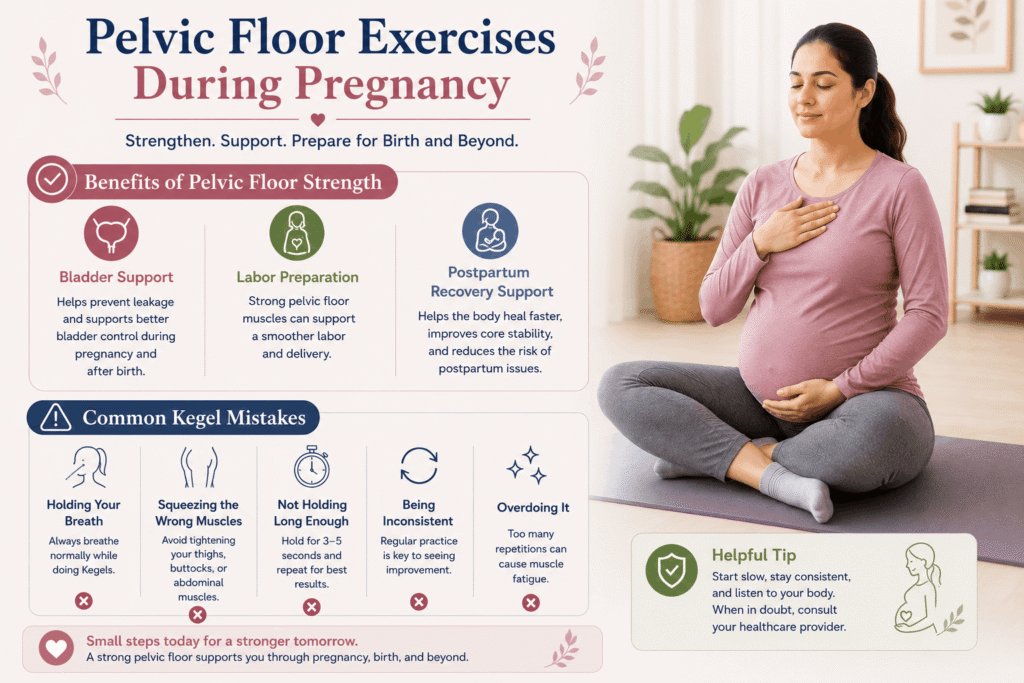
Postpartum Recovery Support
Pelvic floor exercises are also commonly recommended after birth to support recovery and rebuild muscle strength gradually.
Because every pregnancy and delivery experience is different, postpartum exercise guidance should always follow professional medical advice.
Common Kegel Mistakes
Many beginners accidentally make Kegel exercises harder than necessary.
Common mistakes include:
- Holding the breath
- Tightening the stomach instead of the pelvic floor
- Performing exercises too aggressively
- Forgetting to relax between repetitions
- Doing exercises despite pain or discomfort
Kegel exercises should feel gentle and controlled rather than tiring or uncomfortable.
Breathing and Stretching Exercises
Breathing and stretching exercises are often included in beginner prenatal workout routines because they encourage relaxation, flexibility, and gentle movement without high physical strain.
Research suggests that safe prenatal movement may help improve circulation, reduce stiffness, improve sleep quality, and support emotional wellness during pregnancy.
For beginners experiencing fatigue, stress, or back discomfort, breathing and stretching routines may feel more manageable than intense workouts.
Pregnancy Breathing Exercises for Relaxation
Pregnancy breathing exercises may help some women feel calmer, especially during stressful moments or physical discomfort.
Slow breathing also encourages body awareness and relaxation, which many women find helpful during pregnancy and labor preparation.
Step-by-Step Instructions
- Sit comfortably in a chair or supported position.
- Relax your shoulders and jaw.
- Slowly inhale through your nose.
- Exhale gently through your mouth.
- Focus on slow, comfortable breathing.
- Continue for 5–10 minutes.
Benefits of Breathing Exercises
- Encourages relaxation
- May help reduce stress and anxiety
- Supports calm breathing habits
- Helps some women feel more emotionally balanced
Safety Tips
- Breathe naturally without forcing deep breaths
- Stop if dizziness occurs
- Sit in a comfortable supported position
Beginner Modifications
Women uncomfortable sitting on the floor can perform breathing exercises in bed or in a supportive chair.
Common Mistakes to Avoid
- Breathing too quickly
- Holding the breath
- Tensing the shoulders and neck
When to Stop
Stop if breathing exercises cause dizziness, chest discomfort, or unusual symptoms
Gentle Stretching Routine for Beginners
Gentle stretching may help improve flexibility and reduce stiffness during pregnancy, especially in the hips, lower back, shoulders, and legs.
Stretching routines should always feel comfortable rather than painful.
Simple Beginner Stretching Routine
Neck Stretch
- Slowly tilt your head side to side
- Hold gently for several seconds
Shoulder Rolls
- Roll shoulders slowly backward and forward
- Keep movements controlled
Seated Butterfly Stretch
- Sit comfortably with feet together
- Allow knees to relax outward naturally
Calf Stretch
- Stand facing a wall
- Step one foot back gently
- Hold briefly without bouncing
Benefits of Gentle Stretching
- Helps reduce stiffness
- Encourages flexibility
- May improve posture
- Supports relaxation and mobility
Safety Reminders
- Stretch slowly without bouncing
- Avoid deep overstretching
- Keep breathing naturally
- Stop if pain occurs
Beginner Modifications
Use pillows, chairs, or walls for support if balance feels uncomfortable.
Common Mistakes to Avoid
- Stretching too deeply
- Moving too quickly
- Ignoring discomfort signals
When to Stop
Stop stretching immediately if you feel cramping, sharp pain, dizziness, or pelvic discomfort.
Stretching Safety Tips During Pregnancy
Pregnancy hormones naturally loosen joints and ligaments, which can increase the risk of overstretching.
To stay safe during prenatal stretching:
- Move slowly and gently
- Avoid forcing flexibility
- Focus on comfort rather than intensity
- Stay hydrated during exercise
- Avoid lying flat for long periods later in pregnancy
- Use support when balance feels unstable
Listening to the body is one of the safest ways to approach prenatal movement.
Walking During Pregnancy
Many prenatal wellness experts recommend walking because it may help improve circulation, reduce stiffness, support healthy weight gain, and encourage regular movement throughout pregnancy.
Walking is one of the safest and most beginner-friendly pregnancy exercises for many women. Walking does not need special equipment, works for different fitness levels, and places less pressure on the joints.
Alongside exercise, women should also learn how to perform breast self-examination during pregnancy as part of routine prenatal health awareness.
Why Walking Is One of the Safest Prenatal Exercises
Walking is considered low impact, meaning it places less stress on the joints while still encouraging movement and circulation.
For beginners who feel nervous about exercise during pregnancy, walking often feels less intimidating than structured workouts.
Benefits of walking during pregnancy may include:
- Improved circulation
- Gentle support for energy levels
- Reduced stiffness
- Emotional relaxation
- Support for healthy movement habits
Walking can also be adjusted based on trimester, energy levels, and daily comfort.
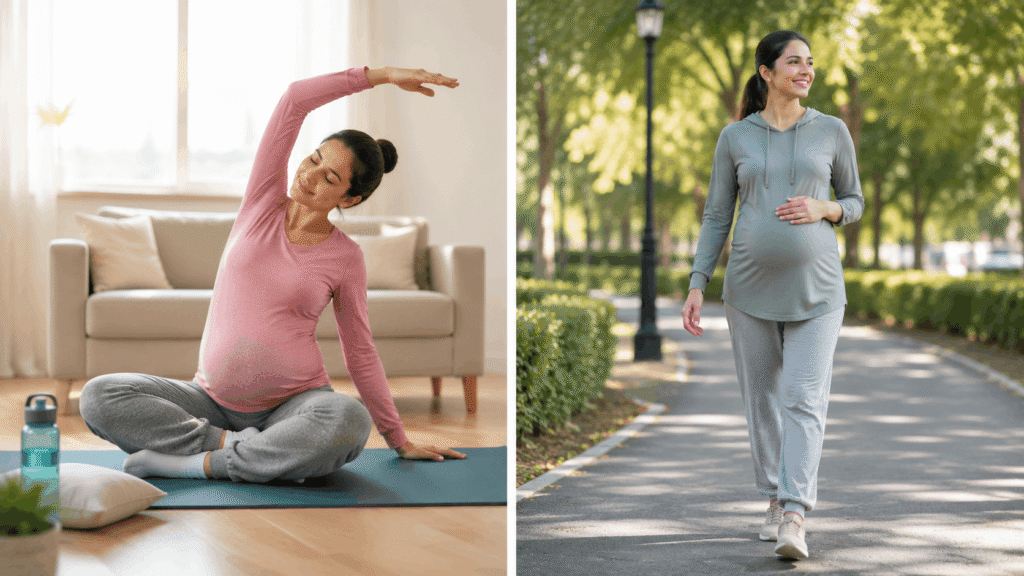
Beginner Walking Routine by Trimester
First Trimester
- Start with 10–15 minute walks
- Focus on comfort rather than speed
- Rest when fatigue appears
Second Trimester
- Gradually increase walking time if comfortable
- Use supportive shoes
- Stay hydrated during walks
Third Trimester
- Slow the pace if needed
- Choose flat, safe walking areas
- Shorter walks may feel more comfortable later in pregnancy
How Long Should Pregnant Women Walk?
Many prenatal wellness guidelines suggest aiming for moderate activity throughout the week during healthy pregnancies when approved by a healthcare provider.
For beginners, shorter daily walks are often more realistic and comfortable than long workouts.
Some women feel comfortable walking:
- 10–20 minutes daily
- 20–30 minutes several times weekly
- Short sessions spread throughout the day
The best walking routine is one that feels safe, comfortable, and sustainable.
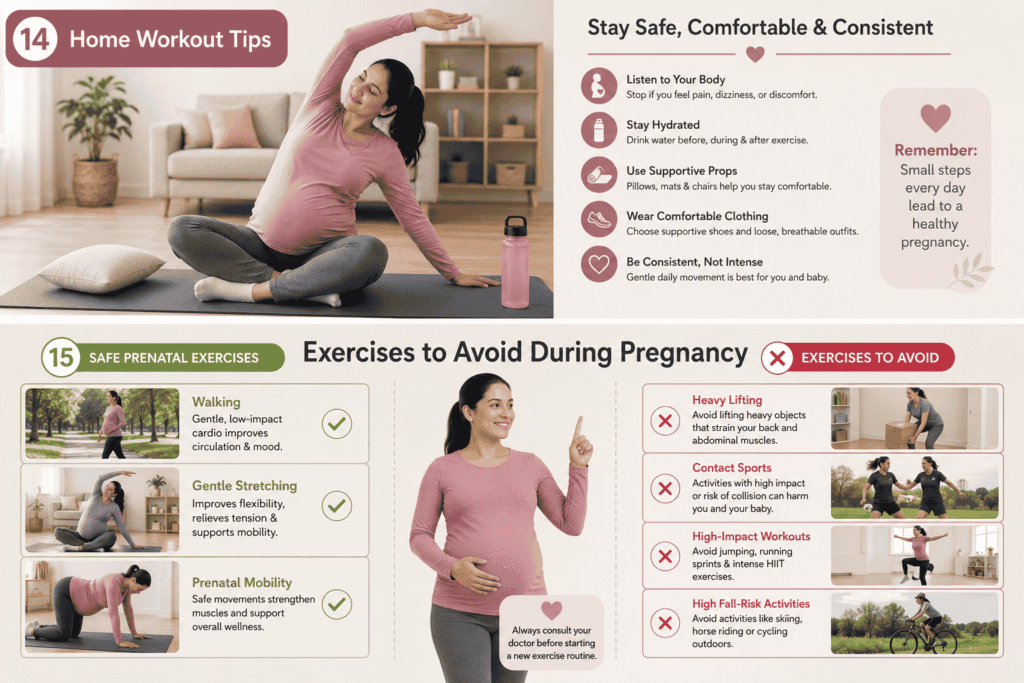
Exercises to Avoid During Pregnancy
While many gentle prenatal exercises are considered safe, some workouts may become risky during pregnancy because of balance changes, joint looseness, or injury risk.
Understanding which activities to avoid can help beginners feel more confident and safer while staying active.
High-Risk Exercises to Skip
Contact Sports
Sports with collision risk or physical impact may increase the chance of injury during pregnancy.
Heavy Lifting
Heavy lifting may place extra pressure on the abdomen, pelvis, and lower back.
Intense Jumping Workouts
High-impact jumping exercises can sometimes feel uncomfortable as joints and balance change during pregnancy.
Activities With Fall Risk
Activities such as skiing, horseback riding, or exercises requiring unstable balance may increase fall risk during pregnancy.
If severe symptoms occur during exercise, it is important to understand when to go to hospital during pregnancy.
Why Some Exercises Become Unsafe During Pregnancy
As pregnancy progresses, posture, flexibility, and balance naturally change. Hormonal shifts also loosen ligaments and joints, which may increase injury risk during intense movement.
Exercises that once felt easy before pregnancy may become uncomfortable or unsafe later.
This is why many prenatal wellness experts encourage:
- Gentle low-impact movement
- Controlled exercise intensity
- Comfortable pacing
- Listening carefully to the body
Safe pregnancy exercise should support comfort and wellness rather than physical exhaustion.
Common Pregnancy Exercise Mistakes
Starting a pregnancy workout routine can feel overwhelming for many beginners. Some women worry about not exercising enough, while others fear doing too much and harming the baby. These concerns are very common, especially during a first pregnancy.
The good news is that safe prenatal exercise does not need to be intense or complicated. In fact, many common pregnancy workout problems happen when women try to push too hard instead of focusing on gentle, consistent movement.
Research and prenatal wellness guidance suggest that moderate exercise during healthy pregnancies may help reduce lower back pain, improve circulation, support healthy weight gain, improve sleep, and strengthen muscles used during labor when approved by a healthcare provider. Many pregnancy wellness guidelines also commonly recommend around 150 minutes of moderate activity weekly during healthy pregnancies.
Understanding common mistakes can help beginners feel more confident and comfortable staying active safely.
Overdoing Workouts Too Quickly
One of the most common beginner mistakes is trying to continue pre-pregnancy workout intensity without adjusting for physical changes.
Pregnancy affects energy levels, balance, breathing, flexibility, and recovery. Even women who exercised regularly before pregnancy may need slower workouts and more rest.
Trying to exercise too intensely can sometimes lead to:
- Extreme fatigue
- Dizziness
- Overheating
- Muscle strain
- Increased discomfort
Gentle and consistent movement is usually safer and more realistic than intense workouts during pregnancy.
Beginner-Friendly Advice
- Start slowly if you are new to exercise
- Increase activity gradually
- Choose low-impact movement
- Focus on comfort instead of calorie burning
Common Signs You May Be Overdoing It
- Feeling exhausted after workouts
- Needing unusually long recovery time
- Trouble breathing comfortably
- Feeling shaky or weak
Safety Reminder
Pregnancy workouts should leave you feeling refreshed or lightly energized, not completely exhausted.
Ignoring Pain or Dizziness
Many beginners feel unsure whether discomfort during exercise is normal. Mild stretching sensations and gentle muscle fatigue can happen during movement, but sharp pain, dizziness, or severe discomfort should never be ignored.
Listening to the body is one of the safest prenatal fitness habits.
Symptoms That Should Not Be Ignored
- Sharp abdominal pain
- Severe pelvic pressure
- Dizziness or faintness
- Chest discomfort
- Vaginal bleeding
- Strong contractions
Continuing to exercise through warning signs may increase stress on the body.
Beginner-Friendly Advice
- Pause immediately if something feels wrong
- Sit down and hydrate if dizziness appears
- Contact a healthcare provider if symptoms continue
Common Mistakes
- Pushing through discomfort
- Assuming pain is normal
- Exercising despite exhaustion
Skipping Warm-Ups and Hydration
Warm-ups and hydration are often overlooked during pregnancy workouts, but both are important for comfort and safety.
Gentle warm-ups help prepare muscles and joints for movement, especially because pregnancy hormones naturally loosen ligaments and affect stability.
Why Warm-Ups Matter
Simple warm-up movements may help:
- Improve circulation
- Reduce stiffness
- Prepare muscles for movement
- Lower injury risk
Easy Pregnancy Warm-Up Ideas
- Shoulder rolls
- Gentle walking
- Slow arm circles
- Light stretching
Importance of Hydration
Pregnant women may become overheated and dehydrated more easily during exercise. Drinking enough water before and after workouts may help support circulation and body temperature regulation.
Common Mistakes to Avoid
- Starting workouts too suddenly
- Exercising without water nearby
- Ignoring overheating
Safety Reminder
Stop exercising if you feel overheated, lightheaded, or unusually weak.
Comparing Yourself to Others
Pregnancy experiences vary greatly from person to person. Some women feel energetic during pregnancy, while others experience significant fatigue, pelvic discomfort, or nausea.
Comparing workout routines with friends, influencers, or social media posts can create unnecessary pressure.
Why Comparison Can Be Harmful
Every pregnancy is different because factors like:
- Energy levels
- Medical history
- Fitness background
- Pregnancy symptoms
- Body changes
all affect exercise ability differently.
Beginner-Friendly Reminder
Safe pregnancy exercise is not about performance or appearance. The goal is supporting comfort, movement, and overall wellness.
Walking for 10 minutes may feel perfect for one woman, while another may feel comfortable doing longer prenatal workouts. Both experiences are valid.
Signs You Should Stop Exercising
Gentle movement is considered safe for many healthy pregnancies, but there are times when exercise should stop immediately.
Knowing warning signs can help beginners feel safer and more confident during prenatal workouts.
Warning Symptoms That Need Medical Attention
Bleeding
Vaginal bleeding during exercise should always be taken seriously and discussed with a healthcare provider immediately.
Chest Pain
Chest pain or pressure during pregnancy exercise is not considered normal and requires medical attention.
Severe Swelling
Sudden or severe swelling, especially if combined with headaches or discomfort, should be evaluated by a healthcare provider.
Fainting
Feeling faint or losing consciousness may signal dehydration, overexertion, or another medical concern.
Contractions
Strong or painful contractions during exercise require immediate rest and medical guidance.
Additional Warning Signs
Exercise should also stop if you experience:
- Severe dizziness
- Shortness of breath
- Severe pelvic pain
- Sudden weakness
- Intense cramping
Safety Reminder
Pregnancy workouts should feel supportive and manageable. Pain, severe discomfort, or distress are signs the body needs rest and medical advice.
Beginner Home Workout Tips
Many pregnant beginners feel more comfortable exercising at home because it feels private, flexible, and easier to control. Home prenatal workouts can also reduce pressure for women who feel nervous about public fitness spaces during pregnancy.
Simple and gentle movement at home can still provide meaningful benefits when performed safely and consistently.
Creating a Safe Exercise Space at Home
A safe workout space can help reduce stress and improve comfort during pregnancy exercise.
Tips for a Safer Home Workout Area
- Choose a clutter-free space
- Use supportive footwear if needed
- Exercise on a stable surface
- Keep water nearby
- Avoid slippery floors
- Use pillows or yoga mats for support
Beginner-Friendly Advice
Comfort matters more than having expensive fitness equipment. Many safe prenatal exercises only require a small open area and supportive clothing.
Easy Daily Pregnancy Workout Routine
Beginners often benefit from simple routines that feel realistic and easy to maintain consistently.
Example Gentle Pregnancy Workout Routine
5-Minute Warm-Up
- Shoulder rolls
- Slow walking
- Gentle stretching
10–20 Minutes of Light Movement
- Walking
- Pelvic tilts
- Cat-cow stretches
- Side leg raises
5 Minutes of Relaxation
- Deep breathing exercises
- Gentle seated stretching
This type of low-impact movement may help support circulation, flexibility, posture, and relaxation without placing excessive strain on the body.
Safety Reminder
Take breaks whenever needed. Rest days are also important during pregnancy.
How to Stay Consistent Without Overexertion
Many beginners feel motivated one day and exhausted the next. This is completely normal during pregnancy.
Consistency during prenatal fitness is usually about gentle routine rather than intense effort.
Tips for Staying Active Safely
- Focus on short workouts
- Choose movement that feels enjoyable
- Exercise during higher-energy times of day
- Rest without guilt when needed
- Adjust routines throughout each trimester
Emotional Reassurance
Some days, gentle stretching may feel like enough. Other days, walking may feel easier. Listening to your body is more important than following strict workout schedules during pregnancy.
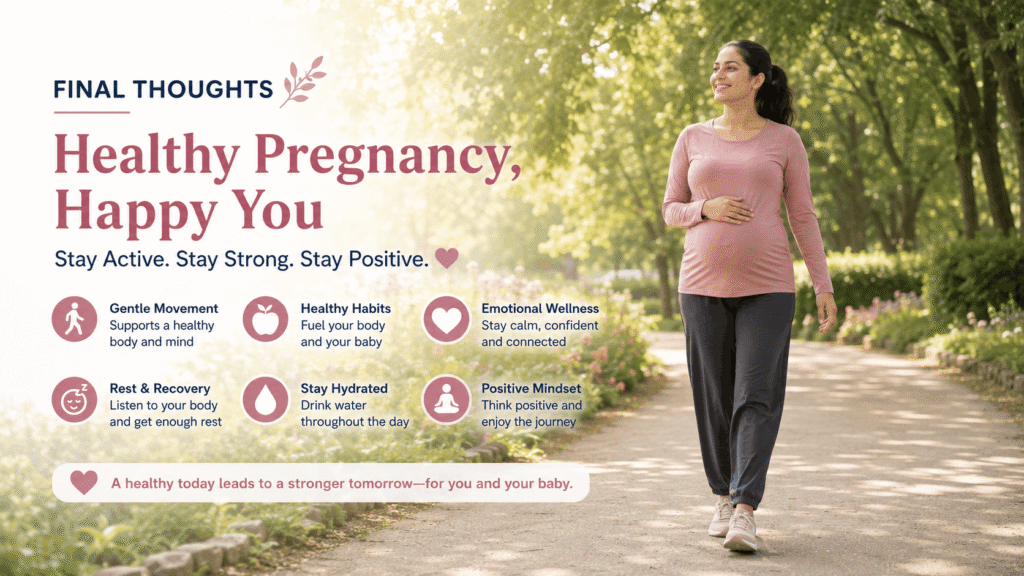
Final Thoughts
Starting prenatal fitness as a beginner can feel intimidating at first, especially with so much conflicting advice online. Many pregnant women worry about exercising too much, doing the wrong movements, or accidentally harming the baby.
The most important thing to remember is that safe pregnancy exercise is usually focused on gentle, consistent movement rather than intense workouts or physical performance.
Research and prenatal wellness guidance suggest that moderate activity during healthy pregnancies may help improve circulation, reduce stiffness, support emotional wellness, strengthen muscles used during labor, and encourage healthier movement throughout pregnancy when approved by a healthcare provider.
At the same time, every pregnancy is different. Some women feel energetic during pregnancy, while others need more rest and shorter movement sessions. Both experiences are completely normal.
Listening to your body, moving at a comfortable pace, staying hydrated, and following doctor-approved exercise guidance are often the safest ways to approach prenatal fitness.
Even small amounts of gentle movement can support comfort, flexibility, relaxation, and confidence during pregnancy. Beginners do not need perfect routines or intense workouts to benefit from safe prenatal exercise.
The goal is not perfection. The goal is helping your body feel supported, comfortable, and cared for throughout pregnancy.
Leave a Reply