Introduction
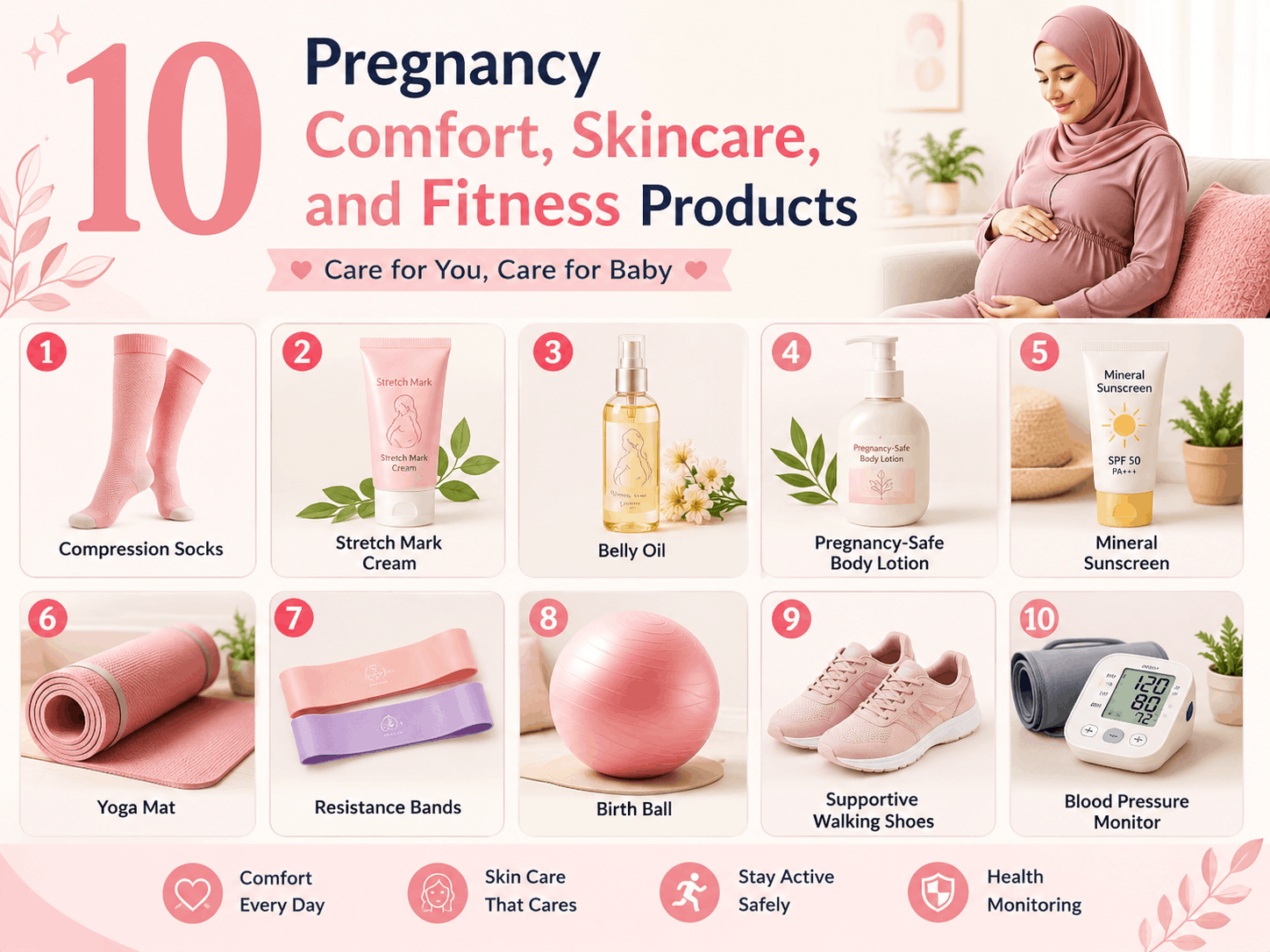
Pregnancy brings exciting changes, but it can also introduce new physical challenges as your body adapts to support your growing baby. Many expectant mothers experience leg swelling, dry or itchy skin, increased sensitivity to sunlight, and muscle discomfort. Choosing the right comfort, skincare, and fitness products can help you manage these common changes while supporting your overall well-being.
This guide is Part 3 of our pregnancy essentials series and focuses on products that promote everyday comfort, healthy skin, and safe physical activity. From compression socks and moisturizers to pregnancy-friendly exercise equipment, these essentials are designed to help you stay comfortable and active throughout your pregnancy.
Table of Contents
Rather than recommending every product on the market, we’ve selected practical items that offer real value for many expectant mothers. You’ll learn why each product matters, how to choose it safely, and tips for getting the most from it. The information in this guide is based on recommendations from trusted organizations, including the American College of Obstetricians and Gynecologists (ACOG), the World Health Organization (WHO), the National Health Service (NHS), the U.S. Centers for Disease Control and Prevention (CDC), and the National Institute for Health and Care Excellence (NICE). Always consult your healthcare provider before starting a new skincare product or exercise routine during pregnancy.
Why Comfort, Skincare, and Safe Exercise Matter During Pregnancy
As pregnancy progresses, your body undergoes significant physical and hormonal changes. These changes may lead to swollen feet and ankles, stretching skin, muscle fatigue, back discomfort, and increased sensitivity to the sun. Taking care of your body with appropriate comfort products, gentle skincare, and safe physical activity can make your pregnancy experience more enjoyable.
Maintaining healthy skin during pregnancy isn’t just about appearance. Moisturizing regularly can help reduce dryness and itching, while mineral sunscreen helps protect skin that may become more sensitive due to hormonal changes.
Regular physical activity is another important part of a healthy pregnancy. According to ACOG and WHO, most women with uncomplicated pregnancies benefit from regular, moderate exercise. Supportive fitness products such as yoga mats, resistance bands, and birth balls can make exercise safer and more comfortable when used appropriately.
How We Chose These Pregnancy Comfort Products
The goal is not to purchase every available product but to choose practical essentials that support your comfort, encourage healthy movement, and help you care for your changing body throughout pregnancy.
With so many pregnancy products available, it can be difficult to know which ones are worth buying. For this guide, we focused on products that provide practical support for common pregnancy concerns while aligning with evidence-based recommendations.
Each product was selected using the following criteria:
- Helps improve comfort during pregnancy.
- Supports healthy skin or safe physical activity.
- Suitable for everyday use by many expectant mothers.
- Made by reputable manufacturers with clear safety information.
- Easy to use at home or while traveling.
- Offers long-term value throughout pregnancy.
We also prioritized products that are designed specifically for pregnancy or are commonly recommended by healthcare professionals. While every pregnancy is different, these essentials can help many women stay more comfortable, active, and confident as their bodies continue to change.
Part of Our Pregnancy Essentials Series
- Part 1: 10 First Trimester Pregnancy Essentials You Should Buy
- Part 2: 10 Pregnancy Nutrition and Maternity Clothing Essentials
- Part 4: 10 Hospital Bag and Postpartum Essentials for New Moms
10 Pregnancy Comfort Products for Swollen Feet & Back
1. Compression Socks
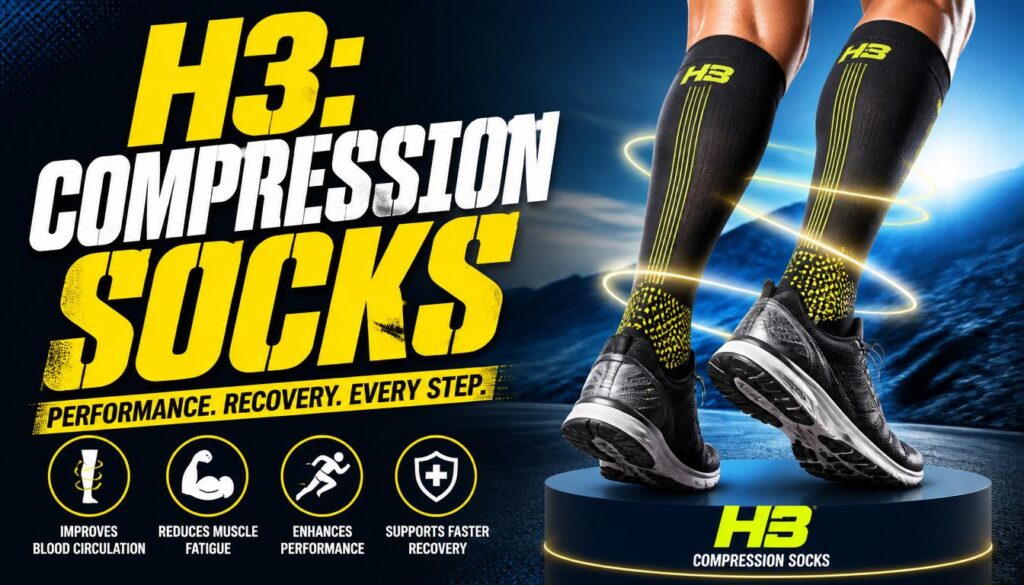
Compression socks are specially designed stockings that apply gentle pressure to the legs and ankles. These socks encourage good circulation and may provide extra comfort during pregnancy, especially when standing, sitting, or traveling for long periods.
Why It Matters
Swelling in the feet and ankles is common during pregnancy due to increased blood volume and pressure on the veins. Compression socks may help improve comfort by supporting healthy blood flow and reducing leg fatigue.
Key Benefits
- Helps support healthy circulation.
- May reduce mild swelling in the feet and ankles.
- Can improve comfort during long periods of standing or sitting.
- Helpful for travel and daily activities.
- Compression socks come in a variety of pressure levels and designs to suit different needs.
How to Choose Safely
When selecting compression socks:
- Choose the correct size using the manufacturer’s sizing guide.
- Select graduated compression socks designed for everyday wear.
- Buy from reputable medical or maternity brands.
- Ask your healthcare provider which compression level is appropriate if you have circulation concerns.
Practical Tips
- Put them on in the morning before swelling develops.
- Wear them during travel or long workdays if recommended.
- Wash them regularly according to the care instructions.
Important Safety Considerations
If you experience severe swelling, sudden leg pain, redness, or shortness of breath, seek immediate medical attention. Compression socks are not a substitute for medical evaluation.
2. Stretch Mark Cream
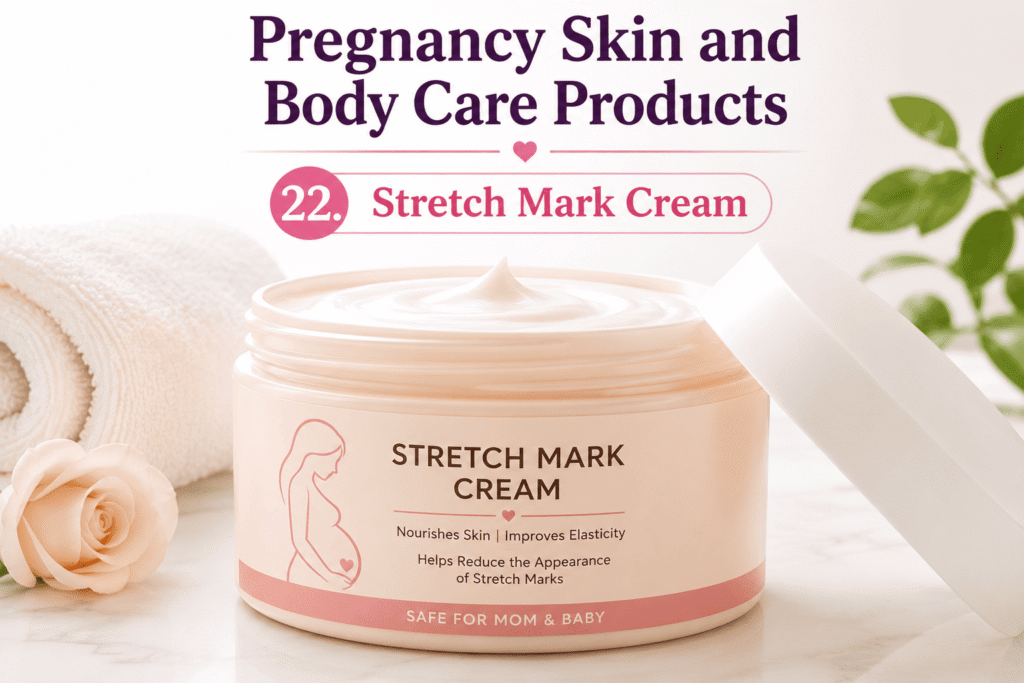
Stretch mark cream is formulated to moisturize and nourish the skin as it stretches during pregnancy. While no cream can guarantee the prevention of stretch marks, regular moisturizing may help improve skin comfort and elasticity.
Why It Matters
As your belly, breasts, and hips grow, your skin stretches rapidly. This may lead to dryness, tightness, and itching. Keeping the skin well moisturized can help improve comfort throughout pregnancy.
Key Benefits
- Helps moisturize dry, stretching skin.
- May reduce feelings of tightness and itching.
- Supports healthy skin hydration.
- Easy to incorporate into a daily skincare routine.
How to Choose Safely
Look for creams that:
- Are specifically labeled as pregnancy-safe.
- Contain gentle moisturizing ingredients.
- Are free from ingredients not recommended during pregnancy.
- Come from trusted skincare brands.
Practical Tips
- Gently apply the product after bathing, when your skin is clean and lightly damp.
- Massage gently into the belly, hips, thighs, and breasts.
- Use consistently for the best moisturizing benefits.
Important Safety Considerations
If redness, irritation, or an allergic reaction occurs, discontinue use and seek medical advice if symptoms persist. If you’re unsure about an ingredient, consult your healthcare provider before use.
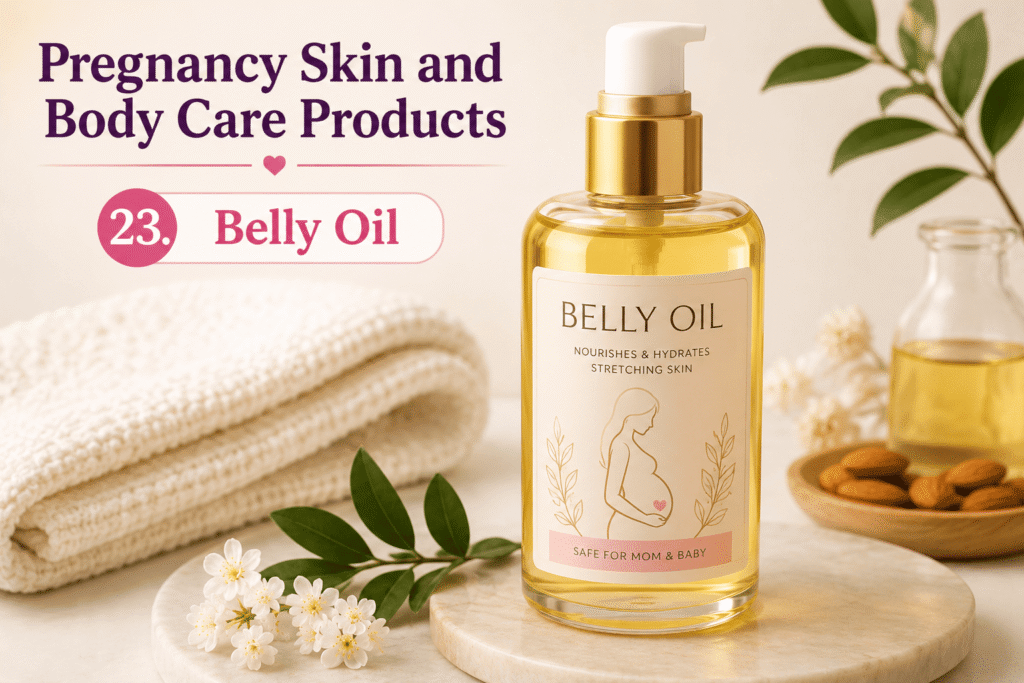
3. Belly Oil
Pregnancy belly oil is designed to nourish and soften the skin as your abdomen expands. Many formulas contain plant-based oils that help lock in moisture and leave the skin feeling smooth and comfortable.
Why It Matters
Hormonal changes and stretching skin can increase dryness during pregnancy. Belly oil provides long-lasting hydration and may help reduce the feeling of tight, itchy skin.
Key Benefits
- Helps maintain skin moisture.
- Leaves the skin feeling soft and smooth.
- Supports daily skincare during pregnancy.
- Simple to apply as part of a self-care routine.
How to Choose Safely
Choose a belly oil that:
- Is specifically formulated for pregnancy.
- Contains gentle, skin-friendly ingredients.
- Avoids ingredients not recommended during pregnancy.
- Comes from a reputable manufacturer.
Practical Tips
- Apply the product after a bath or shower to help keep your skin hydrated.
- Massage gently using circular motions.
- Allow the oil to absorb before getting dressed.
Important Safety Considerations
Always perform a patch test before using a new skincare product. If you notice redness, irritation, or discomfort, stop using the product and seek medical advice if needed.
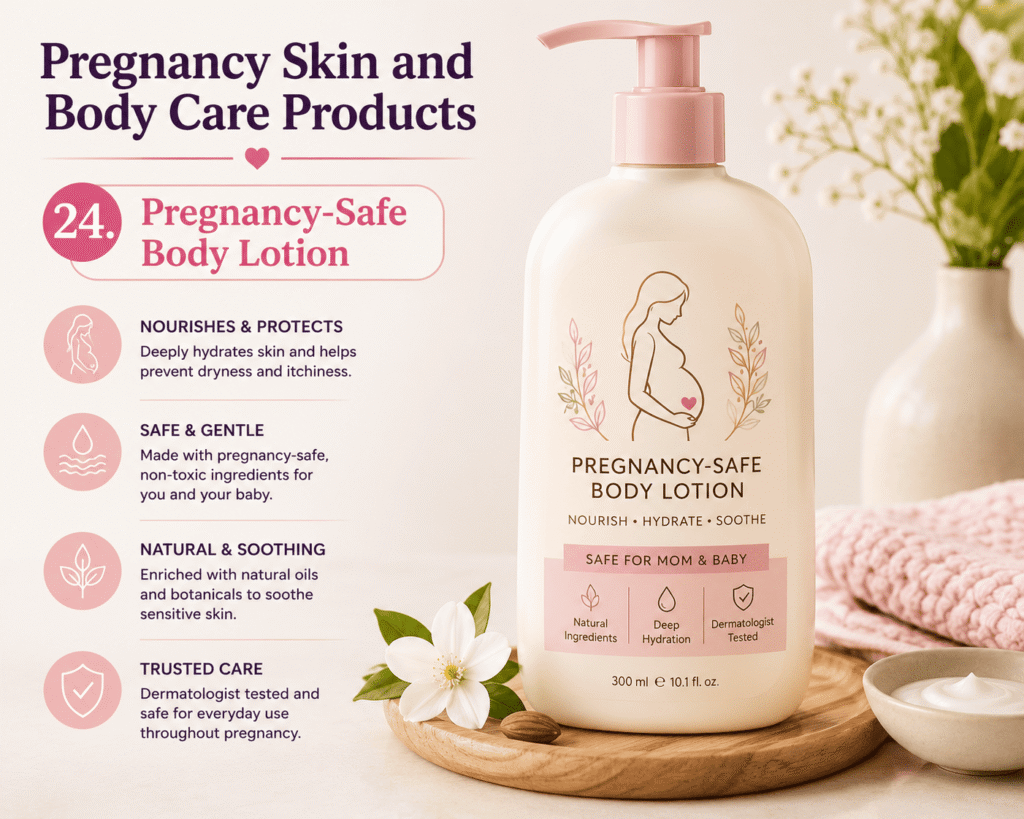
4. Pregnancy-Safe Body Lotion
A pregnancy-safe body lotion helps keep your skin hydrated as hormonal changes increase dryness and sensitivity. Daily moisturizing can improve skin comfort throughout pregnancy.
Why It Matters
Dry, itchy skin is common as pregnancy progresses. A gentle moisturizer can help strengthen the skin’s moisture barrier while providing long-lasting hydration.
Key Benefits
- Helps relieve dry, itchy skin.
- Provides lasting hydration.
- Suitable for everyday use.
- Supports healthy-looking skin.
- Gentle enough for sensitive skin.
How to Choose Safely
Look for lotions that:
- Are fragrance-free or lightly scented if you have scent sensitivity.
- Are labeled as pregnancy-safe.
- Contain gentle moisturizing ingredients.
- Are dermatologist-tested when possible.
Practical Tips
- Apply after bathing and before bedtime.
- Reapply to dry areas as needed.
- Store the lotion at room temperature.
Important Safety Considerations
If you develop a rash, severe itching, or skin irritation, discontinue use and seek advice from your healthcare provider.
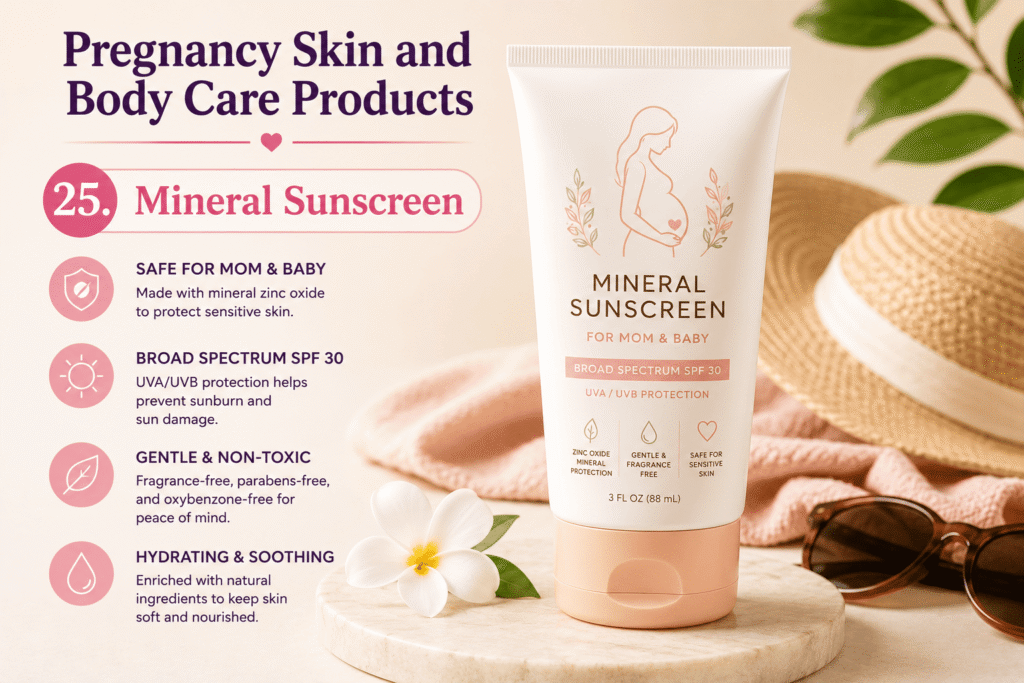
5. Mineral Sunscreen
Mineral sunscreen provides broad-spectrum protection against harmful UVA and UVB rays using mineral ingredients such as zinc oxide or titanium dioxide. It is often recommended for sensitive skin because it sits on the skin’s surface rather than being absorbed.
Why It Matters
Hormonal changes during pregnancy can make your skin more sensitive to sunlight and increase the likelihood of developing dark patches known as melasma or the “mask of pregnancy.” Wearing sunscreen daily helps protect your skin from sun damage and supports overall skin health.
Key Benefits
- Protects against UVA and UVB rays.
- Suitable for sensitive pregnancy skin.
- May help reduce the risk of pregnancy-related skin discoloration.
- Gentle enough for everyday use.
- Available in lotions, creams, and sticks.
How to Choose Safely
When choosing a mineral sunscreen:
- Choose a sunscreen that offers broad-spectrum protection with an SPF of 30 or higher.
- Choose products containing zinc oxide, titanium dioxide, or both.
- Select fragrance-free options if you have sensitive skin.
- Purchase from reputable skincare brands.
Practical Tips
- Apply sunscreen 15 minutes before going outdoors.
- Reapply every two hours when spending time outside or after swimming or heavy sweating.
- Wear a wide-brimmed hat and protective clothing for additional sun protection.
Important Safety Considerations
Remember that sunscreen is just one part of a complete sun protection routine. Limit prolonged sun exposure during peak daylight hours and consult your healthcare provider if you notice unusual changes in your skin during pregnancy.
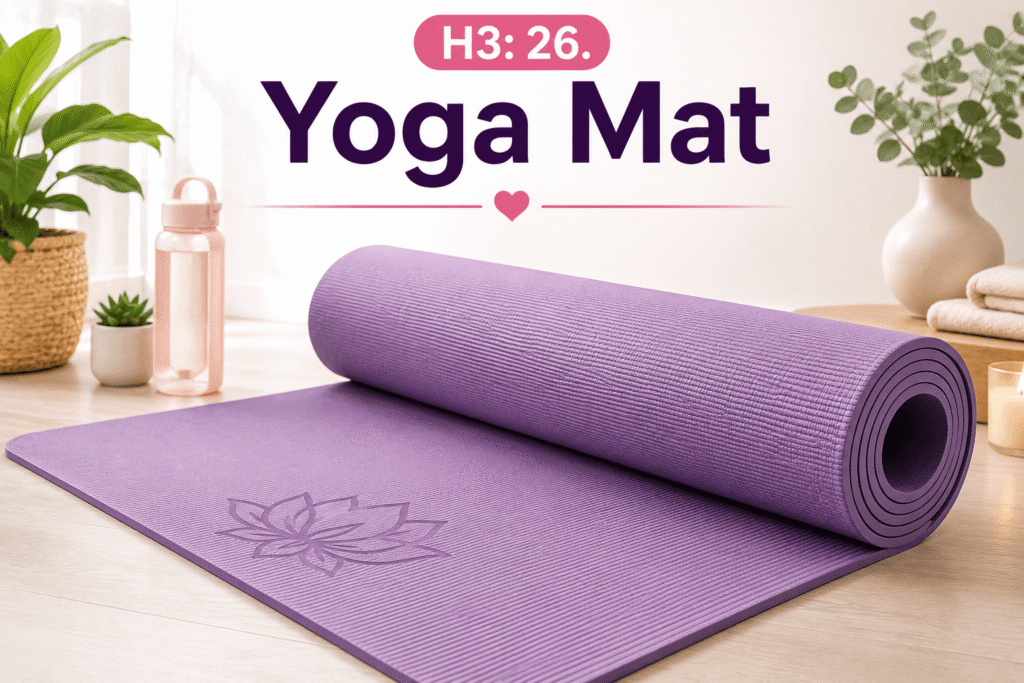
6. Yoga Mat
A high-quality yoga mat provides a stable, cushioned surface for pregnancy-friendly exercises, stretching, and relaxation. Whether you’re following a prenatal yoga class at home or performing gentle mobility exercises, a supportive mat can improve comfort and help reduce the risk of slipping.
Why It Matters
Regular physical activity is recommended for most healthy pregnancies. According to ACOG and WHO, moderate exercise can support overall health during pregnancy. A yoga mat creates a comfortable space for safe movement, stretching, and breathing exercises.
Key Benefits
- Provides cushioning for joints and knees
- Creates a stable surface for prenatal exercise
- Suitable for stretching, yoga, and pelvic floor exercises
- Lightweight and easy to store
- Encourages a consistent fitness routine
How to Choose Safely
When selecting a yoga mat:
- Choose a non-slip surface for better stability.
- Look for adequate thickness to cushion your joints.
- Choose a yoga mat that is durable, comfortable, and easy to wipe clean after use.
- Ensure it lies flat without curling edges.
Practical Tips
- Clean your yoga mat after each use.
- Exercise in a well-ventilated area.
- Wear comfortable maternity workout clothing and supportive footwear when appropriate.
Important Safety Considerations
Always follow pregnancy-safe exercise guidelines and stop exercising if you experience dizziness, vaginal bleeding, chest pain, contractions, or any other concerning symptoms. Consult your healthcare provider before beginning a new exercise program.
7. Resistance Bands
Resistance bands are versatile fitness tools that can add gentle strength training to a pregnancy exercise routine. They provide adjustable resistance without the need for heavy weights, making them suitable for many low-impact exercises.
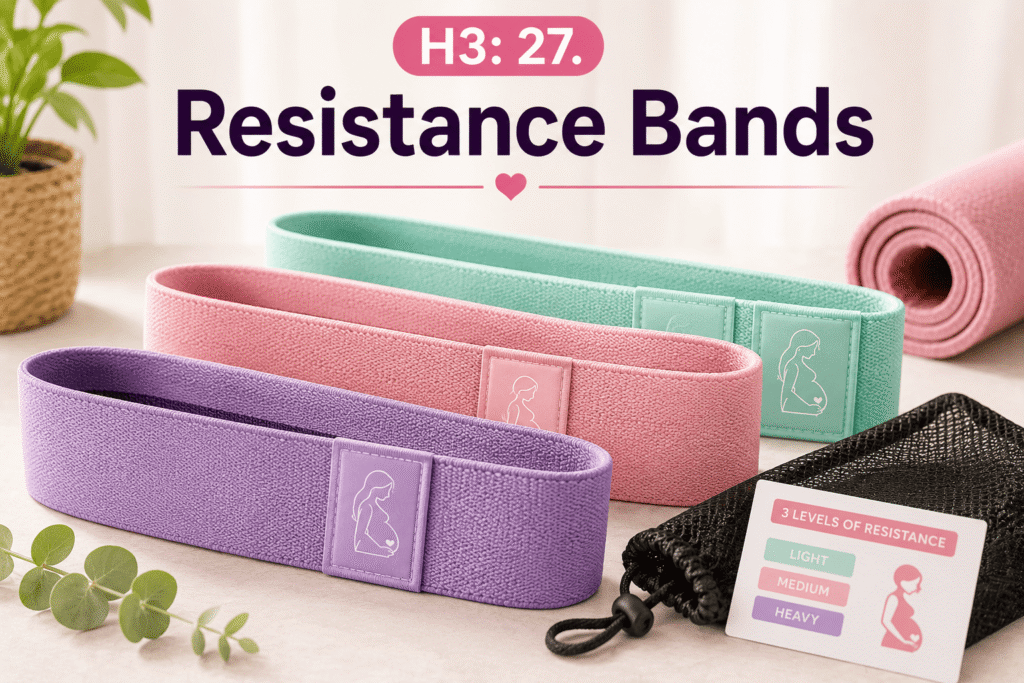
Why It Matters
Strength training can help support muscles that work harder during pregnancy, including those in your back, hips, legs, and shoulders. Resistance bands offer a simple way to maintain strength while minimizing joint stress.
Key Benefits
- Supports gentle muscle strengthening
- Lightweight and portable
- Suitable for home workouts
- Available in different resistance levels
- It can also be used for gentle stretching, flexibility, and mobility exercises.
How to Choose Safely
Choose resistance bands that:
- Match your current fitness level.
- Are made from durable, high-quality materials.
- Have comfortable grips if handles are included.
- Show no signs of cracks or wear.
Practical Tips
- Begin with light resistance.
- Focus on slow, controlled movements.
- Follow pregnancy-safe exercise instructions or work with a qualified prenatal fitness professional.
Important Safety Considerations
Avoid exercises that cause pain, loss of balance, or excessive strain. If you have pregnancy complications, ask your healthcare provider whether resistance training is appropriate for you.
8. Birth Ball
A birth ball, also called an exercise or pregnancy ball, is a large inflatable ball that supports gentle movement, stretching, and sitting exercises during pregnancy. Many women also use it during labor if recommended by their healthcare team.
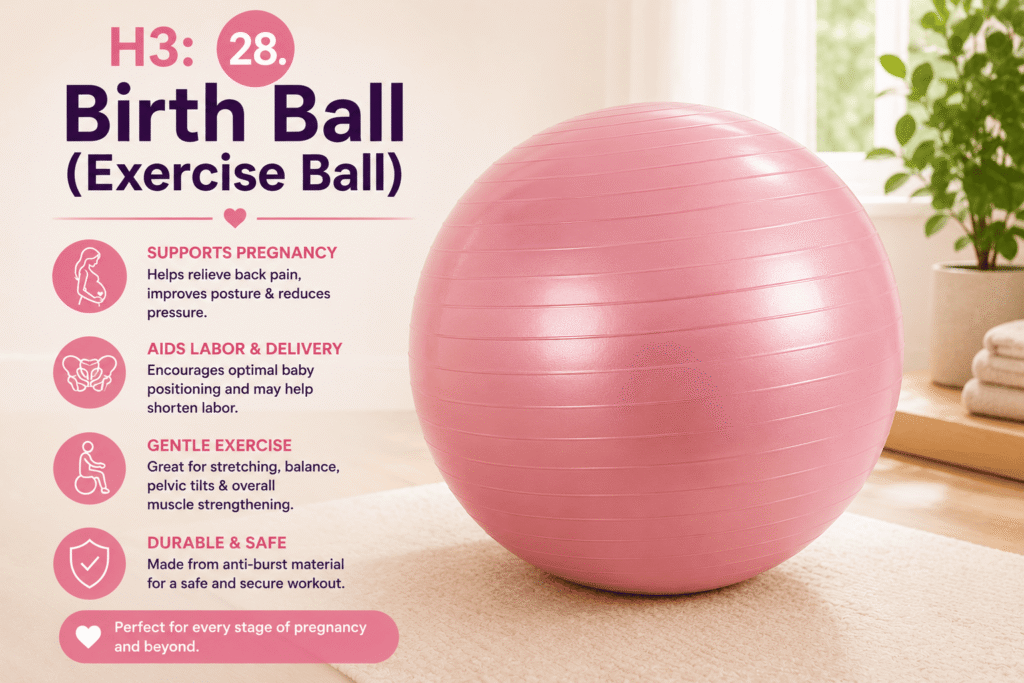
Why It Matters
Sitting on a birth ball may encourage better posture, promote gentle pelvic movement, and provide a comfortable alternative to sitting in a chair for extended periods.
Key Benefits
- Encourages healthy posture
- Supports gentle stretching and movement
- May improve comfort while sitting
- Useful for prenatal exercises
- Can also be helpful during labor under professional guidance
How to Choose Safely
When choosing a birth ball:
- Select the correct size based on your height.
- Ensure it is made from anti-burst material.
- Follow the manufacturer’s inflation instructions.
- Check the maximum weight capacity.
Practical Tips
- Always place the ball on a stable, non-slip surface before using it.
- Hold onto a stable object if you’re new to using it.
- Keep the ball properly inflated for better support.
Important Safety Considerations
Avoid exercises that challenge your balance or increase your risk of falling. If you’re unsure how to use a birth ball safely, ask your healthcare provider or a qualified prenatal fitness instructor for guidance.
9. Supportive Walking Shoes
Walking is considered one of the easiest and safest ways to stay active during pregnancy. A pair of supportive walking shoes can help improve comfort, reduce foot fatigue, and provide better stability as your center of gravity changes.
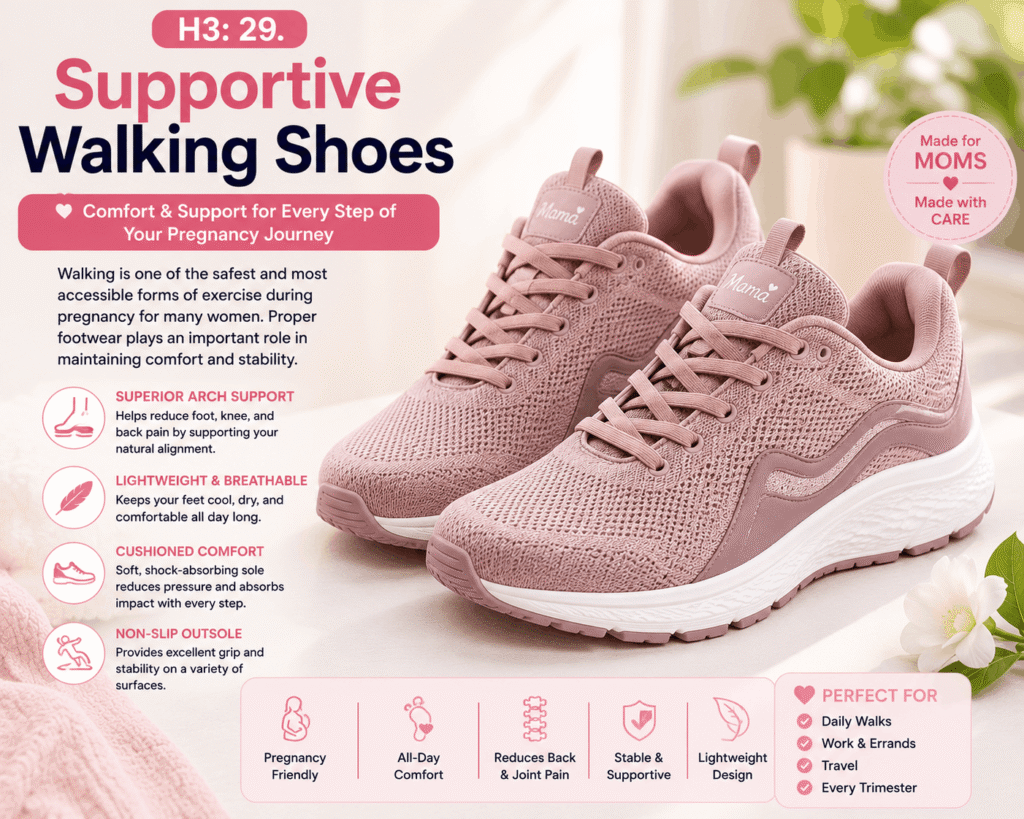
Why It Matters
Pregnancy often places extra stress on your feet, ankles, knees, and lower back. Shoes with proper cushioning and arch support can make daily walks and routine activities more comfortable.
Key Benefits
- Supports healthy foot alignment
- Cushions your feet during walking
- Improves balance and stability
- Helps reduce foot fatigue
- Suitable for everyday wear and light exercise
How to Choose Safely
Look for walking shoes that:
- Provide good arch support.
- Have cushioned midsoles.
- Feature non-slip outsoles.
- Offer a roomy toe box to accommodate swelling.
- Fit securely without feeling tight.
Practical Tips
- Try shoes on later in the day when feet may be slightly swollen.
- Replace your shoes when they become worn and no longer provide proper support or cushioning.
- Wear moisture-wicking socks for added comfort.
Important Safety Considerations
Avoid worn footwear, high heels, or shoes with poor traction. If you develop severe foot pain or sudden swelling, consult your healthcare provider.
10. Blood Pressure Monitor
A home blood pressure monitor allows you to check your blood pressure between prenatal appointments if recommended by your healthcare provider. It can be especially useful for women who need closer monitoring during pregnancy.
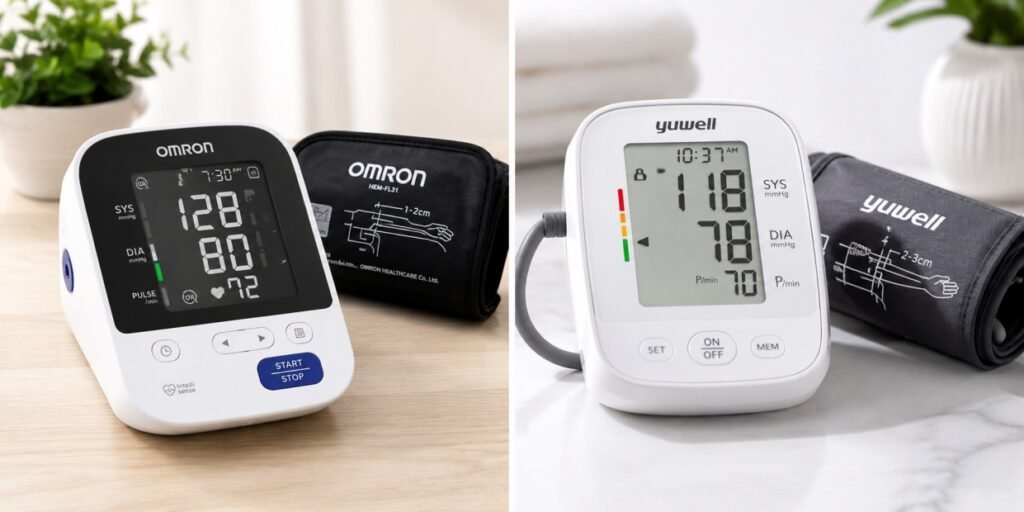
Why It Matters
Blood pressure changes can occur during pregnancy. Home monitoring may help your healthcare provider track your readings more effectively when medically indicated.
Key Benefits
- Makes blood pressure monitoring convenient at home
- Helps record readings between prenatal visits
- Provides valuable information for your healthcare provider
- Easy to use with automatic digital models
How to Choose Safely
Choose a monitor that:
- Has an upper-arm cuff for greater accuracy.
- Is clinically validated when possible.
- Includes the correct cuff size for your arm.
- Displays readings clearly and stores previous measurements.
Practical Tips
- Measure your blood pressure at the same time each day if advised.
- Sit quietly for a few minutes before taking a reading.
- Track your readings and share them with your healthcare provider during routine appointments.
Important Safety Considerations
A home monitor does not replace regular prenatal care. Contact your healthcare provider immediately if you receive unusually high readings or experience symptoms such as severe headache, vision changes, severe swelling, or persistent upper abdominal pain.
When should I start using compression socks during pregnancy?
Many women begin using compression socks when they notice swelling, leg fatigue, or spend long hours standing, sitting, or traveling. Your healthcare provider may also recommend them if you have circulation concerns or are at increased risk of varicose veins.
Is stretch mark cream safe to use while pregnant?
Most pregnancy-specific stretch mark creams are considered safe when used as directed. Choose products made with gentle, pregnancy-friendly ingredients and avoid creams containing ingredients that are not recommended during pregnancy. If you’re unsure about a product, consult your healthcare provider.
Can I exercise safely during pregnancy?
For most women with uncomplicated pregnancies, regular moderate exercise is both safe and beneficial. Activities such as walking, prenatal yoga, swimming, and light strength training are commonly recommended. Always consult your healthcare provider before starting or changing your exercise routine.
Why is mineral sunscreen recommended during pregnancy?
Mineral sunscreens containing zinc oxide or titanium dioxide provide broad-spectrum sun protection and are often recommended for sensitive skin. They can also help protect against pregnancy-related skin discoloration, such as melasma, which may become more noticeable during pregnancy.
Should I monitor my blood pressure at home during pregnancy?
Home blood pressure monitoring may be helpful if your healthcare provider recommends it, particularly if you have high blood pressure, a history of pregnancy-related hypertension, or other risk factors. Home readings should always be shared with your healthcare provider and should not replace routine prenatal checkups.
Why is mineral sunscreen recommended during pregnancy?
Mineral sunscreens containing zinc oxide or titanium dioxide provide broad-spectrum sun protection and are often recommended for sensitive skin. They can also help protect against pregnancy-related skin discoloration, such as melasma, which may become more noticeable during pregnancy.
Should I monitor my blood pressure at home during pregnancy?
Home blood pressure monitoring may be helpful if your healthcare provider recommends it, particularly if you have high blood pressure, a history of pregnancy-related hypertension, or other risk factors. Home readings should always be shared with your healthcare provider and should not replace routine prenatal checkups.
Final Thoughts
Choosing the right pregnancy comfort products can help you stay comfortable, active, and confident as your body changes throughout pregnancy. From compression socks and nourishing skincare products to supportive fitness equipment and home health tools, these essentials are designed to support your everyday well-being.
Remember that every pregnancy is unique, so you may not need every product featured in this guide. Focus on high-quality items that match your lifestyle, support your comfort, and align with your healthcare provider’s recommendations.
Along with practical pregnancy products, maintaining a balanced diet, staying physically active, attending regular prenatal appointments, and following evidence-based medical guidance remain the most important steps for supporting a healthy pregnancy. By combining thoughtful self-care with professional prenatal care, you can better prepare yourself for the months ahead while supporting both your health and your baby’s development.
Leave a Reply