Introduction
The first trimester is an exciting time, but it often comes with symptoms such as nausea, fatigue, food aversions, and increased nutritional needs. While every pregnancy is different, choosing the right products can help improve comfort and support your health during these early weeks.
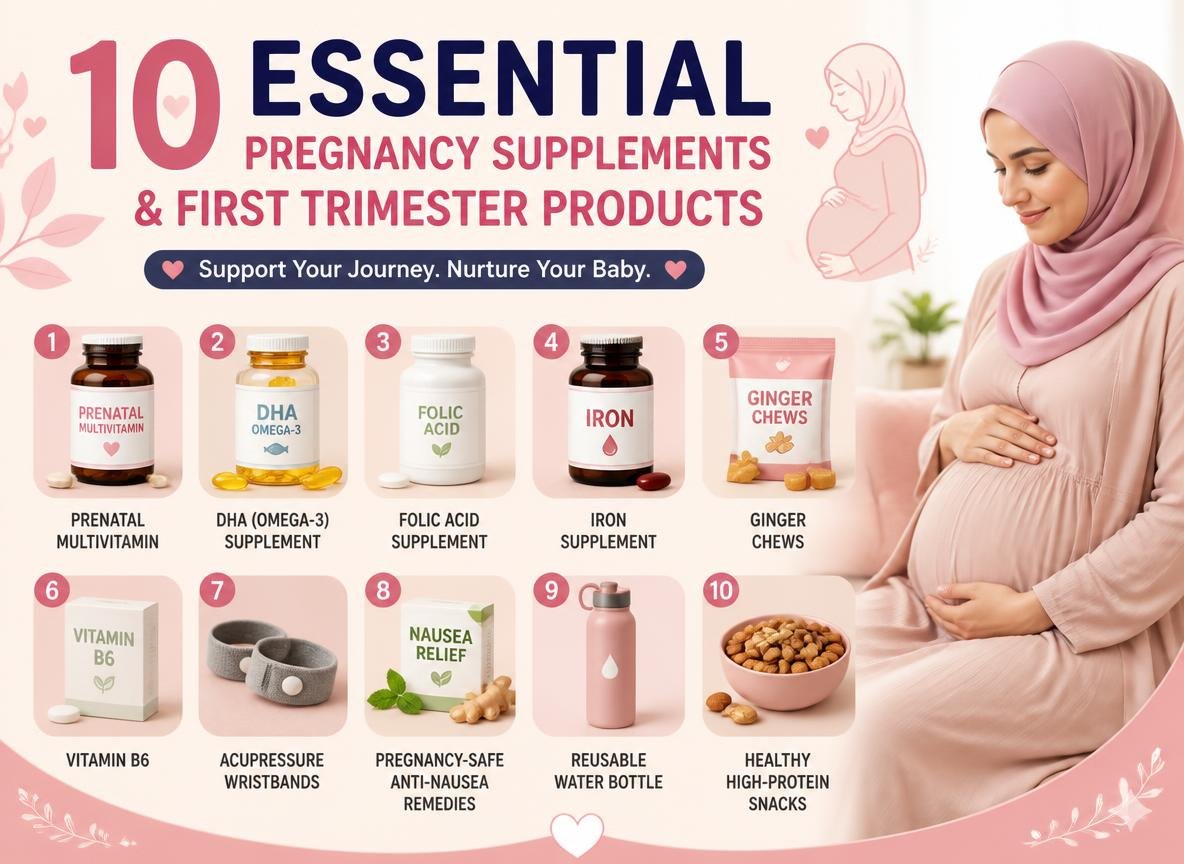
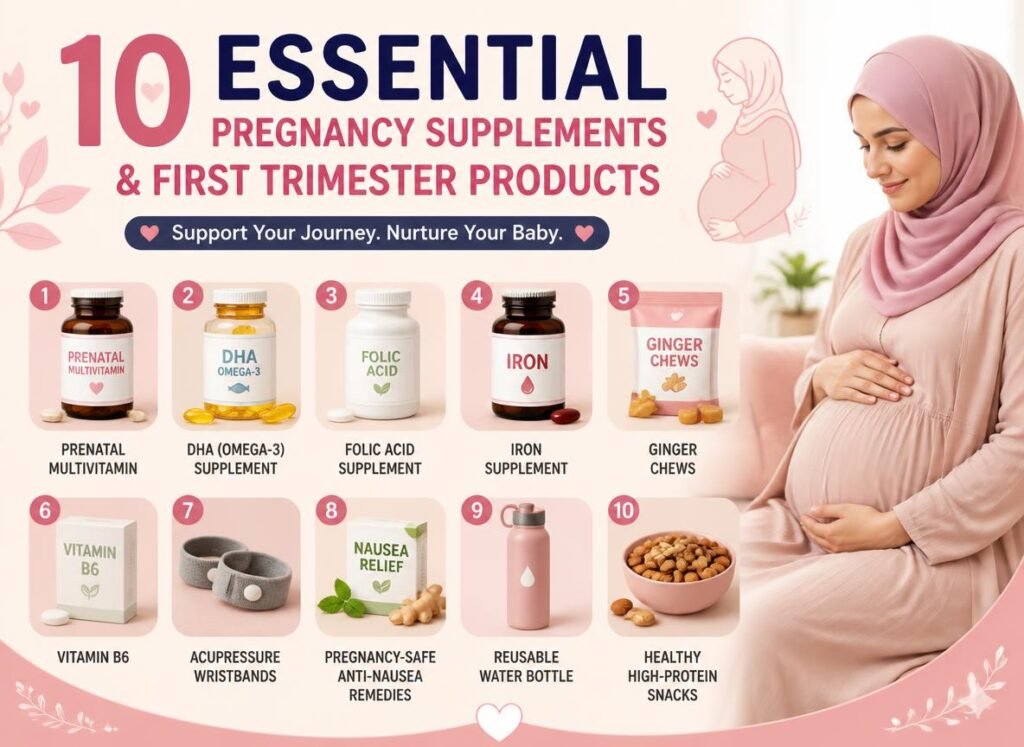
In Part 1 of our Pregnancy Essentials Series, we’ll cover 10 first-trimester products that can help with nutrition, hydration, and morning sickness. You’ll also learn how to choose safe, practical products based on evidence-based recommendations. Always consult your healthcare provider before starting new supplements or products during pregnancy.
Table of Contents
Why First Trimester Pregnancy Products Matter
The first 12 weeks of pregnancy are an important time for both you and your developing baby. Common symptoms such as morning sickness, fatigue, and changes in appetite can make daily life more challenging.
Choosing safe, practical essentials can help support your nutritional needs, improve comfort, and make it easier to manage these early pregnancy changes. While these products can be helpful, they should complement—not replace—regular prenatal care.
How We Chose These Essentials
We selected these products based on their safety, practicality, comfort, and usefulness during the first trimester. Our recommendations are informed by guidance from trusted organizations, including ACOG, WHO, and the NHS, along with products commonly recommended by healthcare professionals.
Every pregnancy is unique, so consult your healthcare provider before using supplements or products intended to manage pregnancy symptoms.
Part of Our Pregnancy Essentials Series
- Part 2: 10 Pregnancy Nutrition and Maternity Clothing Essentials
- Part 3: 10 Pregnancy Comfort, Skincare, and Fitness Products
- Part 4: 10 Hospital Bag and Postpartum Essentials for New Moms
10 First Trimester Pregnancy Essentials You Should Buy
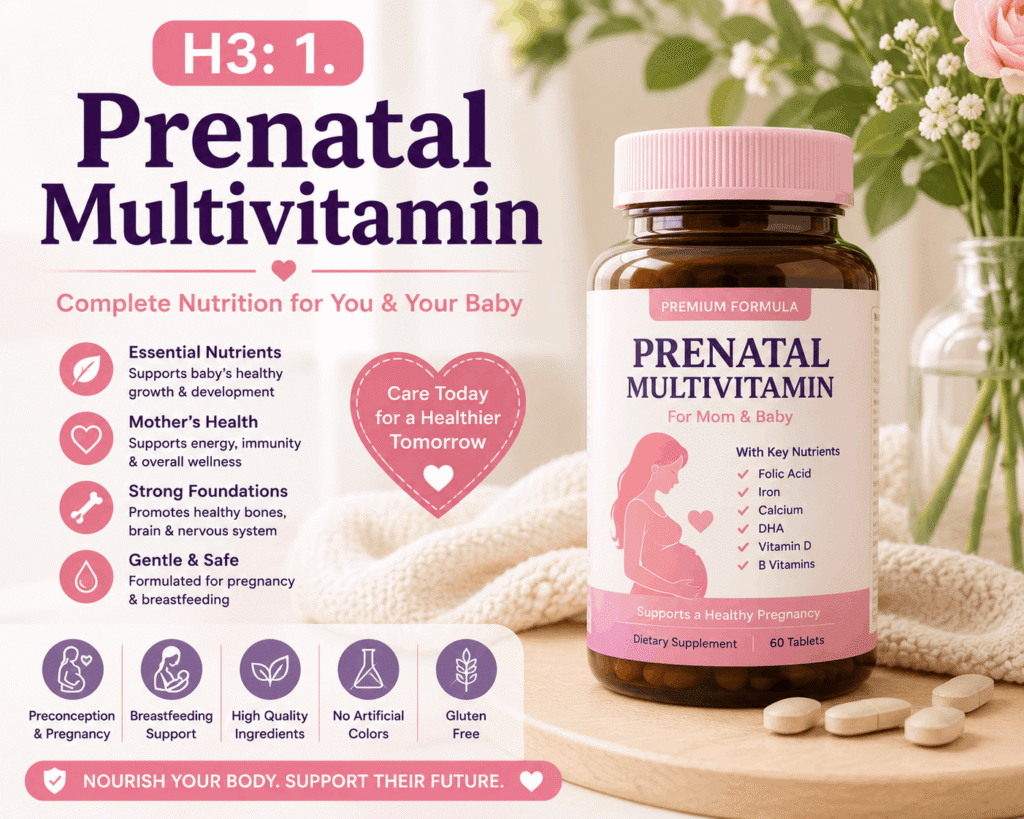
1. Prenatal Multivitamin
A prenatal multivitamin is one of the most important products to consider during the first trimester. It is specially formulated to provide vitamins and minerals that support both maternal health and your baby’s early development.
Even if you eat a balanced diet, pregnancy increases your nutritional needs, and a prenatal multivitamin can help fill potential gaps.
Why it matters
During the first trimester, your baby’s brain, spinal cord, heart, and other major organs begin to develop. Nutrients such as folic acid, iron, iodine, vitamin D, and other essential vitamins play important roles during this stage.
Healthcare organizations including ACOG, the CDC, WHO, NHS, and NICE recommend appropriate prenatal supplementation during pregnancy based on individual needs.
Key benefits
- Supports healthy fetal growth and development.
- Helps provide essential vitamins and minerals needed during pregnancy.
- Complements a healthy, balanced diet.
- Helps meet increased nutritional requirements during early pregnancy.
How to choose safely
When selecting a prenatal multivitamin:
- Choose products from reputable manufacturers.
- Check that the supplement is specifically formulated for pregnancy.
- Read the ingredient label carefully.
- Ask your healthcare provider which formulation best meets your individual needs.
Practical tips
- Take your prenatal vitamin at the same time each day to help build a routine.
- If it causes mild stomach discomfort, ask your healthcare provider whether taking it with food or at a different time of day may help.
- Store supplements in a cool, dry place and keep them out of reach of children.
Important safety considerations
Do not take additional vitamin or mineral supplements without consulting your healthcare provider. Taking more than the recommended amount of certain nutrients may not be appropriate during pregnancy.
2. DHA (Omega-3) Supplement
DHA (docosahexaenoic acid) is an omega-3 fatty acid that contributes to the normal development of your baby’s brain and eyes. Although DHA is naturally found in certain fish and seafood, some pregnant women may not consume enough through diet alone, making supplementation appropriate in some cases.
Why it matters
Your baby’s nervous system develops rapidly during pregnancy, and DHA is one of the nutrients involved in this process. Healthcare providers may recommend a DHA supplement depending on your diet and individual nutritional needs.
Key benefits
- Supports normal brain development.
- Contributes to healthy eye development.
- Complements a balanced pregnancy diet.
- Helps meet omega-3 needs when dietary intake is limited.
How to choose safely
When choosing a DHA supplement:
- Select products from trusted manufacturers.
- Look for purified fish oil or algae-based DHA supplements with clear labeling.
- Check that the product has been tested for quality and contaminants when possible.
- Follow your healthcare provider’s recommendations regarding dosage.
Practical tips
- If you don’t regularly eat low-mercury oily fish, discuss DHA supplementation with your healthcare provider.
- Take the supplement exactly as directed.
- Store it according to the manufacturer’s instructions.
Important safety considerations
Not every pregnant woman requires the same supplements. Always discuss DHA supplementation with your obstetrician, midwife, or other qualified healthcare provider to determine what is appropriate for your individual pregnancy.
3. Folic Acid Supplement
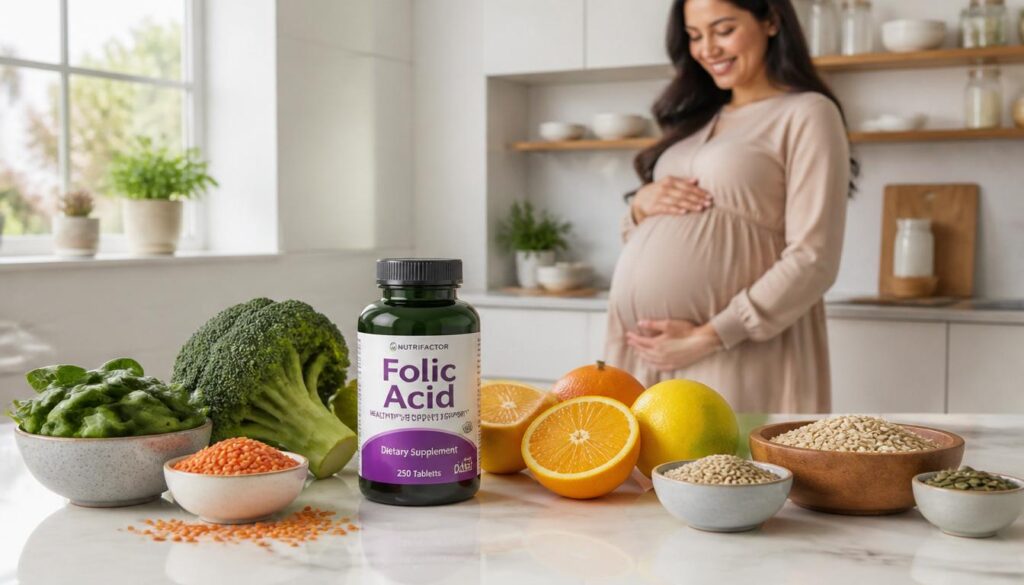
A folic acid supplement is one of the most important pregnancy essentials, particularly during the first trimester. Folic acid is the synthetic form of folate, a B vitamin that plays a vital role in the early development of your baby’s brain and spinal cord.
Because these structures begin forming very early in pregnancy—often before many women know they are pregnant—health experts recommend adequate folic acid intake before conception and during early pregnancy.
Why it matters
According to the CDC, ACOG, NHS, WHO, and NICE, getting enough folic acid before and during early pregnancy helps reduce the risk of neural tube defects, which affect the baby’s developing brain and spinal cord.
Key benefits
- Supports healthy early fetal development
- Getting enough folic acid during early pregnancy helps support healthy neural tube development.
- Supports normal cell growth and DNA production
- Helps meet increased nutritional needs during pregnancy
How to choose safely
When choosing a folic acid supplement:
- Select a product specifically formulated for pregnancy or recommended by your healthcare provider.
- Purchase supplements from reputable manufacturers.
- Read the ingredient label carefully and follow the recommended dosage.
Practical tips
- Take folic acid at the same time each day to help establish a routine.
- If you’re planning a pregnancy, talk with your healthcare provider about starting folic acid before conception.
- Follow your healthcare provider’s guidance on how long you should continue taking this supplement.
Common mistakes to avoid
- Waiting until pregnancy is confirmed before thinking about folic acid.
- Taking multiple supplements that contain folic acid without checking the total amount.
- Skipping doses frequently.
Important safety considerations
Take folic acid only as recommended by your healthcare provider. Individual needs may vary depending on your medical history and previous pregnancies.
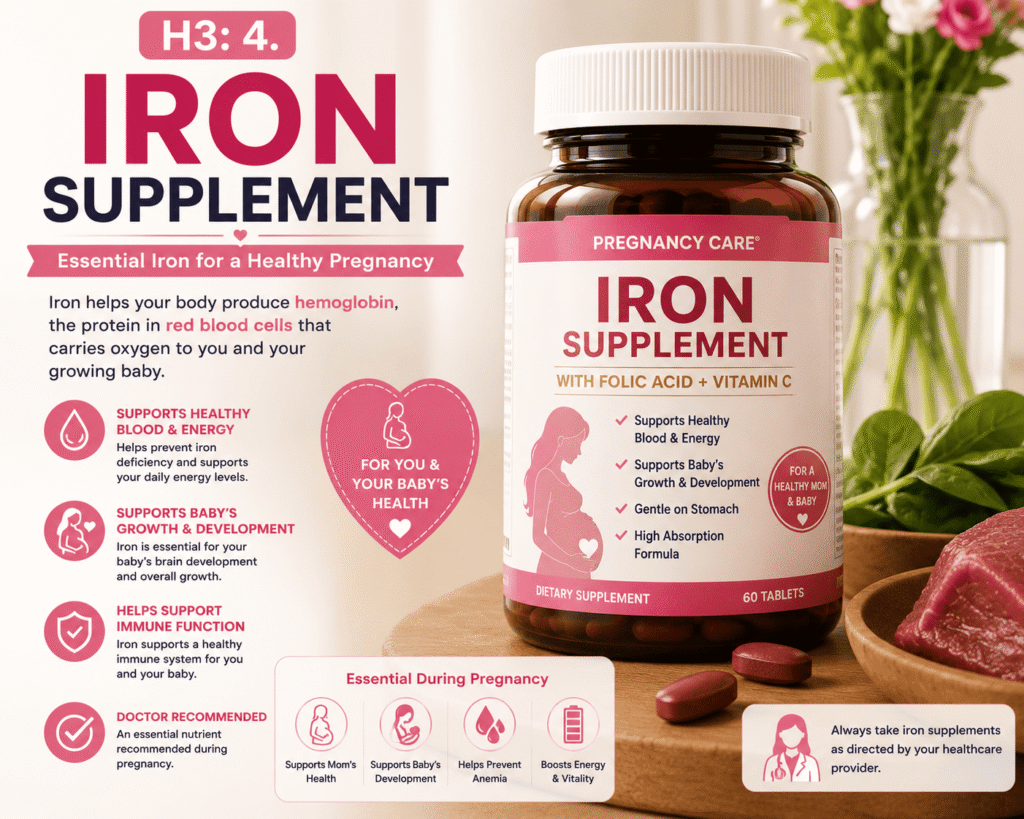
4. Iron Supplement
Iron is an essential mineral that helps your body produce hemoglobin, the protein in red blood cells responsible for carrying oxygen. During pregnancy, your blood volume increases significantly, which raises your body’s need for iron.
Why it matters
Adequate iron supports oxygen delivery to both you and your growing baby. Some women obtain enough iron through diet and prenatal vitamins, while others may need additional supplementation based on their healthcare provider’s recommendations.
Key benefits
- Supports healthy red blood cell production
- Helps transport oxygen throughout the body
- Supports your baby’s growth and development
- Helps meet increased pregnancy-related iron needs
How to choose safely
Choose an iron supplement that:
- Is recommended by your healthcare provider.
- Clearly lists the type and amount of iron.
- Comes from a trusted manufacturer.
Practical tips
- Take iron exactly as directed.
- Follow your healthcare provider’s advice regarding the best time to take your supplement.
- Eat a balanced diet that includes iron-rich foods whenever possible.
Common mistakes to avoid
- Taking more iron than recommended.
- Talk with your healthcare provider before making any changes to your supplement routine.
- Ignoring mild side effects without discussing them during prenatal visits.
Important safety considerations
Iron supplements should only be taken according to professional medical advice. Too much iron can be harmful, while too little may not meet your pregnancy needs.
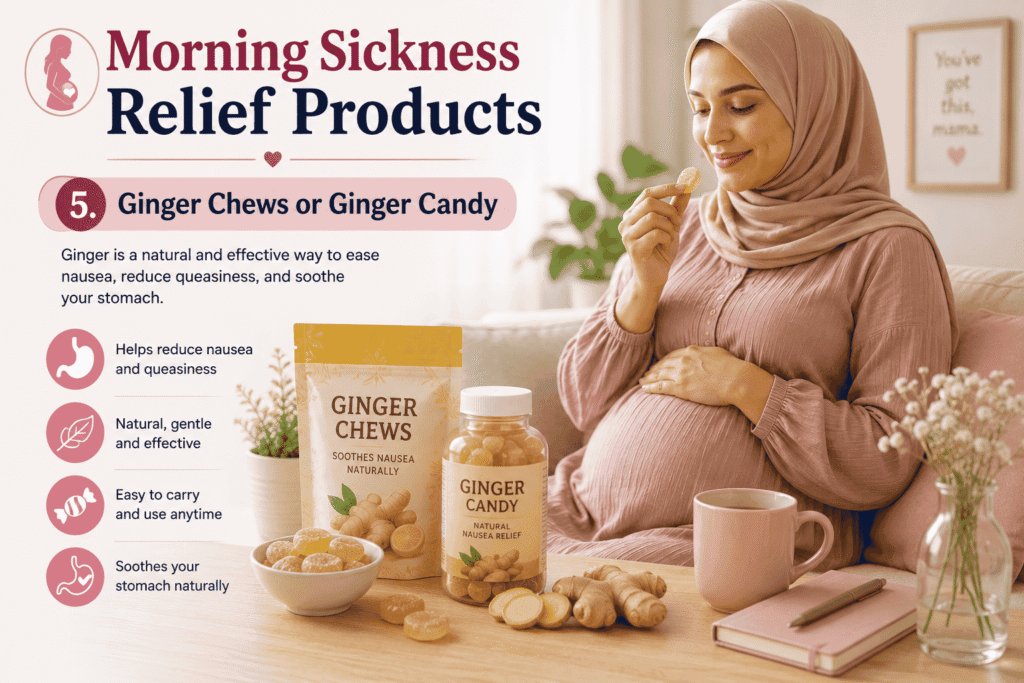
5. Ginger Chews or Ginger Candy
Ginger chews and ginger candy are among the most popular natural products used to help manage mild morning sickness during early pregnancy. Available as chews, hard candies, lozenges, and gummies, they offer a convenient way to enjoy ginger throughout the day, whether you’re at home, at work, or traveling.
Why It Matters
Morning sickness affects many women during the first trimester and can make eating, drinking, and daily activities more challenging. For some expectant mothers, ginger may help ease mild nausea and make it easier to stay hydrated and maintain regular meals.
Organizations such as ACOG recognize ginger as a non-medication option that may be considered for pregnancy-related nausea.
Key Benefits
- May help relieve mild nausea during early pregnancy
- Easy to carry in a purse or backpack
- Available in several convenient forms
- Can support comfort during travel or work
- May encourage regular eating and hydration
How to Choose Safely
When shopping for ginger products:
- Choose products made with real ginger.
- Read the ingredient list carefully.
- Select products from reputable manufacturers.
- Choose options with moderate amounts of added sugar when possible.
Practical Tips
- Keep ginger chews nearby for quick access.
- Some women find it helpful to eat one before getting out of bed.
- Pair ginger with small, frequent meals and adequate water intake.
Common Mistakes to Avoid
- Assuming every ginger product contains enough real ginger.
- Consuming excessive amounts because it is a natural product.
- Ignoring persistent nausea that interferes with eating or drinking.
Important Safety Considerations
Although ginger is generally considered safe in normal dietary amounts during pregnancy, concentrated supplements may not be suitable for everyone. Speak with your healthcare provider before using ginger supplements or if you have ongoing concerns about nausea.
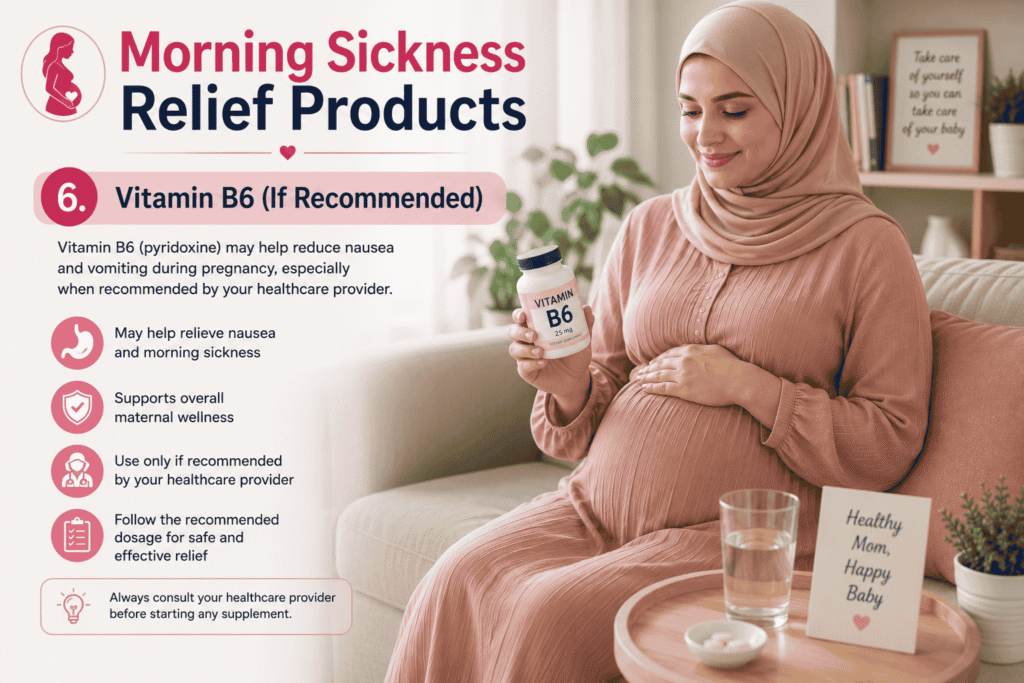
6. Vitamin B6 (If Recommended)
Vitamin B6, also called pyridoxine, is an important nutrient involved in many normal body functions. Healthcare providers sometimes recommend vitamin B6 to help manage pregnancy-related nausea when lifestyle changes alone are not enough.
Why It Matters
Morning sickness can affect daily nutrition and comfort during the first trimester. According to ACOG, vitamin B6 is one of the first options healthcare professionals may recommend for nausea and vomiting during pregnancy when appropriate.
Key Benefits
- May help reduce mild pregnancy-related nausea
- Supports normal metabolism and nervous system function
- Can complement other non-medication strategies
- Easy to take as part of a prenatal care routine
How to Choose Safely
- Only use vitamin B6 if recommended by your healthcare provider.
- Check whether your prenatal vitamin already contains vitamin B6.
- Choose supplements from trusted manufacturers.
- Follow the recommended dosage carefully.
Practical Tips
- Take the supplement consistently if prescribed.
- Inform your healthcare provider about all vitamins and supplements you use.
- Store supplements according to the manufacturer’s instructions.
Common Mistakes to Avoid
- Taking more than the recommended amount.
- Using multiple supplements containing vitamin B6 without checking labels.
- Self-treating persistent nausea without medical advice.
Important Safety Considerations
High doses of vitamin B6 are not appropriate unless specifically recommended by your healthcare provider. Always follow professional guidance regarding dosage and duration.
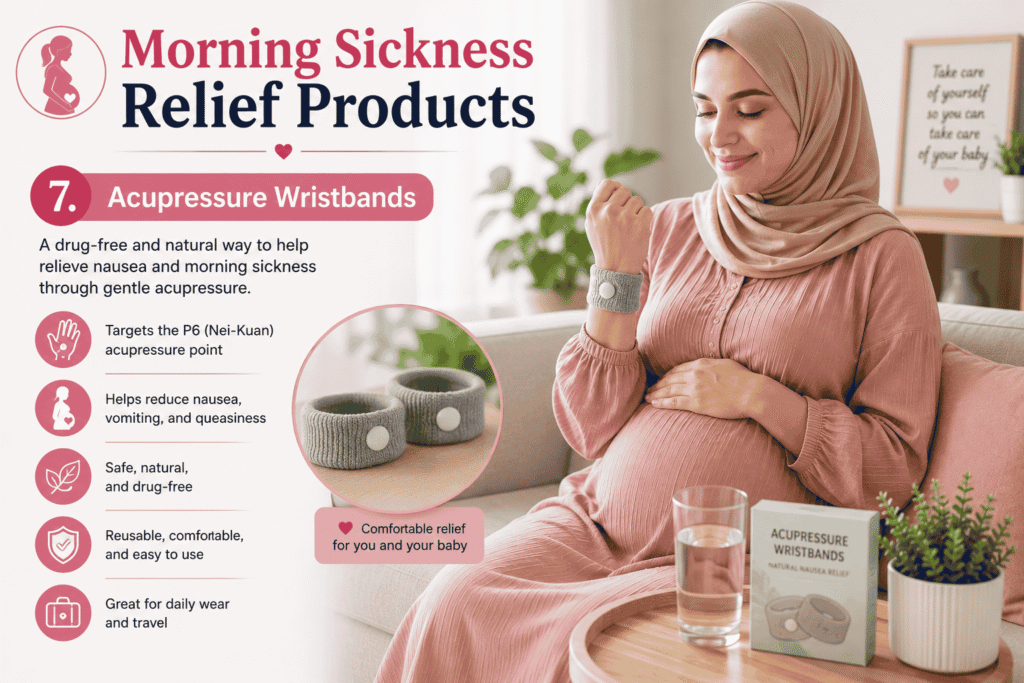
7. Acupressure Wristbands
Acupressure wristbands are reusable elastic bands designed to apply gentle pressure to the P6 (Neiguan) pressure point on the wrist. Many pregnant women use them as a drug-free option to help manage mild nausea.
Why It Matters
Some women prefer non-medication approaches during pregnancy. Acupressure wristbands are easy to wear throughout the day and may provide additional comfort for those experiencing mild morning sickness.
Key Benefits
- Drug-free option for nausea relief
- Comfortable for everyday use
- Reusable and portable
- May also be useful during travel
- Simple to use without batteries or medication
How to Choose Safely
Choose wristbands that:
- Fit comfortably without restricting circulation.
- Include instructions for correct placement.
- Are made from breathable, skin-friendly materials.
- Come from reputable manufacturers.
Practical Tips
- Wear the wristbands before symptoms become severe.
- Position them according to the manufacturer’s instructions.
- Wash reusable wristbands regularly.
Common Mistakes to Avoid
- Wearing them in the wrong position.
- Buying the wrong size.
- Expecting immediate or complete symptom relief.
Important Safety Considerations
Acupressure wristbands may not work for everyone. If nausea becomes severe, persistent, or prevents you from eating and drinking normally, contact your healthcare provider.
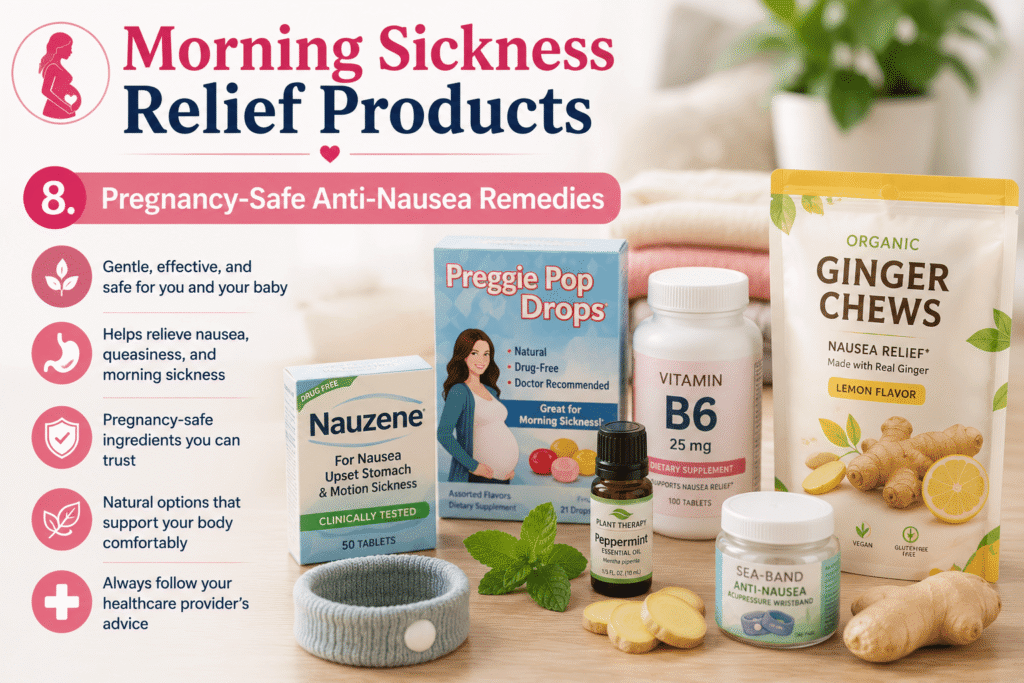
8. Pregnancy-Safe Anti-Nausea Remedies
If natural approaches do not provide enough relief, your healthcare provider may recommend pregnancy-safe anti-nausea treatments based on your symptoms, medical history, and overall health.
Why It Matters
Persistent nausea and vomiting may affect hydration, nutrition, and daily life. Receiving appropriate medical guidance can help you manage symptoms safely while supporting a healthy pregnancy.
Key Benefits
- May provide greater symptom relief when needed
- Can help maintain hydration and nutrition
- Tailored to your individual pregnancy
- May improve comfort and quality of life
How to Choose Safely
- Only use medications approved or prescribed by your healthcare provider.
- Purchase products from licensed pharmacies.
- Follow dosage instructions exactly as directed.
- Avoid self-medicating with over-the-counter products unless advised by a healthcare professional.
Practical Tips
Along with recommended treatments:
- Eat small meals more frequently.
- Drink fluids regularly throughout the day.
- Avoid foods and smells that trigger nausea.
- Get enough rest whenever possible.
Common Mistakes to Avoid
- Delaying medical advice when symptoms worsen.
- Taking medications recommended by friends or family.
- Ignoring signs of dehydration.
Important Safety Considerations
Seek medical attention promptly if you are unable to keep food or fluids down, experience dizziness, notice significant weight loss, or develop signs of dehydration. These symptoms require professional evaluation
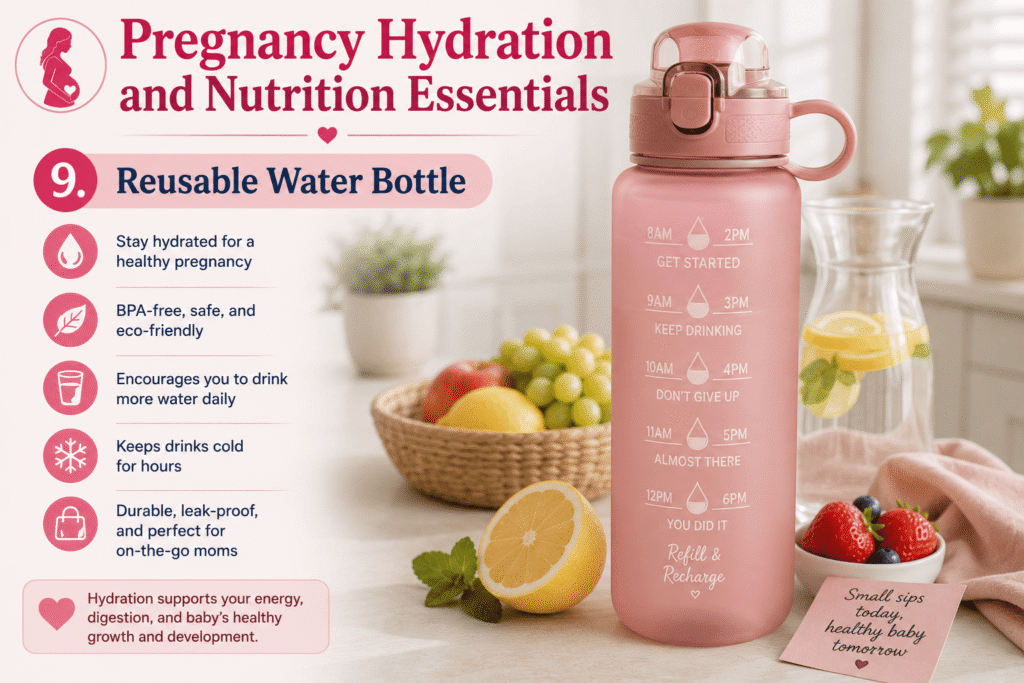
9. Reusable Water Bottle
A reusable water bottle is one of the simplest yet most valuable pregnancy essentials. Keeping water nearby makes it easier to stay hydrated throughout the day, whether you’re working, traveling, exercising, or relaxing at home.
Why It Matters
Your body requires more fluids during pregnancy to support increased blood volume, healthy circulation, and your baby’s development. Staying well hydrated may also help improve overall comfort and support normal body functions.
Key Benefits
- Encourages regular water intake
- Convenient for daily activities
- Helps track hydration throughout the day
- Eco-friendly and reusable
- Suitable for home, work, and travel
How to Choose Safely
Look for a water bottle that:
- Is made from BPA-free plastic or stainless steel.
- Has a leak-proof lid.
- Is easy to clean thoroughly.
- Holds enough water for your daily routine.
- Is comfortable to carry.
Practical Tips
- Carry your water bottle wherever you go.
- Refill it regularly throughout the day.
- If plain water is less appealing, add slices of lemon, cucumber, or berries for natural flavor.
- Clean the bottle daily with warm, soapy water.
Common Mistakes to Avoid
- Waiting until you feel thirsty before drinking.
- Forgetting to clean reusable bottles regularly.
- Leaving water bottles in direct sunlight or hot vehicles for long periods.
Important Safety Considerations
Water should remain your primary source of hydration during pregnancy. If you experience persistent vomiting, diarrhea, or signs of dehydration, contact your healthcare provider promptly for medical advice.
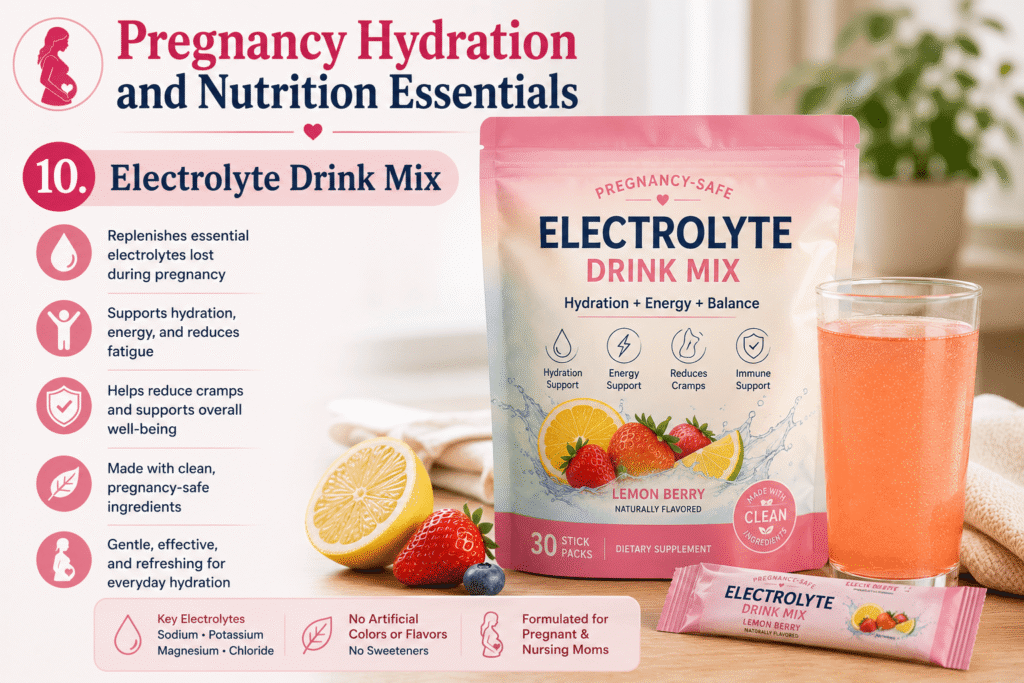
10. Electrolyte Drink Mix
Electrolyte drink mixes contain minerals such as sodium and potassium that help maintain normal fluid balance. They may be helpful during periods of increased fluid loss, such as vomiting or hot weather, when recommended by your healthcare provider.
Why it matters
Morning sickness or excessive sweating may increase fluid loss during early pregnancy. Electrolyte drinks can sometimes help replace fluids and important minerals.
Key benefits
- Supports hydration during increased fluid loss
- Convenient for travel
- Easy to prepare
- Available in portable packets
How to choose safely
Look for products that:
- Clearly list their ingredients.
- Contain moderate amounts of sugar.
- Come from reputable manufacturers.
- Are intended for hydration rather than energy enhancement.
Practical tips
- Water should remain your primary source of hydration.
- Use electrolyte drinks only when appropriate rather than replacing water every day.
- Follow the preparation instructions carefully.
Common mistakes to avoid
- Drinking electrolyte beverages instead of water throughout the day.
- Choosing products with excessive added sugar.
- Assuming every sports drink is suitable during pregnancy.
Important safety considerations
If you experience ongoing vomiting, diarrhea, or signs of dehydration, contact your healthcare provider promptly. Electrolyte drinks can support hydration in some situations, but they are not a substitute for medical evaluation when symptoms are severe or persistent.
What are the most important products to have during the first trimester?
The most helpful first trimester essentials typically include a prenatal multivitamin, folic acid, DHA (if recommended), iron (if recommended), a reusable water bottle, and products that may help manage morning sickness, such as ginger chews or acupressure wristbands. The right products depend on your individual needs, symptoms, and your healthcare provider’s recommendations.
Do I need to take all of these supplements?
Not necessarily. Every pregnancy is different, and your nutritional needs may vary based on your diet, medical history, and prenatal test results. Your obstetrician, midwife, or healthcare provider can recommend which supplements are appropriate for you.
Are natural remedies for morning sickness safe during pregnancy?
Some natural remedies, such as ginger, may help relieve mild nausea for many pregnant women. However, even natural products are not suitable for everyone. Always discuss supplements or herbal products with your healthcare provider before using them during pregnancy.
How much water should I drink during the first trimester?
Hydration needs vary from person to person and may change depending on your activity level, climate, and overall health. Drinking water regularly throughout the day and staying well hydrated is important during pregnancy. If you are unsure about your individual fluid needs, ask your healthcare provider for personalized guidance.
Can I buy pregnancy products online?
Yes. Many pregnancy products are available from reputable pharmacies, medical supply stores, and trusted online retailers. Choose well-known brands, read product descriptions carefully, and avoid products that make unrealistic health claims.
When should I contact my healthcare provider?
Contact your healthcare provider if you experience severe nausea or vomiting, signs of dehydration, vaginal bleeding, severe abdominal pain, persistent fever, or any other symptoms that concern you. Pregnancy products can support comfort, but they should never replace professional prenatal car
Final Thoughts
The first trimester is a time of rapid change for both you and your growing baby. Choosing a few well-selected pregnancy essentials can help support healthy nutrition, improve comfort, encourage hydration, and make it easier to manage common early pregnancy symptoms.
Remember that the best pregnancy products are not necessarily the most expensive—they are the ones that are safe, practical, and appropriate for your individual needs. Focus on quality over quantity, choose products from reputable manufacturers, and always follow your healthcare provider’s advice when selecting supplements or products intended to manage pregnancy symptoms.
Organizations such as the American College of Obstetricians and Gynecologists (ACOG), the World Health Organization (WHO), the National Health Service (NHS), the U.S. Centers for Disease Control and Prevention (CDC), and the National Institute for Health and Care Excellence (NICE) continue to emphasize the importance of balanced nutrition, regular prenatal care, and evidence-based guidance throughout pregnancy.
As your pregnancy progresses into the second and third trimesters, your needs will naturally evolve. Building a foundation with these first trimester essentials can help you feel more prepared and confident as you move forward in your pregnancy journey.
Leave a Reply