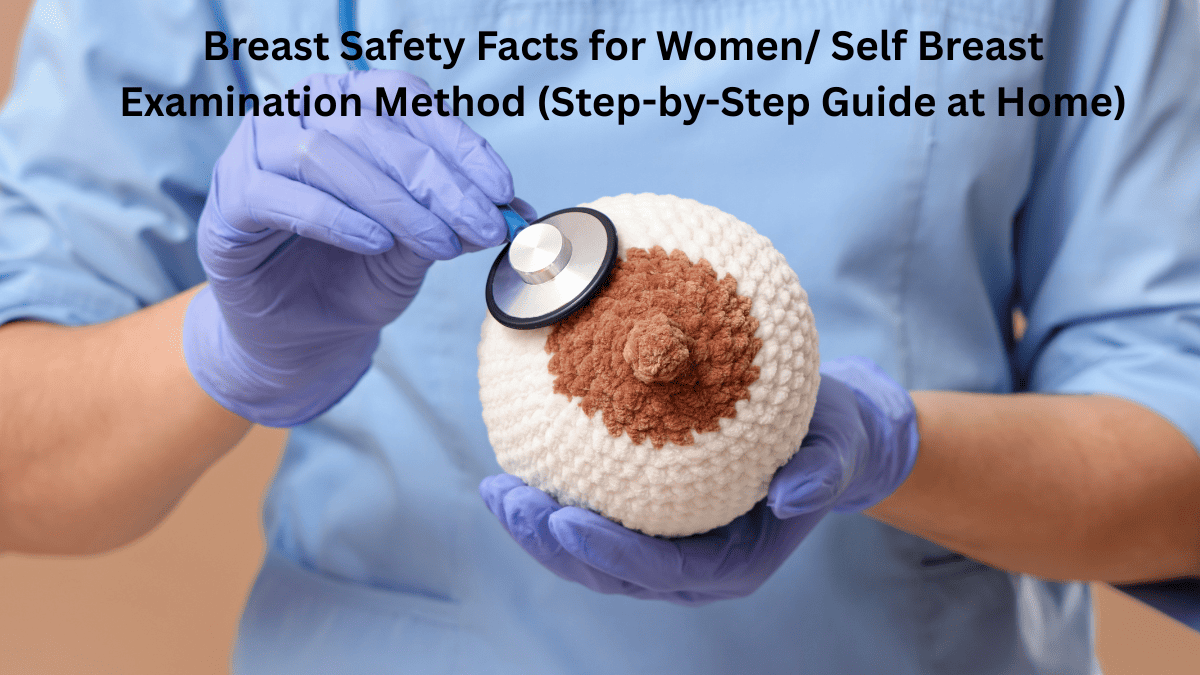

Self Breast Examination Method (Step-by-Step Guide at Home). Maintaining healthy breasts plays a vital role in supporting a woman’s physical and emotional health.
Table of Contents
Many serious breast conditions, including breast cancer, can be managed successfully if they are detected early. Unfortunately, delayed diagnosis remains one of the biggest reasons for complications and mortality in women worldwide.
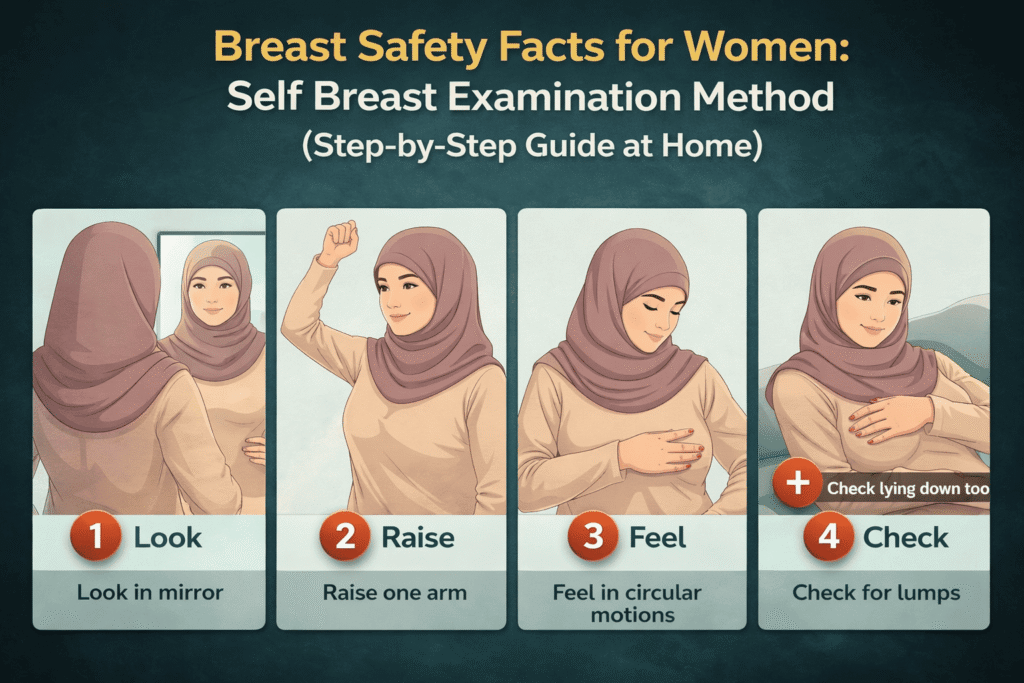
Understanding breast safety facts and learning how to perform a self-breast examination at home can help women notice changes early and seek timely medical advice.
This guide explains why breast safety is important, what changes to watch for, and how to perform self breast examination step by step at home in a simple and practical way.
Why Breast Safety Is Important for Women
Cancer can affect any organ in the human body, but among women, breast cancer and cervical cancer are the most common. Breast cancer is a major cause of illness and death in women across the world.
One of the main reasons breast cancer becomes dangerous is late diagnosis. Many women do not notice early changes in their breasts, such as small lumps, swelling, or skin changes.
In some cases, women may notice these signs but do not consider them serious enough to seek medical attention. By the time symptoms are clearly visible or painful, the disease may have already grown or spread.
Early detection saves lives. Breast cancer is not always deadly when found early, and treatment outcomes are often much better. For this reason, it is essential for every woman to:
- Be aware of normal breast appearance and feel
- Examine her breasts regularly
- Consult a healthcare professional if any unusual change is noticed
Monthly self breast examination is a simple habit that can help women become familiar with their breasts and identify changes at an early stage.
Breast Safety Facts Every Woman Should Know
Understanding basic breast safety facts helps reduce fear and encourages timely action.
Normal vs Abnormal Breast Changes
Breasts naturally change during menstruation, pregnancy, breastfeeding, and aging.
Mild tenderness or slight swelling before periods can be normal.
Abnormal changes include new lumps, persistent pain, skin dimpling, redness, sores, or nipple discharge.
Age-Related Breast Changes
Teenagers and young women may notice changes due to hormonal development.
After puberty, regular breast examination should begin.
As women age, breast tissue may become softer or less dense, but new lumps should never be ignored.
Self Breast Examination Method (Step-by-Step Guide at Home)
Monthly Examination Is Important
Women should examine their breasts once every month after their menstrual period. This timing is ideal because hormonal changes are minimal, making it easier to feel unusual lumps.
The biggest advantage of monthly examination is early detection. If a lump develops, it can be felt early and checked by a health worker or medical officer in time.
Not All Lumps Are Cancerous
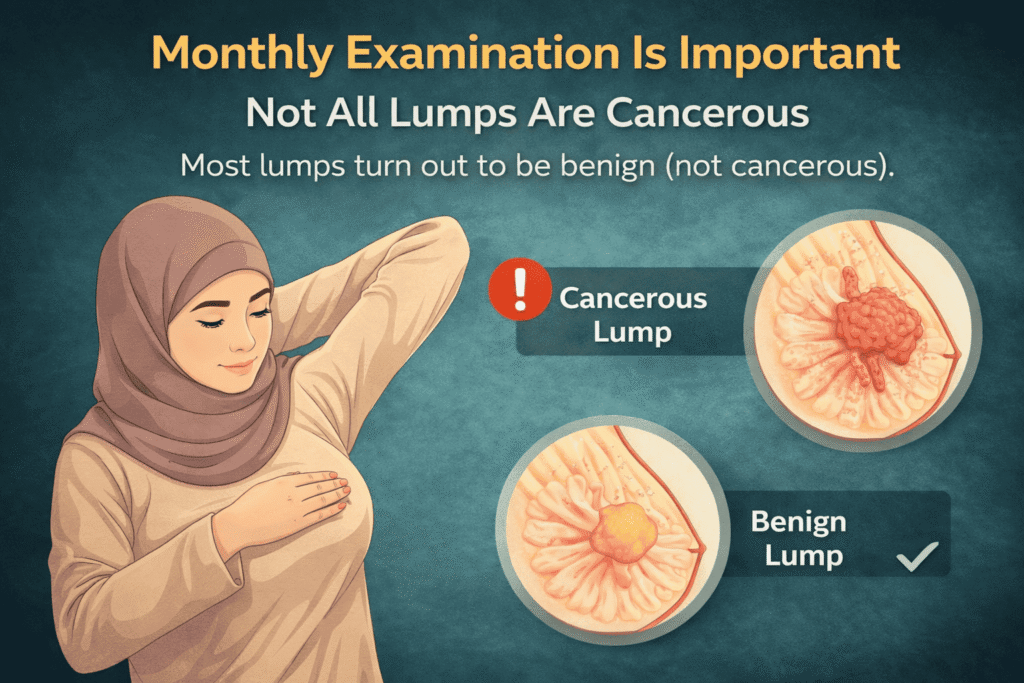
Most breast lumps are not dangerous, but some can be cancerous. Because it is impossible to tell the difference without medical evaluation, every lump should be examined by a healthcare professional.
Teaching breast examination is a responsibility of health educators and communities. Although breast health is a sensitive topic, it is one of the most effective ways to diagnose breast cancer early and protect women’s health.
Skin and Nipple Changes Matter
Women should report the following signs to a doctor:
Skin dimples or puckering
Changes in breast color
Sores or ulcers on the breast
Bloody or unusual nipple discharge
Change in breast shape or size
Common Pain Myths About Breast Safety
- ❌ Myth: Breast pain always means cancer
✅ Fact: Breast pain is often caused by hormonal changes and is not always serious.
- ❌ Myth: Only older women get breast cancer
✅ Fact: Breast cancer can occur at any age, although risk increases with age.
- ❌ Myth: If there is no family history, there is no risk
✅ Fact: Many women diagnosed with breast cancer have no family history.
What Is Self Breast Examination?
Simple Definition
Self breast examination (SBE) is a method in which a woman checks her own breasts using her eyes and hands to notice any changes in size, shape, texture, or the presence of lumps.
Who Should Do It?
All women after puberty
Women of all ages
Especially important for women with limited access to regular medical screening
Self breast examination does not replace clinical breast exams or mammograms, but it plays a supportive role in early awareness.
Self Breast Examination Method: Step-by-Step Guide at Home
Self breast examination is easy, safe, and can be done at home without special equipment.
Best Time to Do Self Breast Examination
Once every month
After menstruation ends
If not menstruating, choose the same date every month
Step 1 – Visual Inspection (Standing in Front of a Mirror)
Look at the size, shape, and texture of your breasts and nipples.
Stand in front of a mirror with both arms relaxed at your sides.
Check for swelling, redness, dimples, or skin changes.
Now:
Raise both arms above your head
Again observe the breasts and nipples carefully
Note any visible differences or changes.
Step 2 – Physical Examination While Standing
Raise your right arm above your head.
Use the palm and fingers of your left hand to gently press and feel all parts of the right breast.
Gently examine the breast using slow, circular movements to ensure all areas are checked.
Repeat the same process:
Raise your left arm
Check the left breast carefully by using your right hand to feel for any changes.
You should not feel hard lumps. Some areas may feel different, but you should become familiar with your normal breast structure so you can notice new changes early.
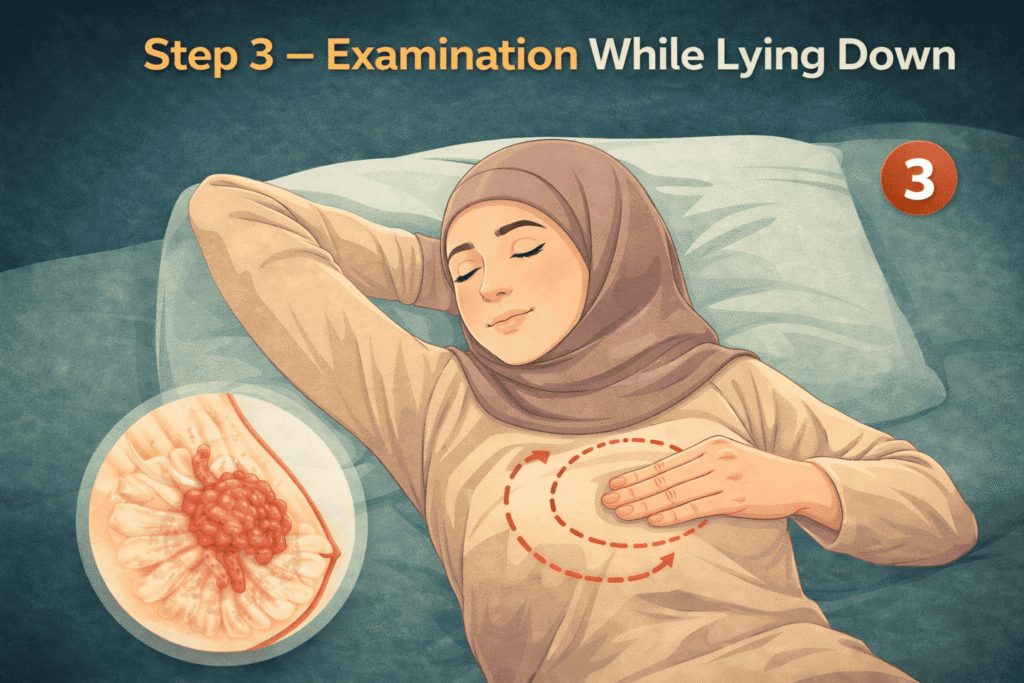
Step 3 – Examination While Lying Down
1.Place a pillow beneath your left shoulder while lying flat on your back.
2. Place your left arm under your head.
3. Use your right hand to examine your left breast using gentle circular movements.
Repeat on the other side:
Pillow under right shoulder
Right arm under head
Left hand examines right breast
Step 4 – What to Check (Lumps, Skin, Nipple Changes)
Feel the area between the breast and armpit
Check for lumps, thickened areas, or tenderness
Gently press both nipples to see if any fluid or discharge appears
Notice:
If you notice anything unusual, do not panic—but do consult a healthcare professional.
Breast Changes That Need Medical Attention
Seek medical advice if you notice:
A new lump that does not go away
Persistent breast pain
Skin dimpling or redness
Change in breast size or shape
Bloody or unusual nipple discharge
Early consultation can prevent serious complications.
Clinical Breast Examination vs Self Examination
Differences
Self Breast Examination: Done by the woman herself at home
Clinical Breast Examination: Performed by a trained health worker or doctor
When Clinical Exam Is Needed
If any abnormal change is found
For routine health checkups
As advised by a medical professional
Both methods work best together, not as replacements.
Common Myths About Breast Safety
Breast cancer is always fatal ❌
Early detection makes treatment more effective ✅
Self examination causes fear ❌
Awareness reduces fear and saves lives ✅
Final Thoughts on Breast Safety for Women
Breast safety begins with awareness. Self breast examination is a powerful habit that helps women understand their own bodies and recognize changes early. While not every change is dangerous, ignoring symptoms can be risky.
By examining breasts monthly, understanding breast safety facts, and seeking medical advice when needed, women can protect their health and improve outcomes. Breast safety is not just a personal responsibility—it is a community effort that saves lives.
Medical Disclaimer:
This content is for general health awareness only and is not intended as medical advice. Please consult a qualified healthcare professional for diagnosis or treatment.
How to self-examine breasts at home?
Check your breasts once a month. Look at them in a mirror for any changes, then use your fingers to feel the entire breast in small circular motions, both standing and lying down. Check the armpit area and gently press the nipples for any discharge. If you notice a new lump or change, consult a healthcare professional.
What are the different ways to check breasts?
Clinical Breast Examination vs Self Examination
Differences
Self Breast Examination: Done by the woman herself at home
Clinical Breast Examination: Performed by a trained health worker or doctor
When Clinical Exam Is Needed
If any abnormal change is found
For routine health checkups
As advised by a medical professional
Both methods work best together, not as replacements.
What are 4 steps of breast self-examination?
Step 1 – Visual Inspection (Standing in Front of a Mirror)
Look at the size, shape, and texture of your breasts and nipples.
Stand in front of a mirror with both arms relaxed at your sides.
Check for swelling, redness, dimples, or skin changes.
Now:
Raise both arms above your head
Again observe the breasts and nipples carefully
Note any visible differences or changes.
Step 2 – Physical Examination While Standing
Raise your right arm above your head.
Use the palm and fingers of your left hand to gently press and feel all parts of the right breast.
Gently examine the breast using slow, circular movements to ensure all areas are checked.
Repeat the same process:
Raise your left arm
Check the left breast carefully by using your right hand to feel for any changes.
You should not feel hard lumps. Some areas may feel different, but you should become familiar with your normal breast structure so you can notice new changes early.
Step 3 – Examination While Lying Down
1. Place a pillow beneath your left shoulder while lying flat on your back.
2. Place your left arm under your head.
3. Use your right hand to examine your left breast using gentle circular movements.
Repeat on the other side:
Pillow under right shoulder
Right arm under head
The left hand examines the right breast
Step 4 – What to Check (Lumps, Skin, Nipple Changes)
Feel the area between the breast and armpit
Check for lumps, thickened areas, or tenderness
Gently press both nipples to see if any fluid or discharge appears
Notice:
If you notice anything unusual, do not panic—but do consult a healthcare professional.
What is the average breast size?
There is no single “average” breast size because it varies by country, age, body type, and genetics.
Commonly reported averages (approximate):
United States: around 34DD / 36C
Europe & UK: around 34C–34D
Asia: often 32A–32C
Important to know
Bra sizes are not standardized, so “average” can differ by brand
Weight changes, pregnancy, hormones, and age all affect breast size
Breast size has no link to health, fertility, or cancer risk
👉 What matters most is breast awareness, not size—knowing what is normal for your body.
What is the best method for breast examination?
Monthly Examination Is Important
Women should examine their breasts once every month after their menstrual period. This timing is ideal because hormonal changes are minimal, making it easier to feel unusual lumps.
The biggest advantage of monthly examination is early detection. If a lump develops, it can be felt early and checked by a health worker or medical officer in time.
What is the best position to check breasts?
The best position to check breasts is a combination of positions, not just one.
✅ Most effective positions
1️⃣ Standing in front of a mirror
Best for visual changes
Helps spot skin dimpling, swelling, or shape changes
2️⃣ Standing or sitting (in the shower)
Soap makes fingers glide easily
Good for feeling lumps or thick areas
3️⃣ Lying down (most important) ⭐
Breast tissue spreads evenly over the chest
Makes it easier to feel small lumps
👉 Best overall:
Use all three, but if choosing one → lying down is the most effective.
Pro tip (for your article)
Health experts recommend checking breasts in both standing and lying positions for the most accurate self-examination.
Leave a Reply