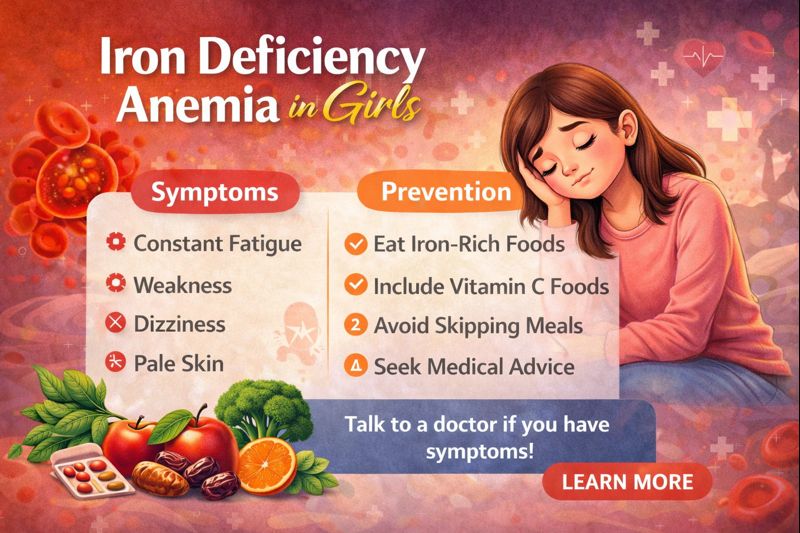
1. Anemia in Girls Introduction

Anemia Symptoms in Girls: Early Warning Signs include fatigue, weakness, dizziness, and pale skin. Learn common causes, risk factors, and when to see a doctor for better health awareness.
Anemia in girls is a common health problem that occurs when the body does not have enough healthy red blood cells or hemoglobin.
Table of Contents
This condition is mostly caused by iron deficiency and can lead to weakness, tiredness, dizziness, pale skin, and difficulty concentrating. Teenage girls are at higher risk of anemia due to rapid body growth, the start of menstruation, and poor dietary intake.
If anemia is not identified early, it can affect daily activities, learning ability, and overall health. Awareness, proper nutrition, and timely medical guidance play an important role in preventing anemia in girls.
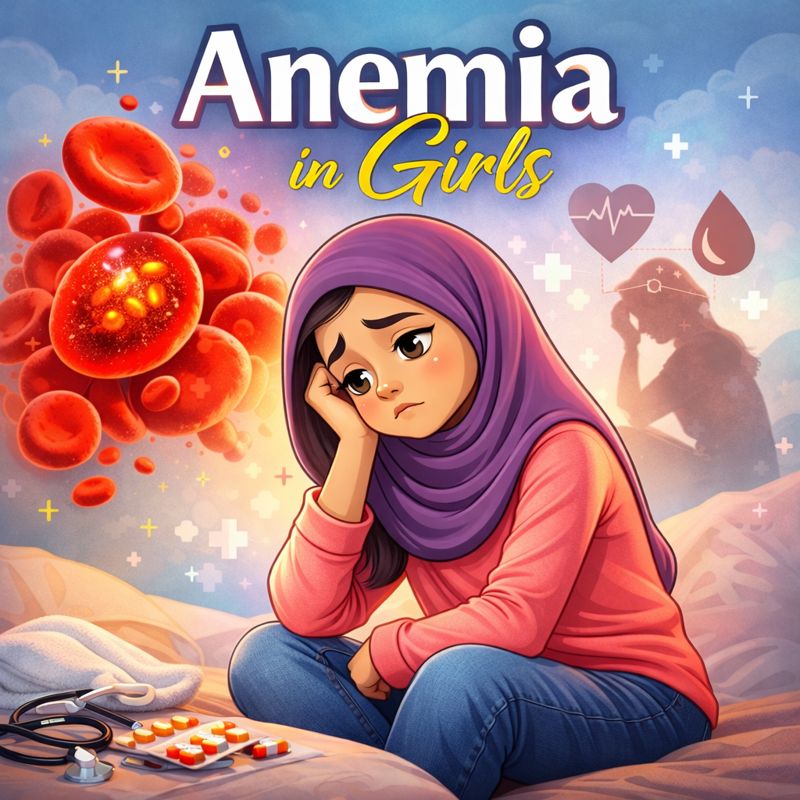
2. What Is Iron Deficiency Anemia
Iron deficiency anemia is a condition that occurs when the body does not have enough iron to produce healthy red blood cells. Iron is an essential mineral needed to make hemoglobin, a protein in red blood cells that carries oxygen from the lungs to the rest of the body.
When iron levels become low, the body cannot make enough hemoglobin. As a result, less oxygen reaches body tissues, which causes weakness, tiredness, dizziness, and reduced energy levels.
Iron deficiency anemia is the most common type of anemia, especially in girls and women. It often develops due to poor dietary intake, heavy menstrual bleeding, rapid growth during teenage years, pregnancy, or problems with iron absorption.
If iron deficiency anemia is not identified early, it can affect daily activities, learning ability, physical performance, and overall health. With proper awareness, balanced nutrition, and timely medical guidance, this condition can be effectively managed and prevented.
3. What Red Blood Cells Do
Red blood cells play an important role in keeping the body healthy. Their main function is to carry oxygen from the lungs to all parts of the body and return carbon dioxide to the lungs for removal. Oxygen is essential for energy production, brain function, and the proper working of organs.
Hemoglobin, which is found inside red blood cells, helps bind oxygen and transport it through the bloodstream. When red blood cells or hemoglobin levels are low, the body does not receive enough oxygen. This can lead to symptoms such as fatigue, weakness, shortness of breath, and poor concentration.
Healthy red blood cells are necessary for maintaining strength, immunity, and overall physical performance.
4. Types of Iron Deficiency Anemia
Iron deficiency anemia can appear in different forms depending on the cause and life stage. Common types include:
· Mild iron deficiency anemia: Occurs when iron levels begin to drop, often with mild symptoms that may go unnoticed.
· Moderate iron deficiency anemia: Symptoms such as weakness, tiredness, and dizziness become more noticeable.
· Severe iron deficiency anemia: A serious condition that may cause extreme fatigue, shortness of breath, chest discomfort, and requires immediate medical attention.
· Iron deficiency anemia during pregnancy: Common due to increased iron needs of both mother and baby.
· Iron deficiency anemia in adolescents: Often seen in teenage girls due to rapid growth and menstrual blood loss.
Identifying the type early helps in proper evaluation and safer health management under medical guidance.
Anemia Symptoms in Girls: Early Warning Signs
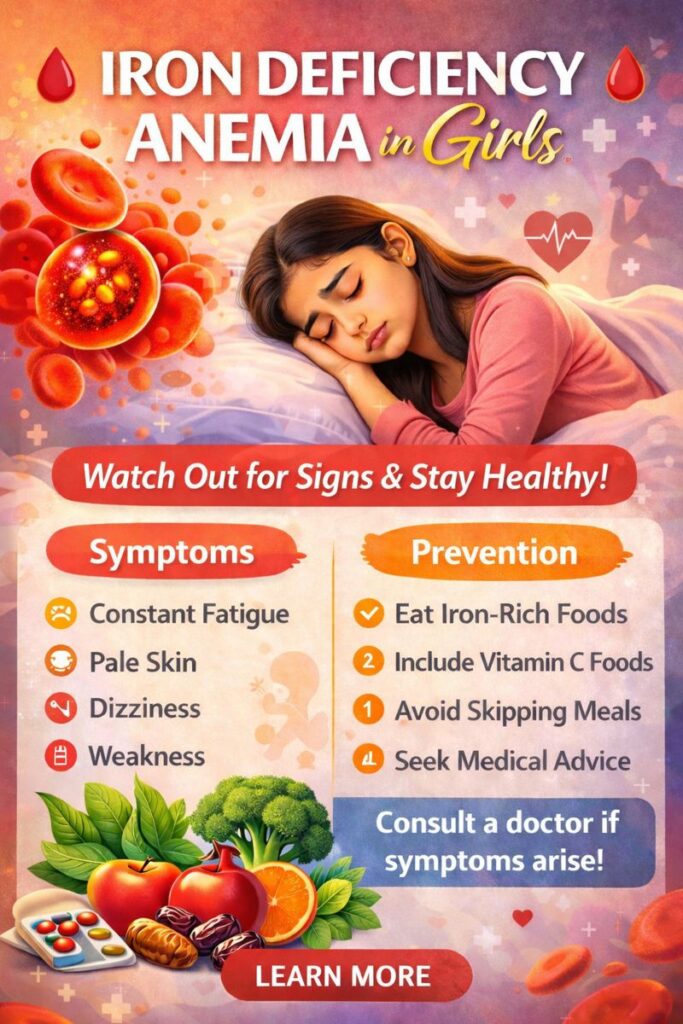
Possible symptoms of anemia may vary from person to person and often develop gradually. Common signs include:
Constant tiredness and low energy
Weakness and fatigue
Pale skin, lips, or nails
Dizziness or lightheadedness
Headache
Shortness of breath
Cold hands and feet
Difficulty concentrating
Fast or irregular heartbeat
In mild cases, symptoms may be unnoticed, but they become more noticeable as iron levels drop.
6. Causes of Iron Deficiency Anemia
Iron deficiency anemia occurs when the body does not receive enough iron or loses more iron than it absorbs. Common causes include:
Low intake of iron-rich foods
Heavy menstrual bleeding
Pregnancy and breastfeeding
Rapid growth during teenage years
Blood loss due to injuries or medical conditions
Intestinal problems that reduce iron absorption
Parasitic infections such as intestinal worms
7. Who Is at Higher Risk of Iron Deficiency (Risk Factors)
Some people are more likely to develop iron deficiency anemia due to their body’s increased iron needs or ongoing iron loss. These include:
Teenage girls after the start of menstruation
Pregnant and breastfeeding women
Women with heavy or prolonged periods
Malnourished mothers and children
Low-birth-weight and premature babies
People with poor dietary habits
Individuals affected by intestinal worms
People who lose blood regularly, such as those with hemorrhoids or ulcers
Being aware of these risk factors helps in early detection and prevention of iron deficiency.
8. Side Effects of Iron Deficiency Anemia
If iron deficiency anemia is not managed on time, it can affect both physical and mental health. Common side effects include constant fatigue, weakness, reduced immunity, and difficulty performing daily activities. Long-term anemia may also affect heart function and overall quality of life.
9. When to See a Doctor
You should consult a doctor if:
· Weakness or tiredness lasts for a long time
· Dizziness or headaches become frequent
· Breathing becomes difficult during normal activity
· Heartbeat feels fast or irregular
· Symptoms worsen day by day
Early medical advice helps prevent serious complications.
10. Don’t Take Risk
Iron deficiency anemia should never be ignored. Do not rely on self-medication or home remedies without medical guidance. Delaying proper care can worsen symptoms and lead to long-term health problems, especially in girls and women.
11. How to Prevent Iron Deficiency
Iron deficiency can often be prevented through healthy habits and proper nutrition. Important preventive steps include:
· Eating a balanced and nutritious diet
· Including iron-rich foods regularly
· Maintaining good meal routines
· Seeking medical advice during pregnancy or heavy menstruation
· Regular health checkups when advised
12. Which Foods Are High in Iron
Eating iron-rich foods helps support healthy blood formation.
Fruits
· Dates
· Raisins
· Figs
· Apples
· Pomegranates
· Apricots
These fruits provide natural iron and help improve energy levels.
Vegetables
· Spinach
· Fenugreek (methi) leaves
· Mustard greens
· Beetroot
· Broccoli
· Cabbage
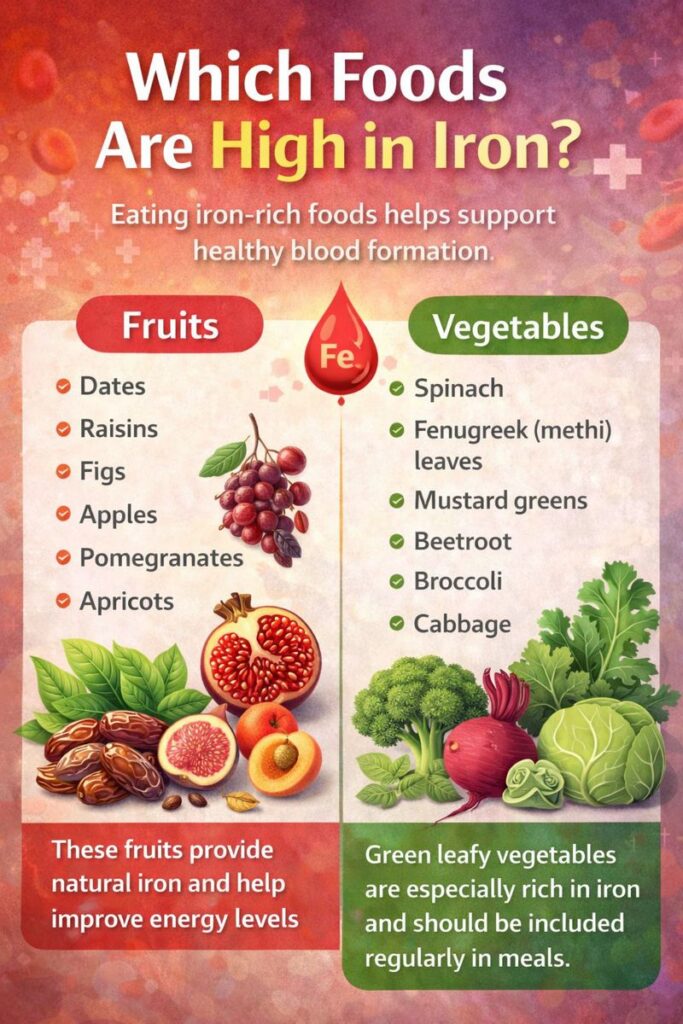
Green leafy vegetables are especially rich in iron and should be included regularly in meals.
13. Note
Iron deficiency anemia should not be ignored, especially in girls and women. Iron supplements should only be taken under medical supervision, as excessive iron intake can be harmful.
Maintaining a balanced diet and following professional medical advice are the safest ways to support healthy iron levels.
14. Complications and Prevention
If iron deficiency anemia is not managed on time, it may lead to serious health problems such as extreme fatigue, weakened immunity, heart-related issues, poor concentration, and pregnancy complications.
Prevention is possible through healthy lifestyle choices, including regular intake of iron-rich foods, consuming vitamin C–rich foods to improve iron absorption, avoiding skipping meals, and seeking medical guidance when symptoms appear. Early awareness and proper care help reduce the risk of long-term complications.
For more information, Average Breast Cancer Treatment Cost In The USA
15. Care in the Future
Future care is important to prevent iron deficiency anemia from returning. Girls and women should maintain a healthy and balanced diet, include iron-rich foods regularly, and follow good eating habits.
Regular health checkups, early attention to weakness or fatigue, and following medical advice can help maintain healthy iron levels. Awareness and proper lifestyle choices play a key role in long-term well-being.
How to Recover From Iron Deficiency
Recovering from iron deficiency takes time and proper care. The body needs enough iron to make healthy red blood cells and improve energy levels.
1. Eat Iron-Rich Foods
Include foods such as leafy green vegetables, dates, raisins, beans, eggs, meat, and whole grains in your daily meals.
2. Add Vitamin C Foods
Vitamin C helps the body absorb iron better. Eat fruits like oranges, lemons, guava, and tomatoes along with iron-rich foods.
3. Avoid Skipping Meals
Regular meals help maintain steady nutrient levels in the body.
4. Follow Medical Advice
If iron levels are very low, a doctor may recommend supplements. These should only be taken under medical supervision.
5. Be Patient and Consistent
Iron levels usually improve slowly. Regular healthy eating and follow-up tests help ensure proper recovery.
⚠️ Important Note
Do not take iron supplements without consulting a healthcare provider, as excess iron can be harmful.
Self Breast Examination Method
Medical Disclaimer:
The information provided in this article is for educational purposes only. It is not intended to replace professional medical advice, diagnosis, or treatment. Always consult a qualified healthcare provider if you have symptoms or health concerns.
How to cure anemia in females?
With iron-rich foods and medical guidance if needed.
Why are teenage girls anemic?
Rapid growth, menstruation, and poor iron intake.
Do people with anemia sleep a lot?
Yes, due to constant tiredness and low energy.
Can a girl with anemia get pregnant?
Yes, but anemia should be treated for a healthy pregnancy.
What is the rule of 3 for anemia?
Low hemoglobin, low iron, and low red blood cells.
What is the fastest way to cure anemia?
Following a doctor’s advice with proper diet and supplements.
How do I know if my daughter is anemic?
Common signs include tiredness, pale skin, dizziness, and weakness.
Leave a Reply